‘I’ll Still be Dreaming Of You…
CROYDON (and NORWOOD)
Some radical history
To coincide with the London Radical Bookfair delving way down into Southeast London, south of the ridge of hills that fence in South London… to South Norwood of places!
… here’s a short splurge of some radical and social history of the Norwood and Croydon areas.
Not complete, not a history of the area, not even a radical history of the place, just SOME STUFF! We know there’s loads more.
We have also published some of the following and more in a mini-zine which we hope to be selling at the Bookfair (assuming we can get the snarl-up on our printer fixed.)
@@@@@@@@@@@@@@@@@@@@@@@@@@@@@@@@@@@@
Battle In Croydon?
In 1264, the only battle reputed to have been fought in Croydon is said to have occurred. Following the defeat of Henry III at the Battle of Lewes, by barons pressing for limits to royal power, a London force of allies of the barons was reportedly intercepted at Norbury by Royalist troops from Tonbridge and killed. One account suggests that the king’s forces lay in ambush in Norwood Forest and that the clash took place near Hermitage Bridge, close to an enclosure long known as Battle Close. However, this interpretation is based on later tradition rather than contemporary documentary evidence.
Commons and Enclosure
The Great North Wood, a natural oak forest, once stretched all across the ridge of hills that runs across South London, from Norwood to Brockley. By the seventeenth century, the wood had broken up into smaller woods and commons, including Croydon Common, Penge Wood, Gipsy Wood, Dulwich Wood, Forest Wood (or Forest Hill), and Westwood (also called Sydenham Common). Until the 18th century, the slopes of the hills were largely still woodland.
By the late 1700s many of these woods and Commons were often inhabited by the very poor, squatters with nowhere else to go, some driven by earlier enclosures and social/economic change into scratching a living from marginal land; others were social outcasts like romany travellers, though there was also often a smattering of outlaws, robbers and rebels. Norwood’s ‘Commons and wastes’ had a “notorious” reputation before enclosures began to tame them. Oliver Cromwell, one of the first to interfere, justified his actions on the need to rid the area of various malefactors hiding out there.
Smugglers and their contacts used green lanes through Norwood and Peckham to bring contraband up from the south coast. Traditional smuggling routes from the south coast ran along suburban green lanes, along modern Park Lane, Croydon, up through Croydon Common, to Norwood, and thence over the hill to London.
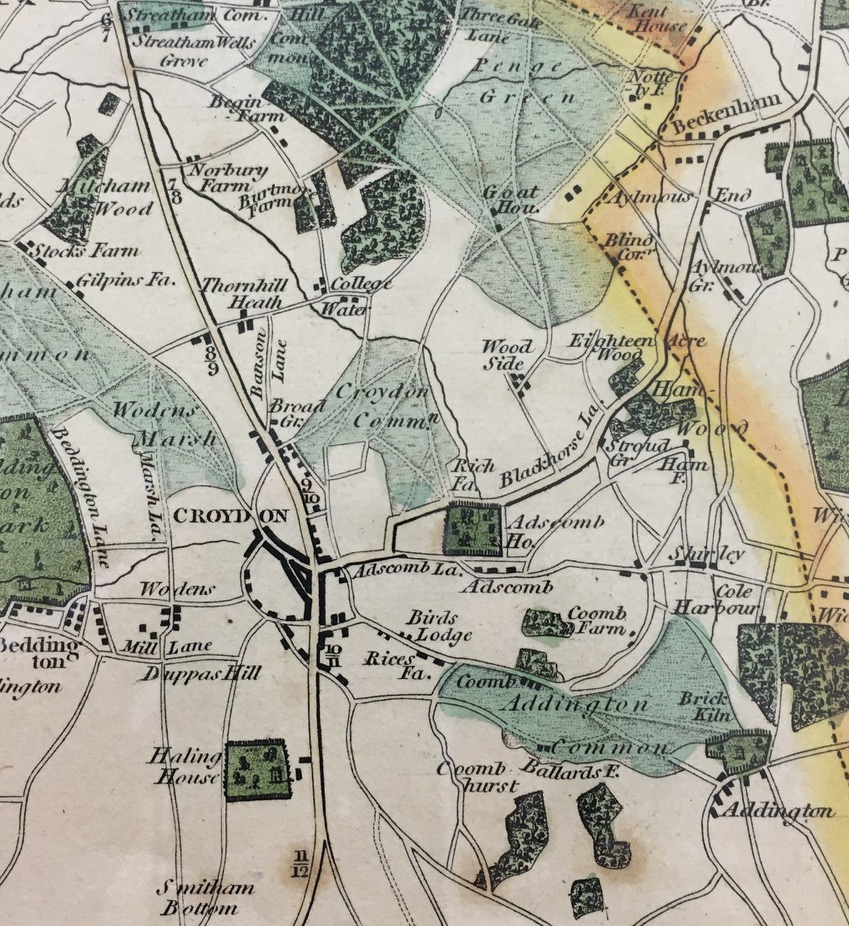
Allegedly Stockwell and Peckham were two villages closer to the City that served as smugglers’ bases.
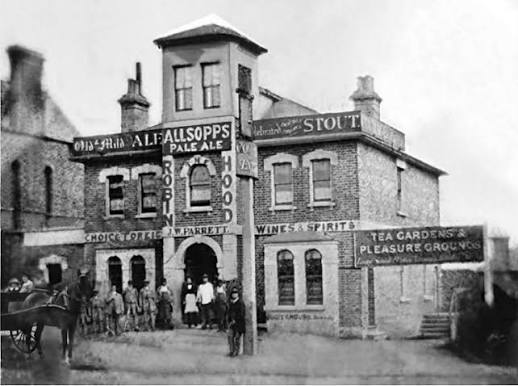
In 1781, Norwood was described as a village scattered around an extensive wild common.
Norwood and Croydon Commons, as usual, attracted squatters, some licensed or tolerated by the manor courts. A few built large houses – one is now part of the convent in Central Hill – but the majority lived in cottages. The enclosure acts allowed some squatters to remain, often on payment of a fee. Squatter dwellings that survive here can be seen in Arnulls Road, Upper Norwood (although in much changed form) , part of a settlement known as Cupgate, Copgate or Cubgate, before the enclosure ( a name remembered in the ‘Copgate Path’ through Norwood Grove).
This was far from the last squatting in the Norwood area. In the 1970s/80s, squatting revived en masse in London, and West Norwood, Gipsy Hill and Crystal Palace had a lot of squats.
Squatters in Berridge Rd and Bristow Rd area in West Norwood occupied whole; streets oef empty houses around 1983, and published their own news-sheet, ‘The Triangle’.
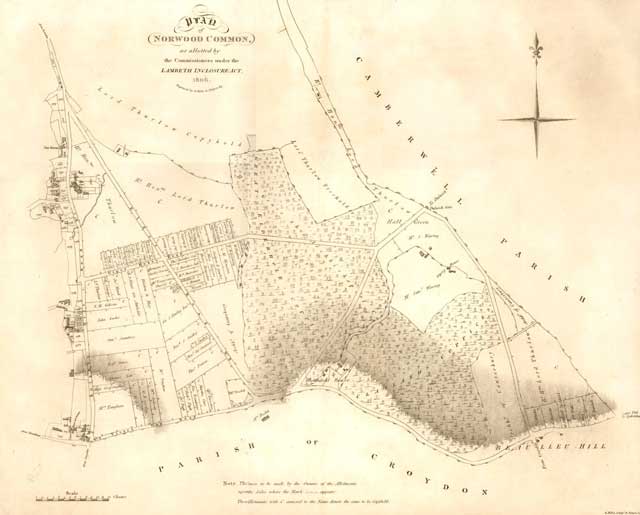
Around 1797-1810, Croydon & Lambeth Inclosure Acts enclosed large parts of the old Great North Wood in Norwood and Gipsy Hill.
Enclosures, often sponsored by powerful landowners, fenced off previously open land, to intensify agriculture or for development. But common lands were often used by many, to collect firewood, graze animals, gather food and for other important reasons, and enclosure caused great hardship by depriving most of these crucial ways of surviving.
John Cator, from a family soon to be well-known as enclosures and developers, bought an 80 acre area of land in South Norwood n 1787, fencing it off by 1797, as ‘White Horse Wood.’ (Now Grangewood Park). John Barwell Cator inherited this but sold it along with the rest of ‘Whitehorse Manor to John Davidson Smith. Smith built the Beulah Spa and Norwood New Town.
In 1796, Cator was one of several sponsors of a Bill presented to Parliament for the enclosure of Croydon Common. He followed this up the next year with another Enclosure Bill, this time aimed at Penge Common.
Croydon Common lay to the south of the Great North Wood ridge of hills; several parishes met around modern Crystal Palace, and neighbouring Lambeth also enclosed common lands in the area.
“The enclosure movement came to a frantic climax during the Napoleonic Wars, when the need to grow more food at home gave a welcome political justification for this huge land grab.” (John Coulter)
The Croydon enclosure act was passed in 1797, and the Ecclesiastical Commissioners were confirmed as great landowners in the district. Enclosure Acts were passed for Dulwich Common (1805), the Manor of Lambeth (1806), and Norwood Common (1808).
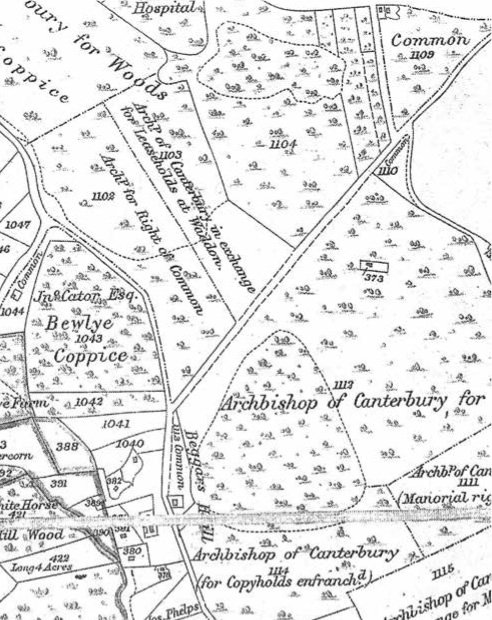
Penge Common was enclosed in 1827. The Croydon and Lambeth commons contributed 1350 acres, Dulwich and Penge perhaps fifty each, to what soon became the suburb of Norwood.
Among beneficiaries of the enclosure acts in the area was Lord Thurlow, owner of huge estates in Norwood. He was a politician & staunch defender of the slave trade & opponent of abolition.
Not sure if he had any interests in slave trading or plantations himself, but his brother Bishop Thomas Thurlow did. Bishop Thomas Thurlow (1787-1791) was directly associated with the slave trade and as such was one of the Bishops who sat on the Society for the Propagation of The Gospel in Foreign Parts, which owned a plantation on the Codrington Estate in Barbados. The Church continued to hold the estate till the 1833 Abolition of Slavery Act. The Society had been left plantations by Christopher Codrington on Barbados to enable a training college to be built financed by the profits from the enslaved labour.
Appropriately the good bishop Thurlow’s rectum is displayed in the Hunterian Museum in London.
In 1810 Enclosure roads (Elder Road, Gipsy Road, Gipsy Hill and Salters Hill) were driven through Norwood Common to open up the area for development. The House of Industry for the Infant Poor (Workhouse) set up in Elder Road. It was eventually extended to become Elderwood and Norwood House. Portions of Norwood Common were allocated to existing landowners in proportion to their existing local landholdings. Ie: the rich and powerful grew richer and more powerful still.
In 1818, 830 further acres of ‘waste land’ were enclosed at Norwood.
The Manors of both Lambeth and Croydon were owned by the Archbishopric of Canterbury, which profitted mightily by those two enclosures. Dr John Moore, then archbishop, was granted huge swathes of the enclosed land, and let nearly all his allotment in Croydon and Norwood (340 acres) to his brother-in-law, Lord Auckland. who sub-let most of the land to farmers. But suburban building on a large scale began in Norwood after the Ecclesiastical Commissioners took control of the archbishop’s estates.
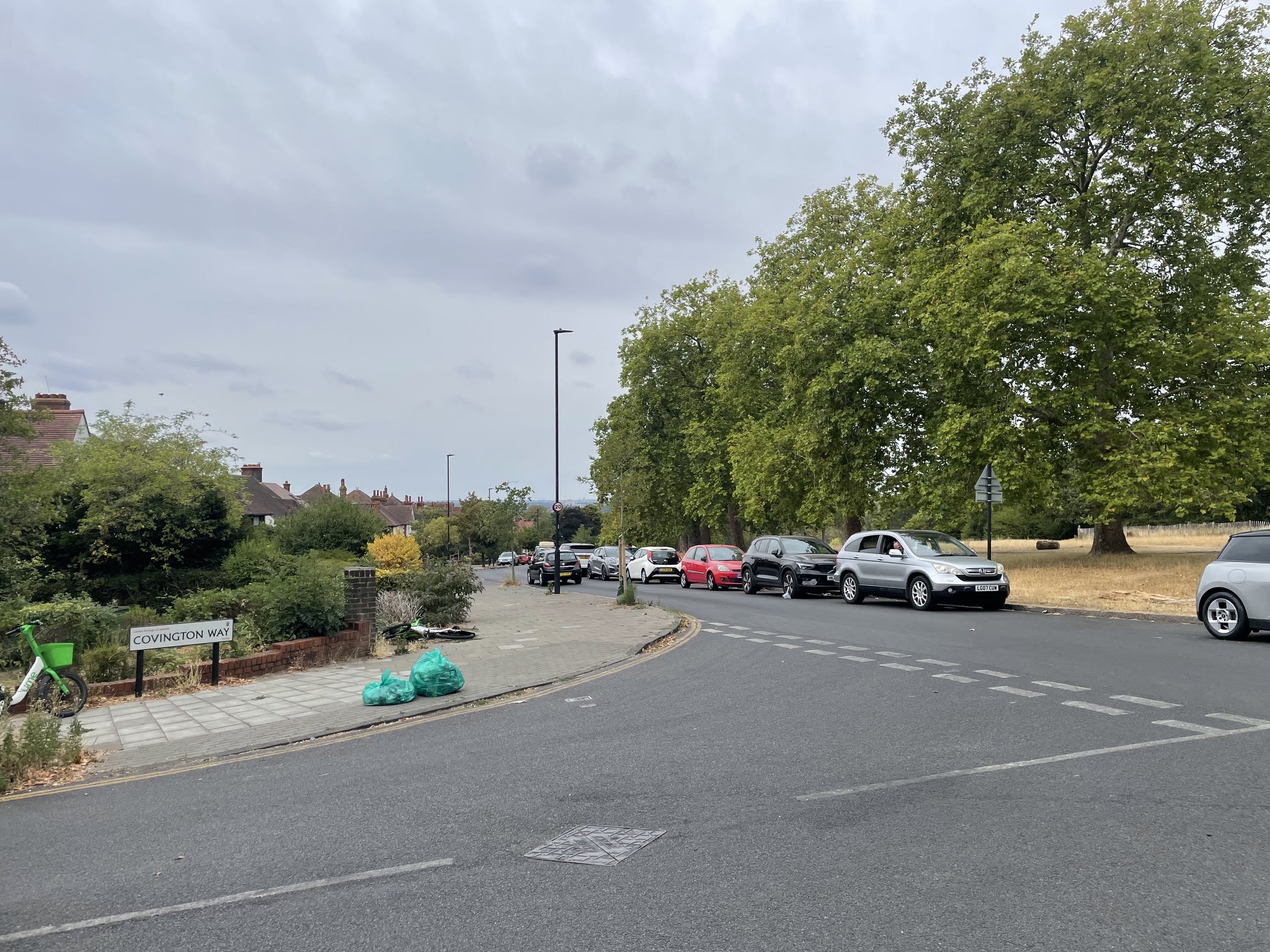
Norwood Grove and the neighbouring Rookery were once part of Great Streatham Common, also known as Lime Common (as it was recorded in the Domesday Book). This Common once stretched from Tulse Hill to Streatham. The Grove area may have been enclosed in 1635 for an estate around a ‘shooting box’. The estate and the house passed through various wealth hands before being bought by the Croydon Corporation, after a local committee formed in 1910 by a Mr. Stenton Covington, opposed development of The Rookery‘s private sale in 1912. In 1923-4, a plan to build housing there was defeated after the same committee raised enough funds to purchase the land linking Norwood Grove and The Rookery and an additional 32 acres from the Nettlefold family. The site was declared open as a park.
One lovely wood that seems to be a remnant of the old Great North Wood is the tiny Biggin Wood, just to the southeast of Norwood Grove, a wild wood, overrun with ivy and bramble. Worth a visit.
Gipsy(s in the) Hill(s)
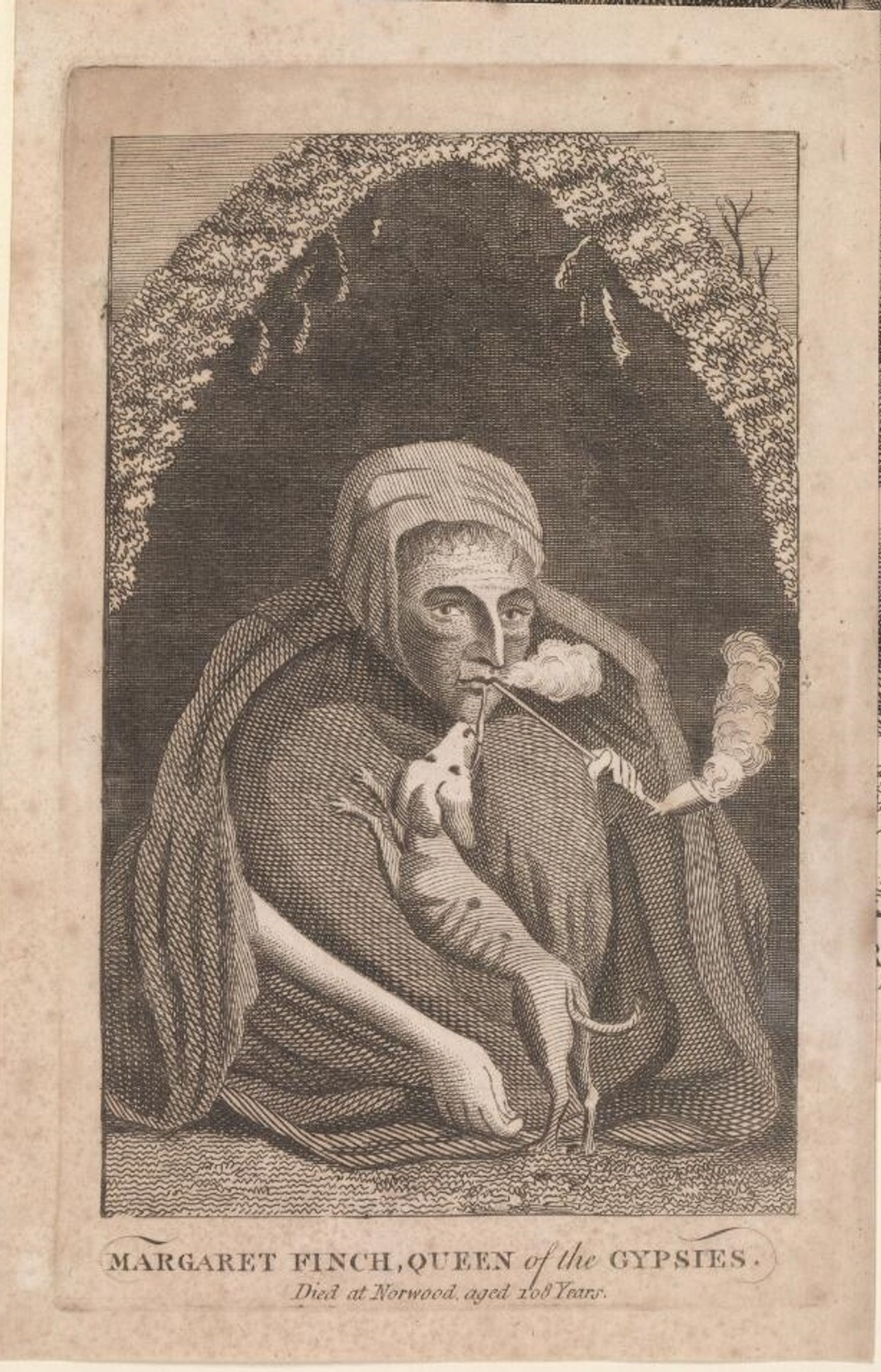
One consequence of the 1797 acts in the Norwood area was the attempt to expel the remainder of the Romany camps that gave Gipsy Hill its name. All the lands between Penge & Norwood hosted ‘gypsy’ encampments; Gypsy or romany travellers had long associations with open lands. Many commons were used as stopping places or spots were travellers would park up for a while. Many travelled on a circuit that involved visiting the same areas year after year but at different seasons, sometimes to take up seasonal work. As well as on the Great North Wood, Barnes, Putney, Wimbledon, Mitcham, Croydon and the so-called ‘Metropolitan Gypseries’ of Battersea and Wandsworth. were well known for such annual settlements. Further out into the many commons heaths and woods of Surrey their camps had long been even wider spread.
In the eighteenth century Norwood was well-known as ’a perpetual haunt of gipsies’; the most famous Roma resident being Margaret Finch (c1631-1740), so-called ‘Queen of the Gipsies’. While some travelling families like the Coopers and the Lees, who pitched their tents regularly around Anerley and Penge were in earlier times not considered so disreputable (because of their ‘relative wealth”), Norwood became increasingly linked with ‘gangs’ of Gypsies who were blamed for various criminal activities. Twenty years after Margaret’s death, newspapers were reporting a new sort of gipsies, apparently ‘stout and well-made men’, part of a gang connected to many robberies. A determined raid by twenty ‘policemen’ took place in 1797, throwing down tents and carrying off 30 to prison under the Vagrancy Act.
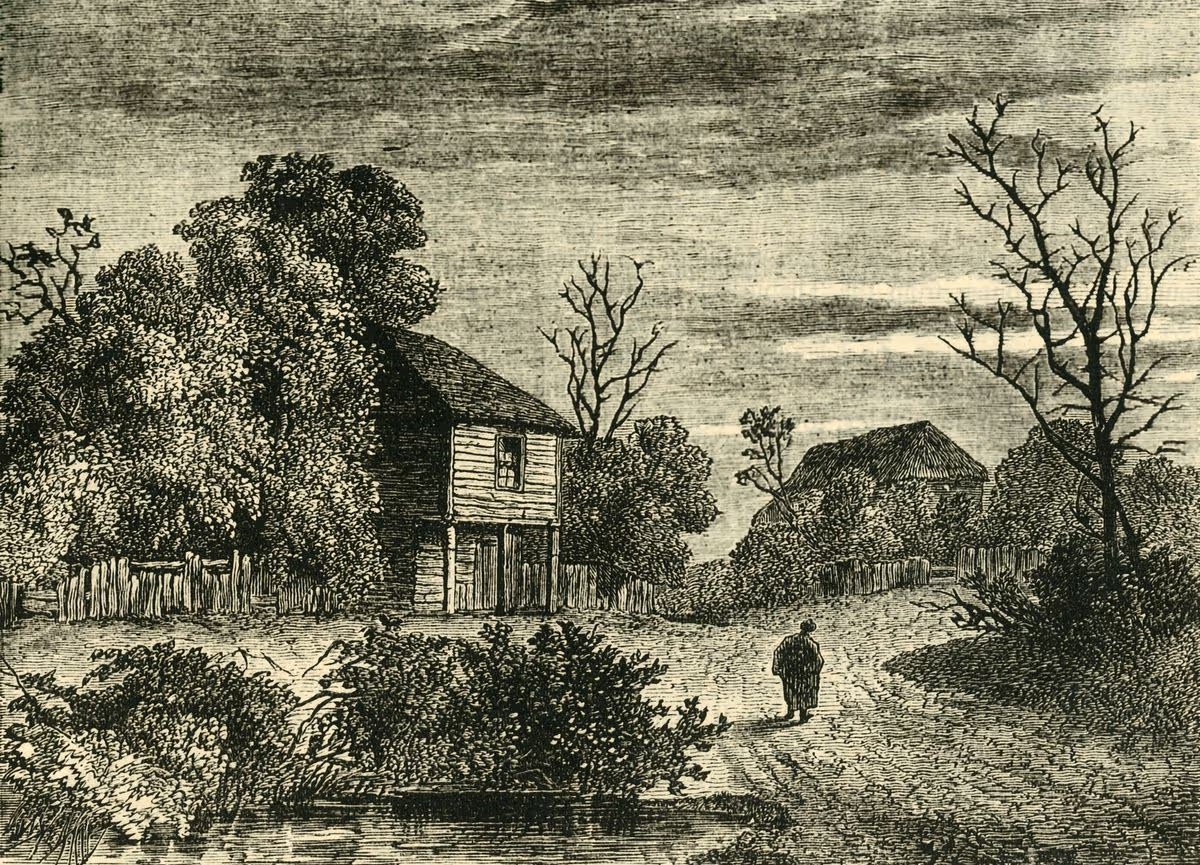
In 1803 six ‘members of the gipsy tribe’ were accused of collaborating with ‘abandoned libertines’ (note that these were local settled residents!) to bring about the ‘inevitable ruin’ of young girls, who were brought “flushed with wine’ to have their fortunes told and encouraged to develop their relationship with one of the said libertines.” Twenty years later, the Cooper family were accused of being involved in fortune-telling, begging and unspecified night-time activities, as part of a ‘horde of gipsies’ on Norwood Common.
This kind of accusations often lumped all travellers together – a hangover of the time when being an ‘Egyptian’ was a capital office, and associating with Roma could also get you imprisoned.
By these early years of the nineteenth century, Norwood was becoming less attractive as a refuge for Gypsy-travellers: enclosure and an expanding London had appropriated the open lands and woods where they had traditionally camped.
‘Norwood, once the harbour for the gipsy tribe, begins now to assume another appearance, a great part of it being already cultivated, and in all probability this vast tract of apparently useless waste land, will in a very few years be covered with verdant fields and groves, widespread with the seats of our opportunist merchants and traders of London.’
In the later 19th century open space continued to be a focal point of dispute and restriction.
Unfairy Tales
The Croydon Fair (aka the Walnut Fair) was traditionally held on the Fair Field (which lay between the Technical College, Park Lane and Fairfield Halls).
One of the three major fairs in Croydon, it was originally chartered in 1314 by Archbishop Reynolds around St Matthew’s Day, on September 21. The date was changed to October when the new Gregorian calendar was introduced in 1752. Originally held in the area of Surrey Street and Middle Row, and attracting pilgrims travelling to Canterbury, it was moved to Fair Field because of increasing congestion.
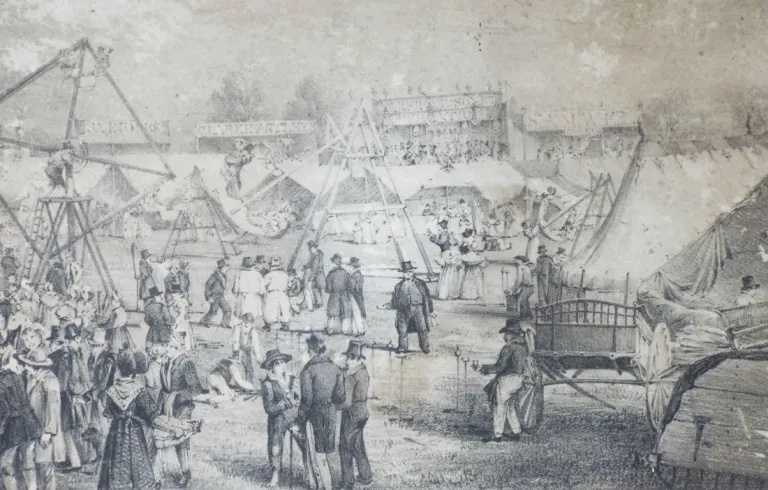
Thousand of stalls, theatrical performances, animal menageries, coconut shies, performing pigs, and much more… thousands of visitors – people travelled from London, Surrey and far and wide to attend.
“Try your hand at the Lucky Bag!”
“Walk up! Walk up! The show’s about to start.”
“Walnuts! Crack ‘em and try ‘em before you buy ‘em! Walnuts! Waaal-nuts!”
Rowdy and raucous behaviour, as well as thieving and pick-pocketing, began to taint the atmosphere of the fair. Dr Carpenter, a prominent local physician, was a leading voice in a campaign to close down the fair. Complaints in the local papers began to surface in 1859. The final fair was in 1868. Dr Carpenter’s status as a killjoy resulted in stones being thrown through his window and an effigy of himself being burned on Guy Fawkes Day. A centuries-old tradition had come to an end.
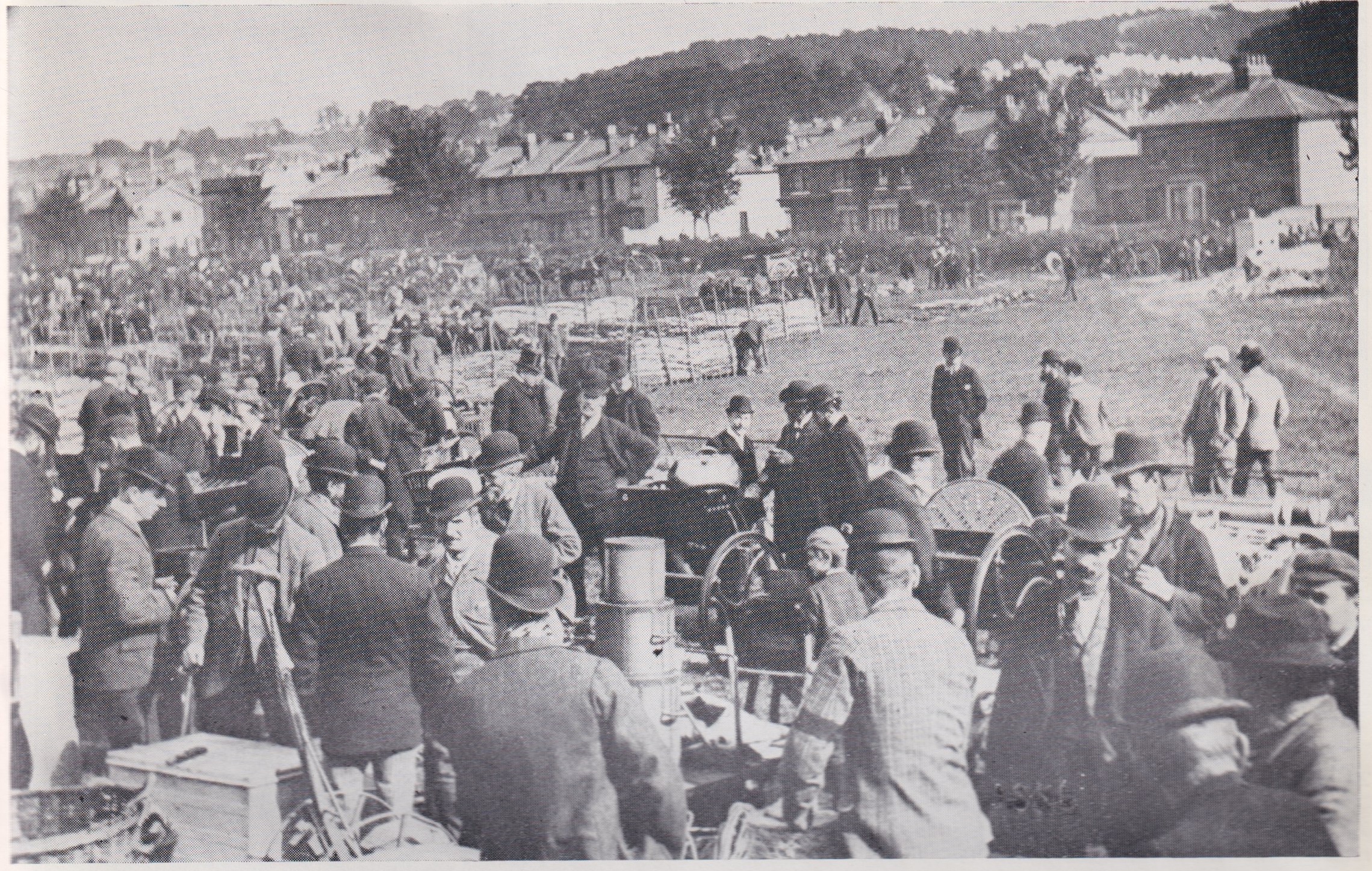
The Fair was abolished after rioting in 1898, but there had been protests since 1863 over plans by the Brighton Railway Co to buy the fair field land for a new line. Croydon Local Board of Health killed two birds with one stone, getting rid of a rowdy gathering and making some moolah.
Croham Hurst in Croydon was a woody open space, a popular recreation spot in the 19th century; however, this was not public property, but was privately owned by Whitgift’s Hospital.
Over 2200 acres of wastes and 500 acres of commons at Croydon had been enclosed by a Parliamentary Enclosure Act in 1797; one of the manors enclosed had been sold to the Hospital.
Croydon was “growing at a rate almost on a par with the growth of the mushroom cities of Western America… streets of houses pushing out in every direction”; profits were to be made by selling land.
In 1898, the governors of the Whitgift Foundation planned to sell the lower slopes of the Hurst for development for housing, while offering the hilltop to the council. This proposal would have resulted in half of the Hurst being built upon and the rest being enclosed behind a seven foot high fence.
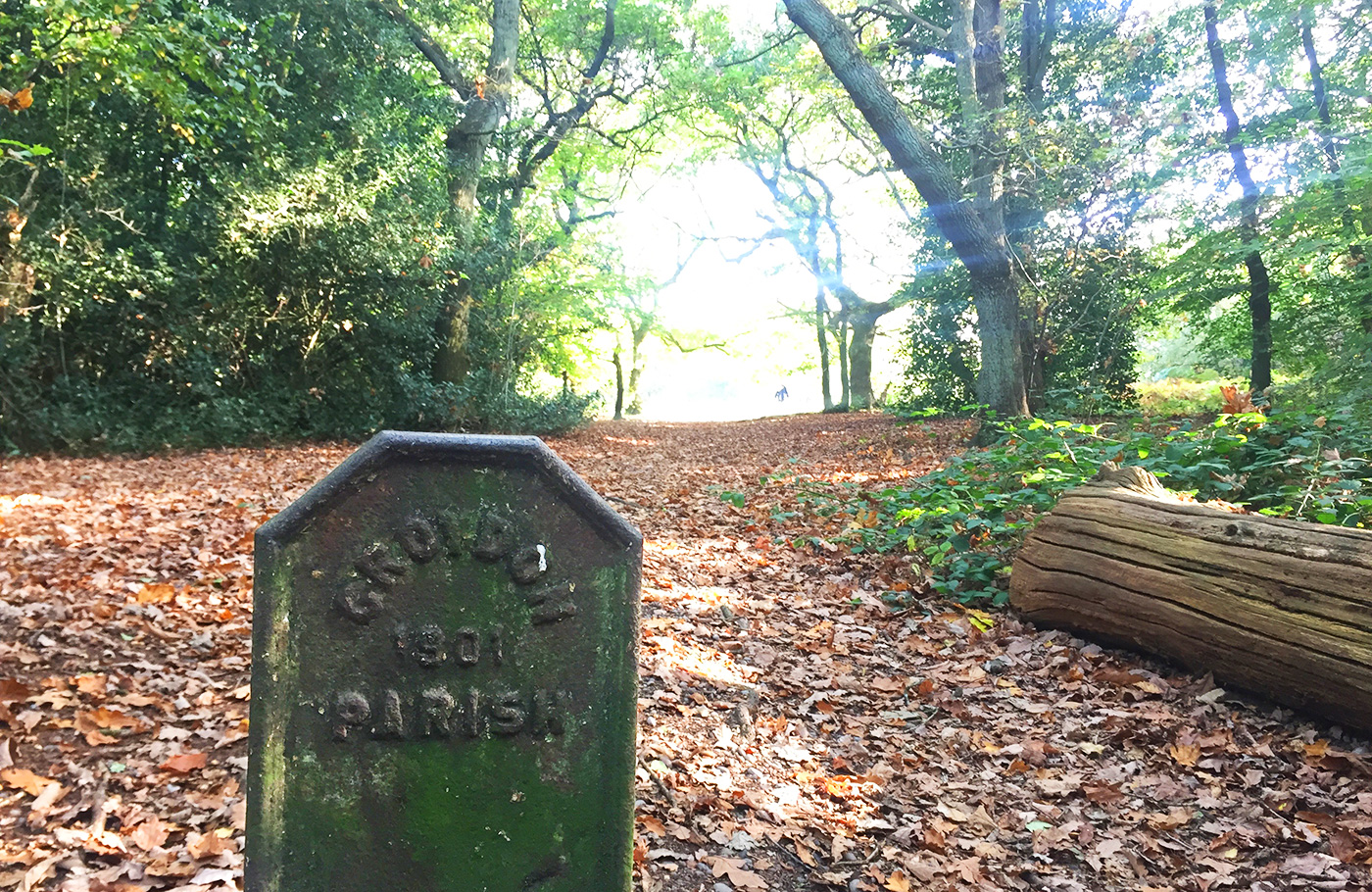
If “this apparently generous offer, [was] accepted … by the Council with almost tearful expressions of gratitude”, the people of Croydon were outraged, since “for half a century and more, Croydonians have rambled unmolested over the Hill, so that some of the well-beaten tracks are undoubtedly public footpaths.” They quickly formed a Croham Hurst Committee to oppose the proposals.
64A public meeting voted unanimously in favour of the purchase of the property as a whole. The campaign had strong backing from the papers who published a plan of the proposals which emphasised just how much of the area would be lost. During February 1899 a memorial signed by a thousand local people was presented to the Council. On March 20th, a mass meeting took place in Croydon’s largest hall. A letter appeared in one of the papers, stating: “We are not asking for a new pleasure ground, we only plead that what we have enjoyed for all our lifetime shall not now be taken from us.”
By 1901 agreement by was reached and the whole of the Hurst was acquired by Croydon Corporation on 8 February that year.
Malcolm Sharpe, an influential activist in the Committee to save the Hurst, was also important in helping to save other local woods in the area, including Littleheath Woods. “When the Selsdon estate was being built in 1920 the developers thought about acquiring this wooded land, but fortunately the residents association with help from local conservationist Malcolm Sharpe linked up with the council and acquired the land for £6,000.”
Crystal Pallets
Further north, and a century later, Bromley Council’s plans to sell off the top end of the Crystal Palace Park to develop a huge multiplex cinema complex were widely opposed by locals.
After the 1851 ‘Great Exhibition’, showcase for the British Empire, the entire glass ‘Crystal Palace’, which housed the Exhibition in Hyde Park, was dismantled and moved to a new site on parkland at Sydenham. The area subsequently took its name from the building – Crystal Palace. The destruction of the ‘Palace’ building by fire in 1936 left the top of the park landscaped, with terraces and amazing views, but gradually this area fell into decline as it was left largely ignored.
The Park was built on the northern edge of what had previously, for centuries, been known as Penge Common, which had been enclosed in the 1820s after a protracted struggle over who owned it.
The Park was nearly built on several times. When the Crystal Palace Company went bankrupt in 1911, the whole park was due to be sold at public auction by Knight, Frank and Rutley. A widespread campaign of protest calling for Palace and park to be saved followed,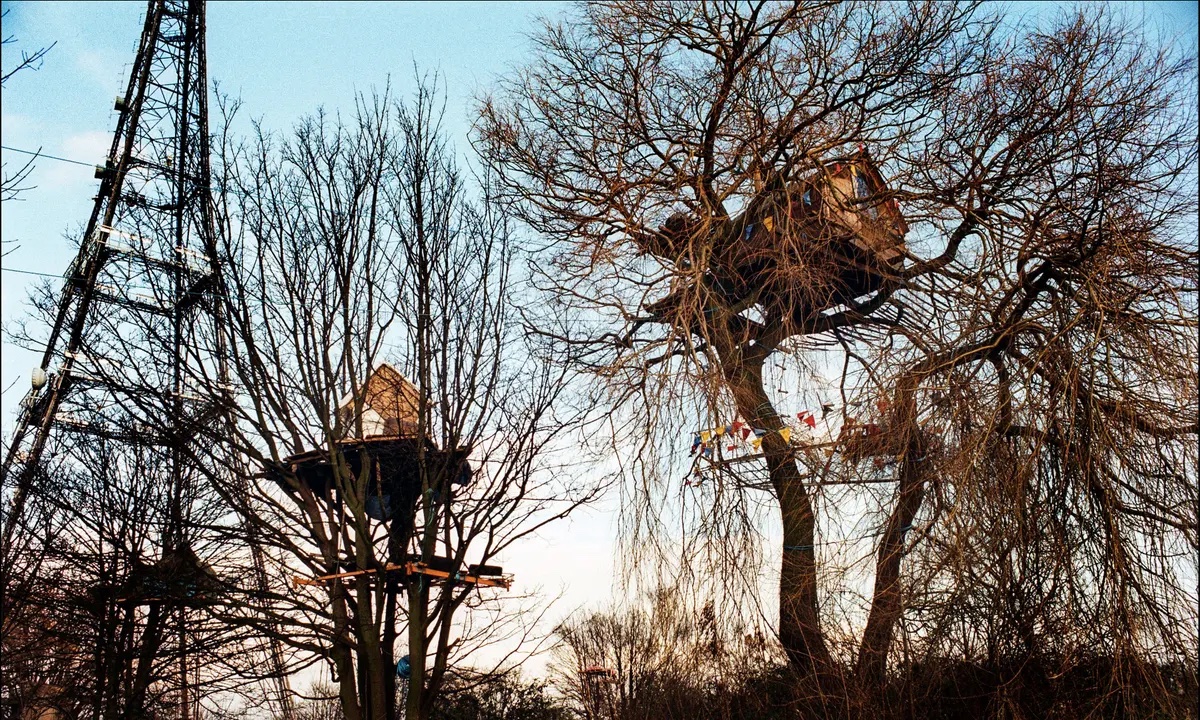 during which a number of wealthy individuals and local authorities contributed money. In the end some £210,000 was raised to buy the whole park.
The park is an eclectic place: ornamental gardens, a football stadium, and geese covered lakes mix with the rusty ‘laptop’ stage where seminal 1970s outdoor gigs have recently been revived, and the 30ft hollow 19th Century (probably hopelessly inaccurate) metal dinosaurs at the south end, described as “a bizarre backdrop for local kids to take drugs by moonlight”. The terraces at the top of the Park where the Palace itself had stood, were generally left to themselves, with grand stone staircases that led nowhere;
73soil contaminated after the burning of the Palace was compounded by flytipping including asbestos! Over piles of rubble, the terraces gradually re- wilded in parts.
In 1989 the site was threatened by the local council of Bromley within whose borders the park lay, and who had taken over managing the park when the Greater London Council was abolished. Bromley proposed the development of the site for hotel and leisure purposes; however opposition culminated in the passing by the House of Commons of the Bromley London Borough Council (Crystal Palace) Act 1990, which limited development on the site.
In the late 1990s, Bromley Council announced new plans – to sell off the top end of South London’s Crystal Palace Park, to allow the development of a huge 18-screen multiplex cinema complex, with restaurants, bars and rooftop parking for a thousand cars, housed in a building, which was described by a local newspaper as having the appearance of an aircraft terminal, surrounded by a concrete tunnel entrance and roads in the park.
A local Crystal Palace Campaign was formed by local residents and businesses, angered by the “monstrous edifice” which Bromley wished to impose on the landscape, and objecting to the loss of 12 acres of Metropolitan Open Land, the projected destruction of 200 trees, & threatened pressures on roads and parking, noise and disruption.
There was virtually no local support for the development. The campaign held many meetings, demos, lobbies, and led to strong legal challenges to the plans, including a High Court case, in London where the Crystal Palace Campaign sought judicial review of Bromley’s outline planning permission. The legal objection turned on the question of style. The Crystal Palace Act of 1990 stated that any building on the Park site should be “in the style and spirit of the former Crystal Palace”.
In parallel with this more orthodox campaign, an eco-protest camp was set up in the threatened part of the park, in April 1998, by activists mainly drawn from the anti-roads movement, which had been growing throughout the 1990s and had been involved in high profile campaigns against road building at Twyford Down, against the M11 in East London, and the Newbury Bypass. On April Fools Day 1998 a crew of eighteen people (and two dogs) quietly reclaimed the site of the Palace. Tents, nets and shelters built from pallets quickly sprang up, and the site was thus nicknamed ‘Crystal Pallets’. Treehouses and barricades were erected to make eviction more difficult, veg was grown, parties held, tunnels dug under the camp. The camp gained loads of support from locals, re-vitalising a flagging campaign, and was to last 11 months. Actions were carried out against the partnerships who wanted to develop the top ridge, multinationals and property developers.
Bromley Council obtained a possession order; after some eviction scares it became clear the camp would be evicted on 3rd March 1999.
People and defences were prepared for the battle to commence. In the morning of the 3rd, 350 police arrived, the initial wave hidden crouched down behind the seats in hired double decker buses. They swarmed onto the site. Within ten minutes or so a lot of ground support was gone, people failing to get into lock-on positions in the chaos.
The massive operation brought all traffic to a grinding halt. Pensioners and school kids were unwittingly caught up in the military manoeuvres.
Over the next two days the treehouses and the protestors’ ‘Faulty Tower’ were evicted one by one. Most of the trees on the site were cut down before nightfall on day two. Fencing contractors ordered by Bromley closed off a right of way, flouting the instructions of two High Court judges.
Three protestors remained defiant, barricaded in the tunnels underground. One emerged after eight days, the other two stuck it out for three more weeks, making Crystal Palace the longest eviction in British history. However, the fight wasn’t over, for a few faced prison on unrelated charges, one of whom after spending 19 days underground was banged up for a month using a 25 year old anti-union law.
But the time and cost of evicting the camp, fighting legal challenges etc, held development off for several years, to the point where in 2001, Bromley Council announced the collapse of the plan.
The future of the top of the Park remained a subject of local debate. Various plans have come and gone since 2001, which have mostly failed to materialise. More recently, the running of the park has been taken from Bromley by the Crystal Palace Park Trust, an ‘independent community trust’. As the history of the community’s relations has shown, ‘public’ ownership of space, as with other ‘assets’ has a long and chequered history. ‘Public’ bodies nominally under ‘our’ control do not always manage space, housing, health, (etc) in anything like the interests of ‘the public’. And what is the public? A catch-all term that obscures the vast variety of competing and struggling interests that we are enmeshed in.
We will have to see how ‘community’ control of the Park pans out. ‘Community’, like ‘public’, is a term that can cover a multitude of sins. ‘Community’ management could reflect a narrow caste imposing their vision of a space, or could genuinely encompass alternative needs.
A longer account of the Crystal Palace struggle
There’s a PDF of ‘Down With The Fences’, our roundup of South London battles for open space, here.
The Wood the Built London
Industry
The Great North Wood wasn’t just a green space… as well as providing resources for people to live from, it was also a mass of industry. The trees and their wood were harvested for untold manufacturing uses, from shipbuilding raw materials for the construction of the city’s buildings themselves and the furniture inside them. (So much so that a recent writer calls it “the Wood that Built London”.
Charcoal burning was another massive undertaking in the Wood. The high-temperature heat produced by burning charcoal was essential for London and metalworking, forges, bakeries, glassmaking, and pottery industries. But charcoal had to be produced, by coppicing and burning wood in a controlled environment.
The colliers, or charcoal burners, of Croydon, gave their names to Colliers Wood, and to Colliers Water Lane at Thornton Heath, so named because the local ‘collyers’ drew their water here to damp down their kilns.
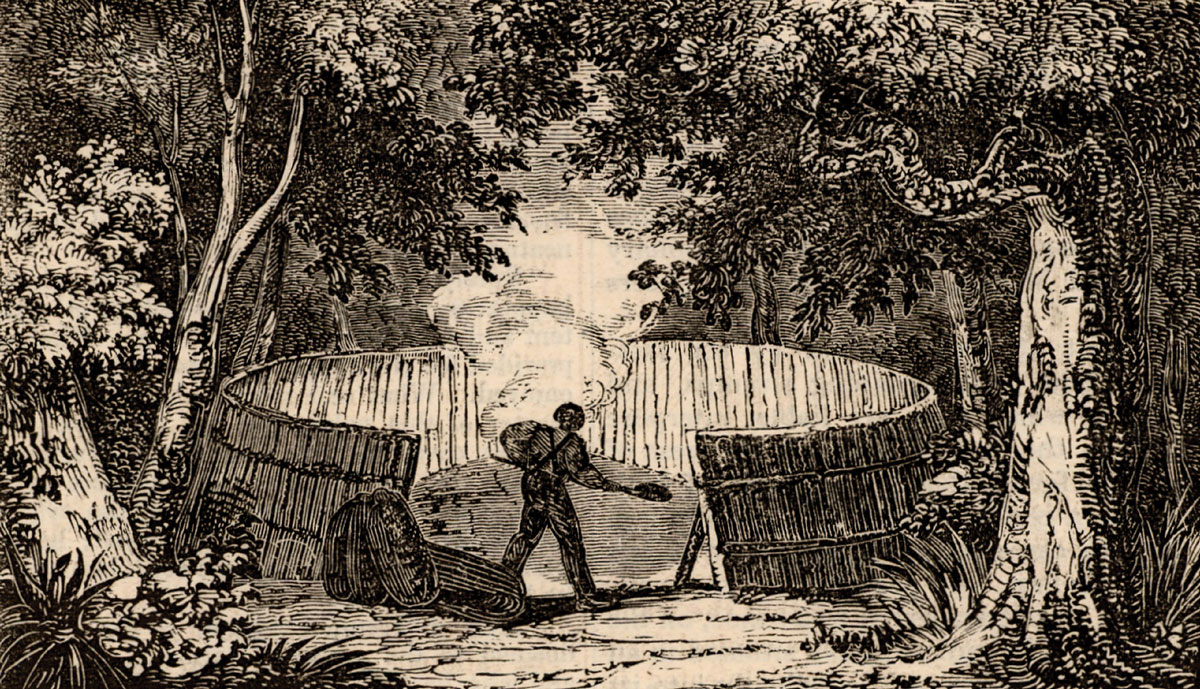
Francis Grimes – a charcoalburner of Croydon- is believed to have lived at Colliers Water Farm, which once stood on the corner of Brigstock Road and Parchmore Road, having his collieries at Beulah Hills. He became a byword (his name is supposed to have given birth to the word ‘Grimy’) because he dared challenge the church authorities: allegedly he hada long-standing feud with Archbishop Grindal pf Canterbury, local landowner, over the smoke created by the charcoal burning. After many years of argument the London Guilds took up Grimes’ case and the Archbishop was defeated in 1568. But the Archbishop is supposed to have taken revenge by refusing Grimes burial in consecrated ground. Instead he is thought to have been buried in the grounds of Colliers Water Farm.
Further revenge may have come in the snobbish satires of the dramatists, who made Grimes and his fellow woodcolliers figures of fun and jest. Grimme, the collier of Croydon, figures in Robert Edwards’ Damon and Pythias, first acted in 1566, and a later comedy is entitled Grim the Collier of Croydon: or the Devil and his Dame (1662).
You can build their houses but the middle classes will still mock you.
The ridge of hills also produced gravel, bricks; bark was used for leather tanning, leaves, twigs and acorns were ground into ink.
Further south, Croydon expanded in the Middle Ages as a market town and a centre for leather tanning and brewing, and into the 20th century, was an important industrial area, known for car manufacture, metalworking and saw the founding of Croydon Airport, the capital’s early attempt at getting airborne.
“Middle Class Democratic”
Croydon Radicals 19th-20th Centuries
Radicalism in the area was already nascent in 1831: when local landowner the Archbishop of Canterbury at St. James’ Church Croydon, after his worship and voted against the Reform Bill in the House of Lords, a mob greeted him with holding and hooting, mobbed him at the Church and pursued him “with reviling and menaces’ when he left.
9From the recollection of Thomas Frost, Chartist activist and writer, who grew up in a cottage at Biggin Hill, Upper Norwood.0
In the later 19th century, a growing population began to create practical and political organisations to focus attempts to change the lives of the working class from below.
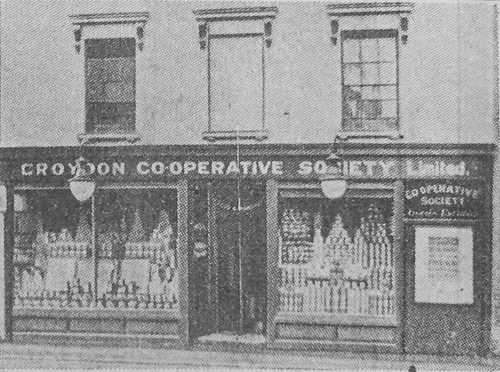
Croydon Co-operative Society formed around 1869, lapsed in 1874, but revived 1887.
Croydon Working Men’s Club was founded, initially with patronage from local gentlemen. Membership rose to 500. It became Croydon Liberal and Radical Working Men’s Club. Same as?: In December 1884, William Morris was scheduled to deliver `Misery and the Way Out’ at the Working Men’s Club, Crown Hill, Croydon. Croydon Radical Society, formed around 1884, saw much debate between radicals and socialists locally over religion and socialism.
In 1884: A branch of early socialist alliance the Social Democratic Federation (SDF) was founded in Croydon, after a series of meetings at the Wimbledon Liberal and Radical Club. Belfort Bax was a leading member. Rev E.M. Geldart was secretary. (Geldart was officiating as pastor at Croydon’s Free Christian Church, and his adoption of socialism lost him the confidence of some of his congregation; he was forced to resign as minister in March 1885, and later committed died after disappearing from a ferry across to France, presumed suicide).
The SDF met at the Crown Hill WMC. On 27 March 1885 William Morris came again to speak, to the SDF group, this time about ‘Commercial War’.
This SDF branch later split, when the Socialist League hived off; there SL branch met at the Royal Coffee House, Croydon, in November 1886, and in Parker Rd (off South End, south of the High St) c. 1887; this branch collapsed in 1888.
The SDF branch also lapsed around 1890, or became Croydon Socialist Society. It may have revived in the late 1890s.
In Norwood New Town, in March 1886 & January 1887, at a time of high unemployment, there were marches here by unemployed workers demanding relief (what we would call benefits) from the authorities.
Meanwhile Croydon Trades & Labour Council formed during or after the South Metropolitan Gas workers strike in 1889. Membership grew to 500. Affiliated trade unions included the Boot & Shoe Operatives, Clickers & Rough Stuff Cutters Society, Tailors, Joiners, House Decorators, plasterers, brickies, stonemasons, gas workers, General labourers.
Through 1890-94, the area saw local strikes in the building trades & boot/shoe industries… Mass demonstrations took place in support. The Trades Council and builders unions campaigned to get Croydon included in the area covered by the London Building Trades regulations, and to get local labour and contractors employed in redevelopment of the Croydon town centre, to which Croydon Borough council eventually agreed.
Croydon Brotherhood Church
The Brotherhood Church was launched by preacher John Bruce Wallace in a derelict church in Hackney in 1891. Strongly influenced by Tolstoy’s pacifist denunciations of war and economic slavery, based on the principles expressed in Jesus’ Sermon on the Mount. Various groups followed and developed Wallace’s ideas, often organising around voluntary socialist cooperative systems.
John Colman Kenworthy who had journeyed to Russia to meet Tolstoy at Yasnaya Polyana. founded a Croydon Brotherhood Church in 1894. They strongly believed in non-violence and welcomed all people, no matter what their faith. One group which later moved to Stapleton in Yorkshire where they still have a base.
Many came from a Quaker backgrounds, avoided the use of money wherever possible, some refused to register their marriages and births and educated their own children. Being pacifist, they were conscientious objectors and would not have anything to do with the First World War and the war effort. They published many leaflets against it. Some members were prosecuted and imprisoned for their beliefs.
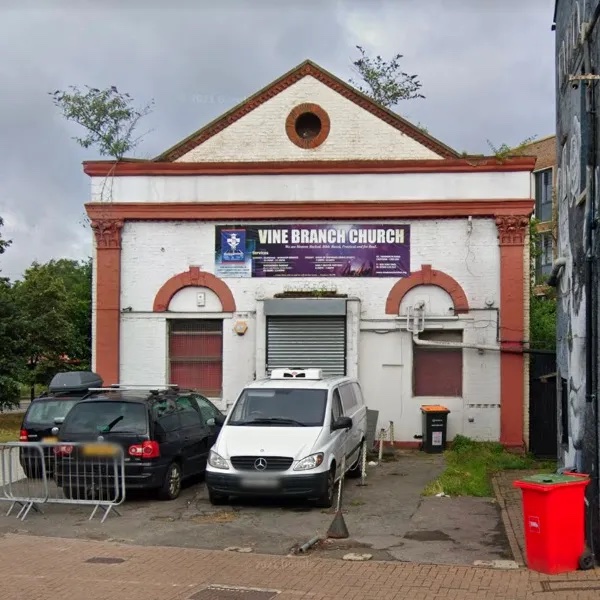
Croydon Brotherhood Church occupied the former Salvation Army Christian Mission Gospel Hall, on Tamworth Road in West Croydon, which the Army had built then moved out of in 1887. (Now Vine Branch Church)
The Croydon Brotherhood meetings – held one Sunday evenings – were attended by, among others, Tolstoy’s secretary, Vladimir Chertkov whilst in exile and Tolstoy’s biographer, Aylmer Maude, who also landed here – both initially lived at Duppas Hill, Croydon _ at Broomfield, atop Duppas Hill, on S.Side. Not sure whether that survives.) Frank Henderson, anarchist proprietor of Charing Cross Road bookshop ‘Hendersons’ (known as ‘The Bomb Shop’!).
Peter Kropotkin, the Russian social-revolutionary activist and philosopher who advocated anarcho-communism, gave a lecture here. Co-author of the Communist Manifesto, Friedrich Engels, who was then living in London, is also said to have attended meetings.
A splinter group of this church established a land colony at Cock Clarks near Purleigh in Essex. Nelly Shaw’s book “Whiteways – a Colony on the Cotswolds” describes the scene in this building in the 1890s.
The Brotherhood opened a co-operative store opened nearby on Pitlake Bridge selling food, books and tobacco.
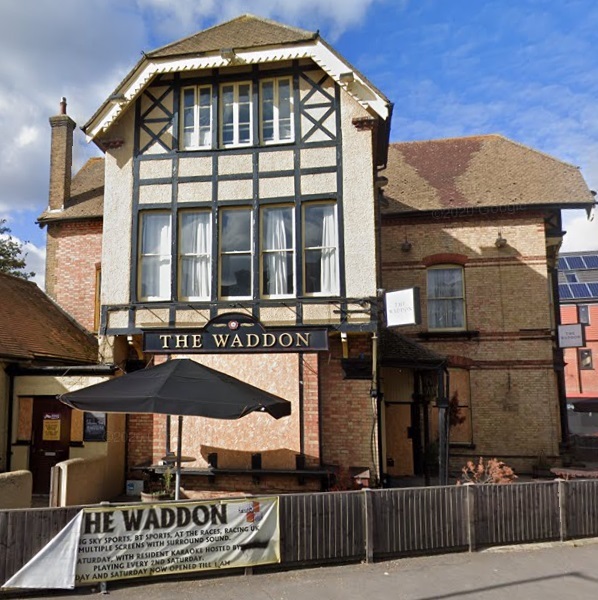
A Tolstoyan Brotherhood hotel was also established, run along co-operative and vegetarian lines on Stafford rd at nearby Waddon in the late 1896 and it still stands today as the Waddon Hotel in an odd sort of Swiss/German Villa style. Named ‘Brotherhood House’, officially described as “The Centre for the Brotherhood Church & the Fellowship of New Life.” It was run “on very free lines for young men interested in the movement.” The store moved here, and the group expanded into food distribution, tailoring, dressmaking, boot-making and laundry. A local socialist printing press published the group’s newspaper, ’The New Order’.
In 1897, an annexe to the Waddon Hotel was used to house the Doukhobour refugees, a non-Orthodox Russian Christian minority from Georgia and the Transcaucasian region. many vegetarian, teetotal and pacifist and worked as a commune for the greater good rejecting personal materialism. In the late 19th century, the Doukhobors faced persecution at home from their opposition to regulations, taxes and conscription. In 1897, the Russian government agreed to let them leave the country. Some came to western European states including Britain. The Quakers and Tolstoyan movement helped cover most of the costs of passage, as did Peter Kropotkin’s supporters.
At the same time, a section of the Croydon Brotherhood commune splintered off to become a Croydon Anarchist Group, following Peter Kropotkin’s lead on anarcho-communism.
In 1898, Brotherhood House was taken over by Edgar Bottle and re-opened as a socialist home, renamed ‘Morris House’, after writer and artist William Morris. According to an advertisement in ‘Seed Time’ magazine: “Morris House has been opened as a home for advanced thinkers and socialists of all kinds and both sexes. The house is opposite the railway station and is within easy reach of the country. The rooms are large and the household arrangements are described as ‘middle-class, but democratic’ – members of the family taking a share of the domestic work. Board and residence costs from 14s to 18s a week.“
The Croydon Brotherhood and various splinters seem to have all dissolved by 1900.
When the Waddon housing estate was built in the 1930s, the hotel, renamed ‘The Waddon’, became a traditional local pub, and it remained that way until the lockdown of 2020. It closed during Covid and hasn’t re-opened. The building still stands, but it is currently boarded up and its future is uncertain, being under the constant threat of redevelopment.
A good article: Your London Walks – Croydon’s Communist Roots
World War & After
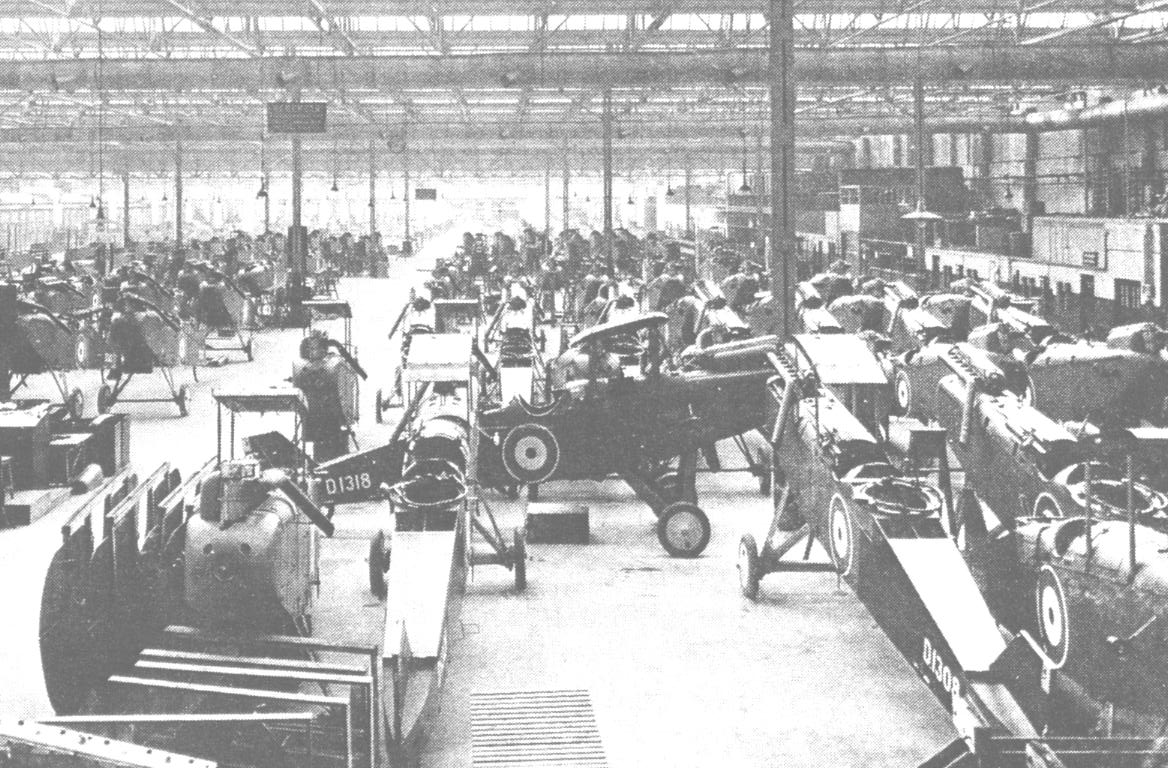
World War 1 led to a diverting of the economy into war production, especially in munitions and arms. Gradually as the war went on workers in these industries and others fought for better wages and conditions. Waddon National Aircraft Factory, in 1918, together with other aircraft factories, saw workers organise had a rank & file workers committee along the lines of the Glasgow and Sheffield shop stewards movements.
The end of the war led to sharp re-structuring and unemployment. At Waddon, 1919, a nationalised munitions factory was threatened with closure in the post-WWI slump. Despite a campaign for ‘peace work’ to replace war production, linked to the Woolwich Arsenal campaign, all the workers were laid off.
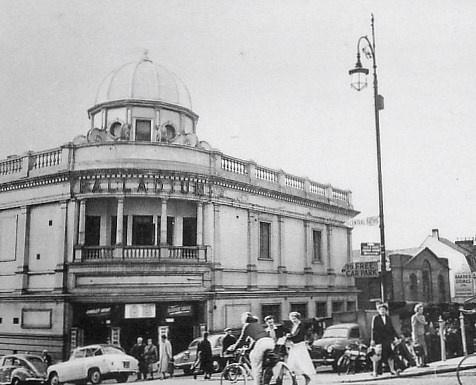
The Orpheum Theatre, Croydon: Around the end of WW1, the theatre had established itself as a centre used by pacifists and local trades union militants. The police spied on the theatre’s management and users – and arrested industrial militants, like David Ramsay, after meetings held at the Orpheum.
The Soldiers’, Sailors’ and Airmen’s Union (SSAU) held a rally here on 12 March 1919.
A Croydon Communist Group was active by June 1920. It merged into Sylvia Pankhurst’s Communist Party (BSTI).
Ruskin House
Another local radical space was Ruskin House, HQ of Croydon’s Labour and Trade Union movement. Still going!
Originally founded as a temperance centre for the labour movement, and named for art and social critic John Ruskin, the first Ruskin House was very busy. Meetings took place every night wherever space was available. Many trade union branches, friendly societies and the Labour Party held their meetings here.
By the end of the First World War, the local labour movement had far outgrown its main premises, and in 1919, the Ruskin House Committee bought ‘Netherton’, a private house on Wellesley Road. In the 1920s, the Labour Party employed full-time staff in the building. In the 1930s and 1940s, whist drives, socials and dances, political rallies and meetings, and a Ruskin Repertory Theatre were based in the building. The Young Communist League held its meetings there.
In the 1960s, Croydon’s centre underwent massive reconstruction, and the second Ruskin House was demolished. Ruskin House moved in 1966, to a large Georgian townhouse in Coombe Road, formerly home of an Italian vice-consul and a private prep school. It was officially opened in 1967 by then Labour Prime Minister, Harold Wilson. Ruskin House has come a long way from its temperance birth: the current building has its own bar. Today, Ruskin House continues to serve as the headquarters of the Communist Party of Britain, Croydon Labour Party, and the local trade union movements and Co-operative movements.
Other Local radicals and publishers
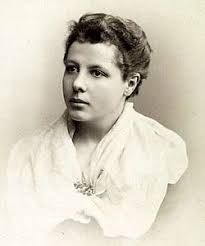
Annie Besant, socialist, freethinker, orator, prominent supporter of the influential 1888 Matchwomens’ Strike, lived in Colby Road, West Norwood, 1873-4 , & founded ‘The Link’ socialist paper.
Louis White ran “Croydon’s new progressive bookshop.” At 122 Wellesley Road, Croydon, seeing “English, foreign and all left-wing books”. (Ad. in Left Review May 1937)
People’s Publications, based at 11 Bloom Grove, SE27 was an independent radical socialist publishers 1980s-90s.
Absolute Solidarity
Croydon During the General Strike
Ruskin House served as the local organising centre during the most high profile workers’ struggle of the 1920s: the 9 day General Strike by over 2 million workers in support of miners locked out by the mineowners who were trying to impose wage cuts and worse working conditions.
Local ‘Councils of Action’ formed the base of the strike and the Trade Union Council of the Croydon Labour Party constituted itself a Council of Action for the period of the strike, with power to co-operate with other bodies. A Central Strike Committee was set up consisting of of representatives of the Council of Action (CoA) and all T.U. branches on strike.
According to the British Worker, in Croydon, “Ruskin House, the local Labour Party’s headquarters, is the scene of great activity. Trade unions are regularly reporting there, and everybody is in fine fettle.” A buffet for pickets and strikers was set u there, and many social events and meetings took place during there dispute, including “concerts of the highest quality… a cricket team… acrobatic performances…” “under direction of Mr. Rutland Boughton and Socials’ Committee.”
The Trades Council reported “absolute solidarity” for the Strike locally, nd sent a report tp the British Worker saying “everybody is in splendid fettle.” “Practically every T.U. branch affected is affiliated). No friction between right and left wings. Running of Strike Bulletin, The CoA produced a local Strike Bulletin, printed by voluntary T.U. labour, under direction of the local Printing Trades Strike Committee, published from May 8th, for 4 days, printing 2000 – 3000 copies. As well as selling the TUC strike daily, the British Worker, which they fetched each day from London. At one point, relays of readers mounted a platform (at Ruskin House?) and read a the whole issue of the British Worker through to a cheering and enthusiastic crowd.
The CoA also organised regular Propaganda Meetings, indoors and outdoors. Info on picketing and movement of strikers was co-ordinated through dispatch riders: volunteers cyclists, motor cyclists and car drivers.
A “monster demonstration – the largest Croydon has ever seen” took place on Sunday May 9th, from Ruskin House to Duppas Hill.
While the Council of Action formed a ‘Workers’ Defence Corps’ this seems to have not been so much to resist attacks on strikers as to ‘keep order’ – the WDC “assisted the Police at a great demonstration at Croydon on Sunday evening. There were no untoward incidents.”
(Daily Mirror 11/5/1926)
However, the Strike was not without violent resistance here as elsewhere.
“A number of court cases arising out of strike disturbances were heard at Croydon Magistrates Court on May 11th. “Several were for using assaulting behaviour towards special constables, it being reported that many people had got into the habit of following them around and letting at them.
One man was fined 20 for delaying transport, a crowd having assembled at
West Croydon Bridge, attempting to stop traffic along the main road, accused had refused to leave.
A labourer was fined for attempting to stop a van and another man was fined for assaulting a special constable.
A crowd had assembled on another bridge, and this man was started to have assaulted a Constable where an effort was made to disperse the crowd.” (News Daily, 11/5/1926)
Croydon magistrates also sentenced Thomas William Adams (aged 44), of Selhurst New Road, South Norwood, to two months hard Labour for intimidating a voluntary worker on the Southern Railway.
“The solicitor for the railway said the case was a grave one. Mr H V.
[Deacon?), living at Woodside [Green?] was working as a platelayer on the Southern Railway when the accused came up to him and asked if he belonged to the union. Mr. Deacon replied “No,” and the man said
“Do you know you are doing many little children out of their dinner by doing this work?”
The accused then seized a hammer , which the voluntary worker was using and brandishing it, threatened to hit him on the head with it if he didn’t “clear off home.” As Mr. Deacon was going for assistance the man discharged a stone at him from a catapult , but did not hit him.
Defendant’s case was that he thought the Voluntary worker and another man were acting suspiciously on the railway, and he went and told them to clear off, but used no violence. He thought they were too young to be platelayers.
He agreed he had no orders at all all from the N.U.R, but acted his own initiative, thinking he was doing right. To the magistrate he said he rather thought he was protecting the railway.
In passing the sentence, the Bench said Intimidation must be put down, and the public must be protected, especially voluntary workers”.
(News Daily, 11/5/1926)
Some of this was sourced from: “The General Strike 1926: Trades Councils in Action”, Emile Burns
During the years of mass unemployment that followed the General Strike and the 1929 economic crash, there was mass unemployed agitation throughout the country, and Croydon had a NUWM branch. In September/October 1932 there were unemployed disturbances in Croydon – fighting between cops and unemployed after a march against the Means test.
Read much more on the General Strike in London
Development and Redevelopment
How areas develop – especially in relation to the nearby city of London – is interesting, and John Coulter has made an excellent study of the growth of Norwood, and the factors that make suburbs successful.
The Enclosure Acts of 1797 onwards may have created the opportunity for development, but “The fact of its being in four parishes was one unusual feature of Norwood, and the divided political control that this entailed has had a great influence on the history of the area, more obviously during its twentieth century decline than when it was growing. The four parishes of Croydon, Lambeth, Camberwell (for Dulwich), and Battersea (for Penge) are now represented by the boroughs of Croydon, Lambeth, Southwark, and Bromley.” Consistent development was never gonna happen. There was no one village to expand, so development was often piecemeal.
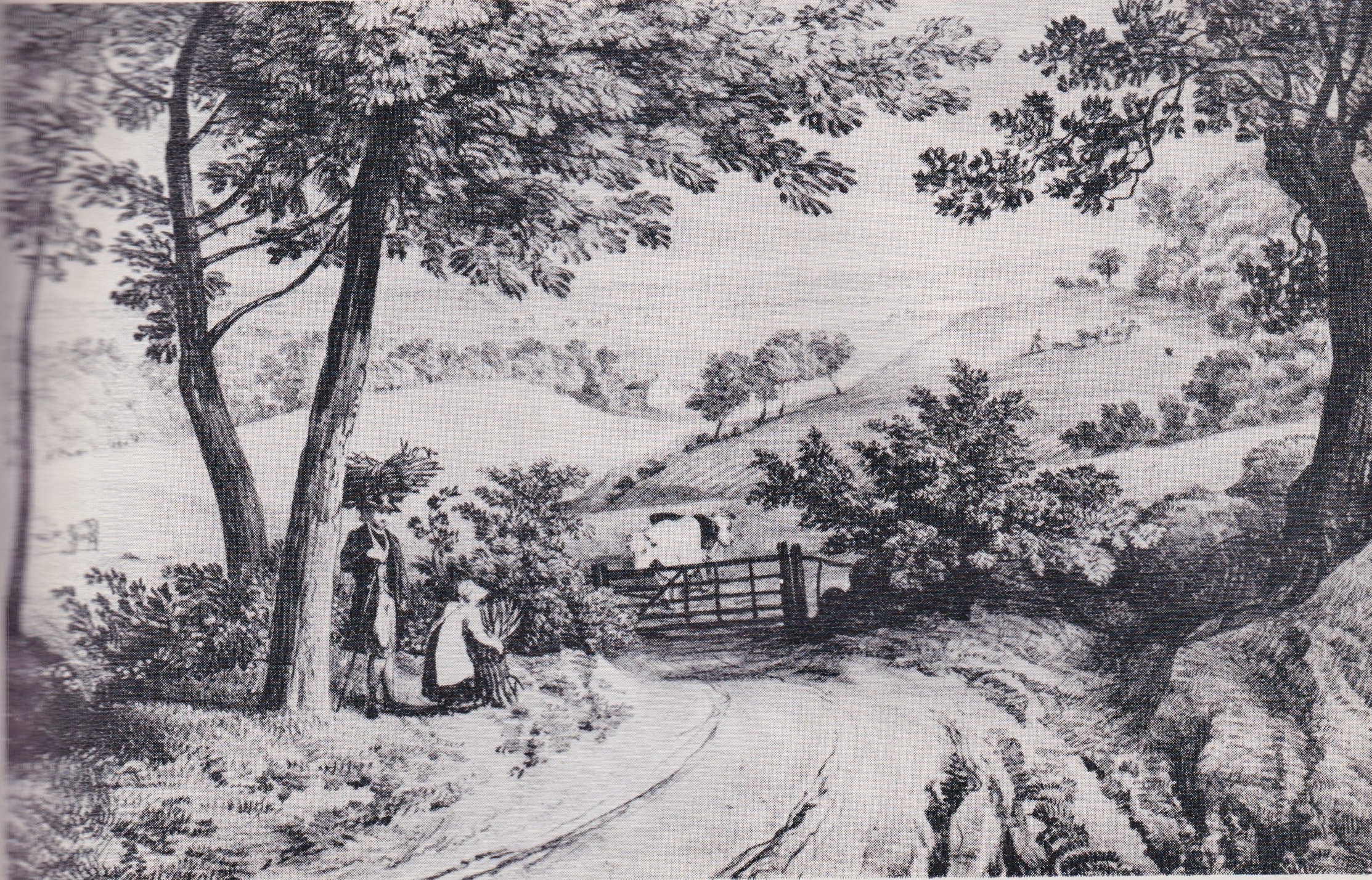
When common land was enclosed, those with common rights were generally allotted a parcel of land to compensate them for the rights they were losing. In suburban enclosures, larger allotments were often placed on the more valuable high ground, the small allotments in the plains and valleys. In the Lambeth part of Norwood, this meant that the poorer beneficiaries received land in the Chapel Road/ Gipsy Road area, in the Croydon bit of Norwood, mostly in Portland Road. Such patterns “determined where the poor would live in West and South Norwood… Allotments on the common imposed a financial burden for fencing, clearing, levelling, and draining before they could be put to any use. As the owners of the small plots were often quite poor they were liable to avoid expense by an immediate sale. Small plots were not viable for agricultural use, so builders were usually the only purchasers available.
The Triangle between Westow Hill, Church Road, and Westow Street became first Upper Norwood working class area and shopping centre arose from the fact that trustees of the remaining Croydon common land sold the Triangle in small lots in 1806: “If they had sold it in a single lot the history of Upper Norwood could have been rather different.” (Coulter)
If “it was mostly from the City that Norwood recruited its new settlers between 1800 and 1840… Many bankers, solicitors, and merchants figure among the early residents. The stock-jobbers villas that were William Cobbett’s pet aversion littered the Norwood hills”, the inhabitants of the villas that line the slopes still needed someone to do the work. “In a middle class suburb like nineteenth century Norwood the working classes can best be considered among the amenities. The districts set apart for them were largely occupied by gardeners, laundresses, policemen, and other direct or indirect servants of the wealthy residents. The main working class areas were the High Street and Portland Road in South Norwood, the Triangle, Norwood New Town (built from the late 1840s), and the Woodland Road area in Upper Norwood, and Chapel Road, Norwood High Street, Gipsy Road, and environs in West Norwood. What little industry the area possessed was concentrated here, especially in South Norwood.”
Norwood New Town was built from 1840 purposely as one of the main working class areas of early Norwood (the others were South Norwood and the ‘Triangle’ of Upper Norwood). It was built as a walled estate to separate its working-class inhabitants from the upper-class country houses and farm land, which at that time made up the district. The estate was deliberately enclosed by a wall south of Central Hill to stop its denizens trespassing on posher neighbours (presumably unless called in by the back entrances to ‘do’). Reminiscent of the Cutteslowe or Downham class apartheid walls. The New Town’s construction commenced before the rebuilding of the Crystal Palace on Norwood Hill but it became home to many of the workers employed in building the Palace. Some of the New Towners possibly took part in the ‘Battle of Penge’ in June 1855 when police fought a pitched battle with intoxicated navvies…
The Development of Croydon
Building of railways and other communications advances in the 19th century resulted in Croydon’s population increasing over 20 times between 1801 and 1901: in the damp and overcrowded working class district of Old Town, this meant overcrowding and ill-health. In response in 1849 Croydon became one of the first towns in the country to set up a local board of health, which built public health infrastructure including a reservoir, water supply network, sewers, a pumping station and sewage disposal works.
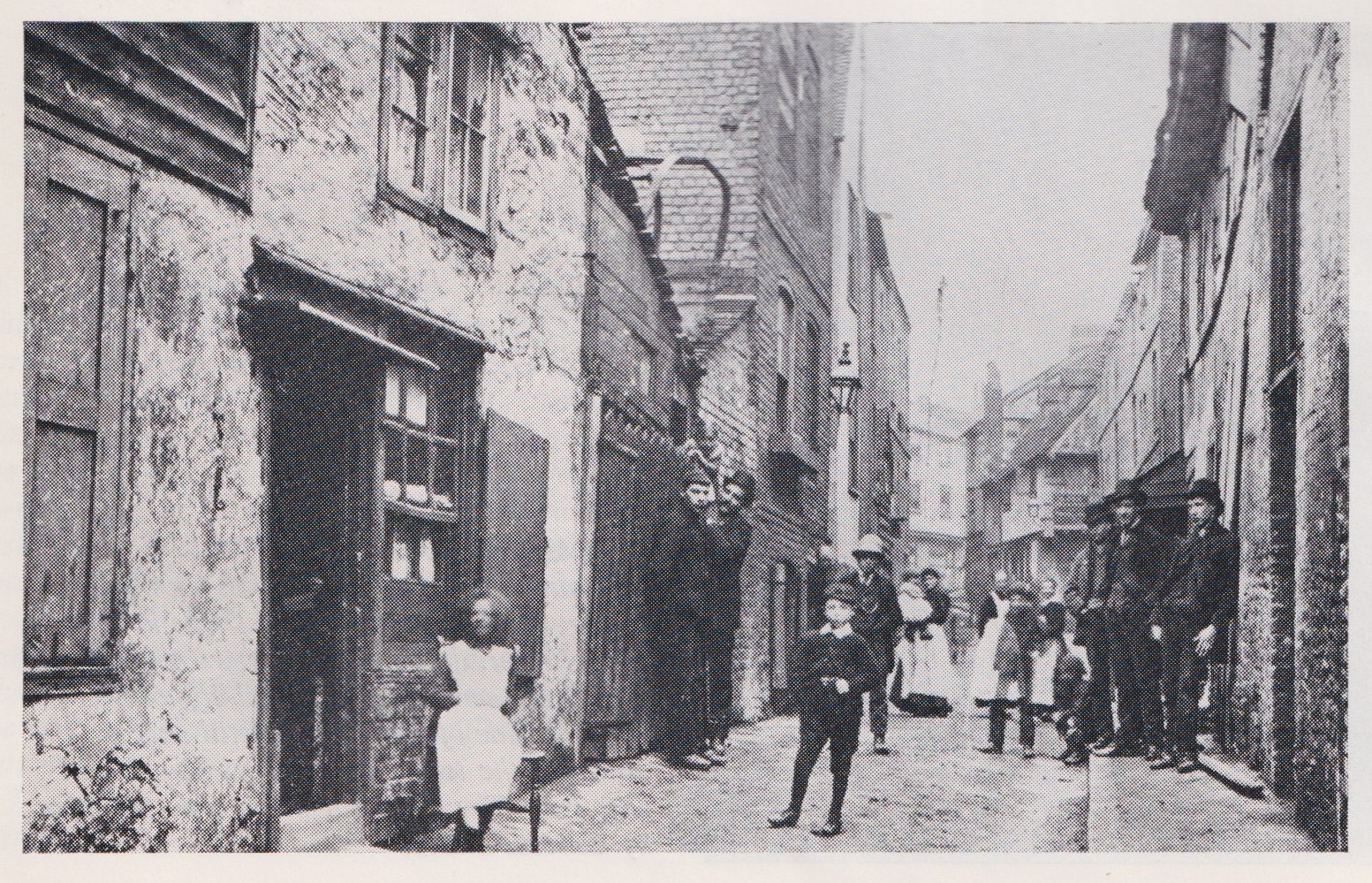
Croydon’s new county borough council implemented an Improvement scheme in the early 1890s, widening the High Street and cleared much of the “Middle Row” slum area. Remaining slums were cleared shortly after Second World War, with much of the population relocated to the isolated new settlement of New Addington.
By the 1950s the town was becoming congested, and the Council embarked on moremajor redevelopment schemes, passing the Croydon Corporation Act was in 1956, while taking advantage of national government incentives for office relocation out of Central London. During the sixties forty nine tower blocks were built in Croydon and by April 1971 five million square feet of office space existed in the central area alone, plus road schemes, an underpass, a flyover and multi-storey car parks. Aimed at attracting business interests decentralising from Central London, working class communities were relegated. In a reflection of the walling in of Norwood New Town a century earlier so the working class there wouldn’t annoy the posher people, there was an attempt to displace the working class of Croydon far from the shiny new urban experiment.
The older industrial manufacturing sectors were replaced by office staffing, retailing and the service economy, which saw the creation of the Whitgift Centre, the largest shopping centre in Greater London until 2008.
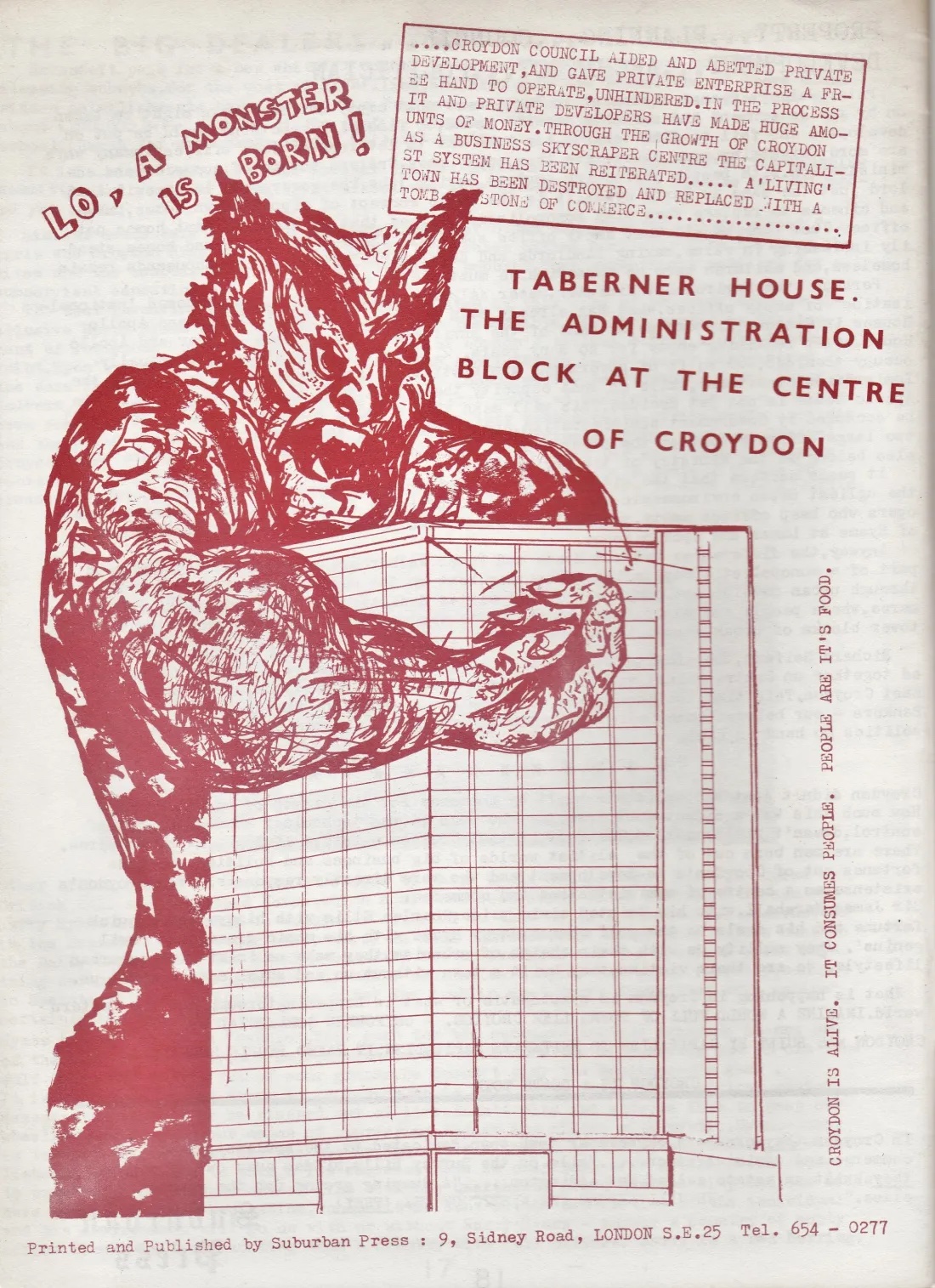
“They nullify us with their chains of urbanism, they make us inert with suburban lifestyle. We are their victims, they built a town without us and which acts against us. What is happening in Croydon is symptomatic of what is happening through out the Western World. IMAGINE A WORLD FULL OF TOWNS LIKE CROYDON – UNIFORMED COMMERCIAL UTILITY.
CROYDON WAS BUILT BY CAPITALISM TO REITERATE CAPITALISM. IT MAKES PEOPLE SERVILE.
CROYDON IS DEATH TOWN.”
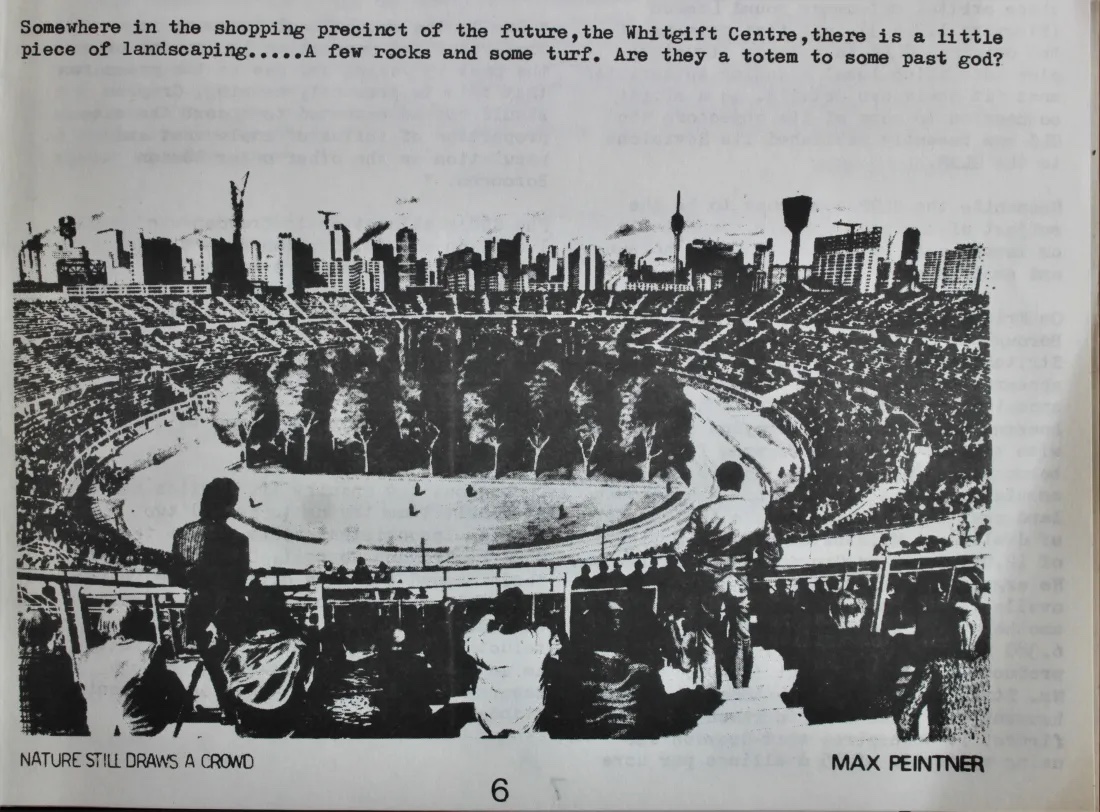
As Les Back points out though, “the bleakness masks another story. In the shadow of the skyscrapers and the stained glass edifices of commerce, artists and musicians flourished, often unnoticed. It is against the concrete tableau of corporate architecture that Malcolm McLaren and Jamie Reid sketched the design of Punk. Croydon Art College became a hub of activity precisely because it was engulfed by ‘single-minded public space’ to use Michael Walser’s phrase.. In the sixties boom, commerce and finance overshadowed all else. Croydon’s sterile shopping centers and council estates provided the ultimate expression of capitalist modernism. Yet, they equally provided the perfect canvass for Situationist slogans, radical gestures and the stylistic refusals of punk.”
Punk’s imagery and early ethos had strong roots here. Malcolm McLaren started at the Art College in the autumn of 1967, making early charcoal sketches of the warped skyscrapers going up around him. In April 1968 McLaren met Jamie Reid who was doing a Vocational Painting course at Croydon. Both got involved in organising student sit-ins in 1968, built connections with the radical student movement in Paris and elsewhere in London.
 In June 1968, there was a six-day student protest at Croydon College of Art. McLaren, Reid and Robin Scott (later of pop group ‘M’) were involved in a ‘sit-in by students’ and an occupation of the College’s annexe in Selhurst Road, South Norwood. The students don’t seem to have been too clued up on tactics though – they left the occupation unguarded and then were surprised to find themselves locked out: ‘Three hundred of them had left the annexe and were at the main college building for a meeting between deputations of staff and students to discuss the students’ grievances. When they returned to the annexe in Selhurst Road, afterwards, they found the doors locked and the building in darkness’” (the Times 12 June 1968).
The Croydon occupation was inspired by the student occupations on Paris of May 68, and nearer to home, the Hornsey & Guilford art college occupations.
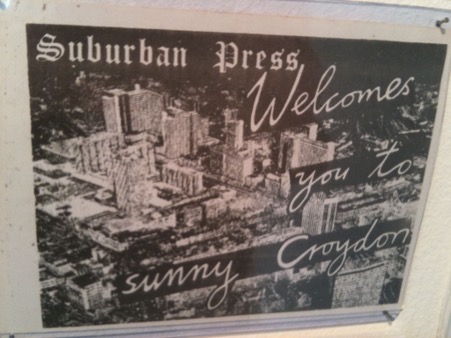
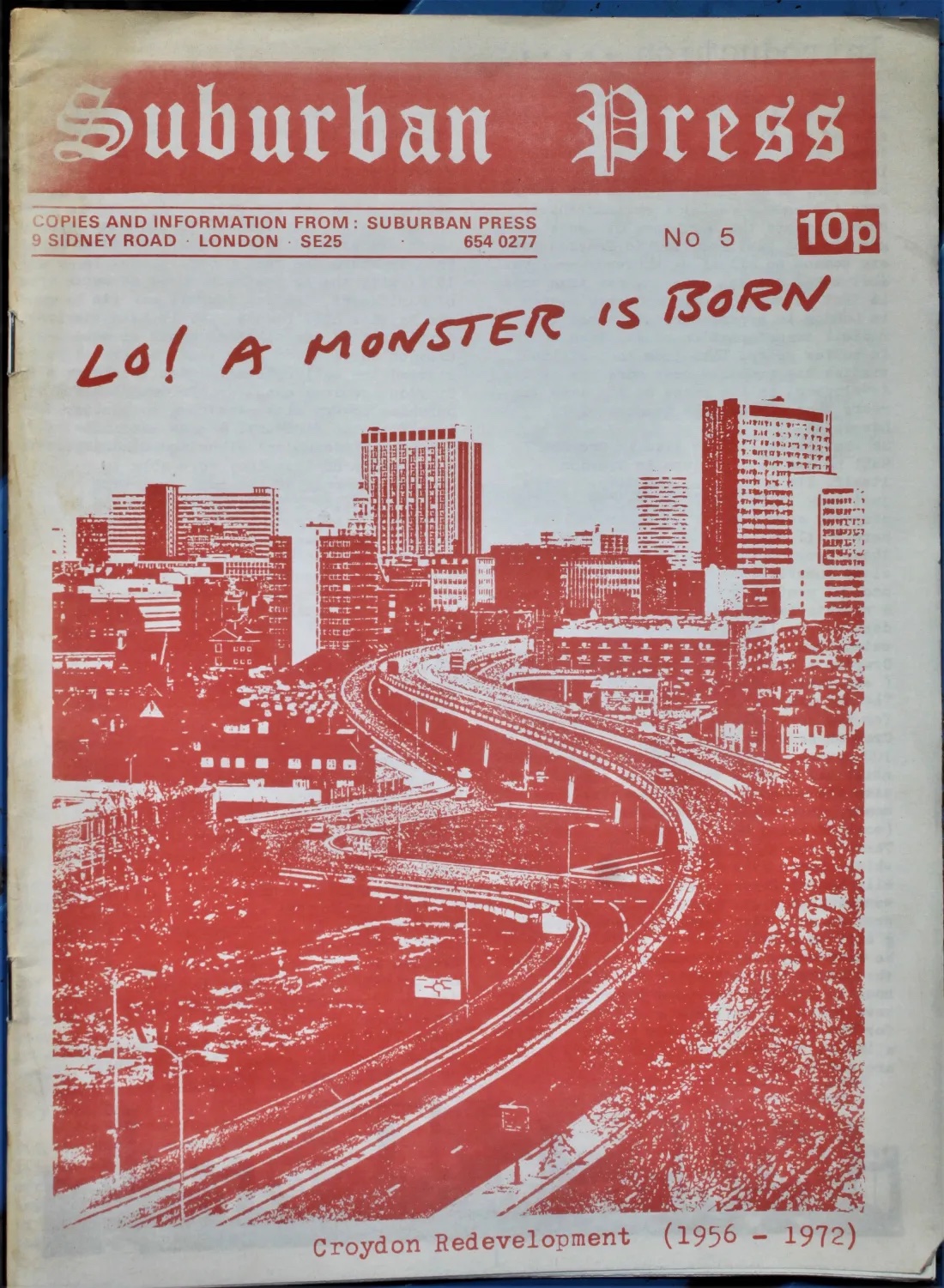
After leaving Croydon Art College Reid worked on the Suburban Press, based in Thornton Heath, an agitprop magazine, costing 10p with a circulation of 5,000. A collage of political exposés, situationist slogans, art work and epigrams from Friedrich Engels (who had visited Croydon’s Brotherhood Church, remember?) , urbanist Lewis Mumford and situ-guru Guy Debord. The cut and paste style and content influenced a 1000 DIY publications and fanzines.
The paper was a fierce critic of free market urban planning and its impact on community life in Croydon. “We are left dwarfed in the streets by huge towers of bureaucracy. An architecture and environment of commerce has been created to manipulate our lives. Our communications with each other are limited by urbanisation. There is nowhere to meet our meeting places have been demolished. The people… have been made to perform in an urban environment of commerce and administration.”
The Press raged against the destruction of communities and their replacement by business enterprise and real estate. As a direct consequence of uncontrolled commercial development since the 1950s, the paper argued, ‘no-one really lives in Croydon itself’, it’s a bit like the City, people just work there’. ‘In Croydon, they create a skyscraper tomb town, dedicated to the soulless pursuit of commerce and administration… while on the Surrey hills, hidden away out of sight, they built an estate called New Addington… “ “a dumping ground for the working class”.
Respect.
Recent commentary referencing Suburban Press
In my own peculiar way
Music
But if “in the council estates working-class culture and history was erased as they were consigned to the blank slate of corrugated living, art and music emerged in response to social instability and simmering conflict. In New Addington the proto-punk rhythm and blues band the Drug Addix formed. The band included Kirsty MacColl among its members who also attended Croydon Art College for a short time.” (Les Back)
The Croydon area developed a lively local alternative & grassroots music from the 1970s. Punk especially flourished here; small legendary venues like The Star, the Red Deer, the Greyhound, Cartoon hosted local punk bands and bigger known names.
2023 film ‘Are They Hostile? portrays some of the nearly lost elements of this Croydon music scene in interviews with the small bands who were around in the 70s and 80s: worth a watch on YouTube:
https://m.youtube.com/watch?v=ydKqEaN_gBc&pp=ygUQQXJlIFRoZXkgSG9zdGlsZdIHCQmLAqO1ajebQw%3D%3D&ra=m
Local band Johnny Moped formed in Croydon in 1974, and went on to become one of the greatest ‘nearly’ bands of punk. Ray Burns – later Captain Sensible – an early member of Johnny Moped, and later stalwart of seminal punk legends The Damned grew up locally, and went to Stanley Tech trade school on South Norwood Hill, after failing his 11 plus.
As memorialised in his very fine musical ode to his birthplace, the song ‘Croydon’, released in 1983:
“I attended Stanley Tech in South Norwood Hill
I think it was oh yeah
Where the bronze bust was nicked
Let me think it must have been in my third year
Lying in wait outside Virgo Fidelis
And the Lady Eldridge Grammar School
I worked at the Fairfield Halls cleaning toilets
But I understood some day
I’d be back in my own right giving concerts
In my own peculiar way”
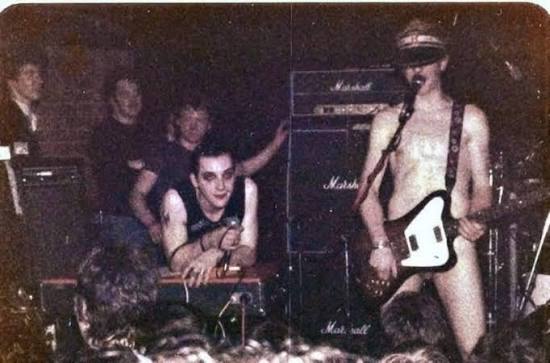
At Stanley Tech Sensible recalls studying woodwork, metal engineering and cast iron pattern-making, all technical training he claims he has never used. Later he did work at local music/theatre venue the Fairfield Hall… The Captain continued to live in South Norwood throughout much of his highly successful musical career into the 1980s, and remained loyal to Croydon and South Norwood; a lifelong follower of local team Crystal Palace FC, himself now a sometime performer at the Fairfield Halls.
The Captain also launched the opening of the Sensible Garden, named after him, in July 2014 on old waste ground on South Norwood High Street opposite his old secondary school. He returned to the garden in 2017 to preside over the installing of a bench in memory of the instigator of the Sensible Garden, Robbie Gibson.
Black music also spread at the grassroots in Croydon:
“From the sixties black people made their own spaces of association often hidden from public view. Through dances and reggae sound systems like Denis The Saint, Blazing Fire and Jim Daddy an alternative black London was established. Later in the seventies the Georgion Club was based in Croydon and top sounds systems like Coxonne and Jah Shaka played there regularly.”
Croydon’s Biog Apple record shop was a crucial arena for the birth of Dubstep in the early 21st century: there’s a good account here:
An unremarkable and apparently untroubled suburb
Migration, racism & anti-racism
Croydon had historically been a Conservative, white, and middle-class suburb; championed as a paragon of imperial suburban life between the wars and as a nostalgic harking back post war when the Empire was in retreat.
In 1938 George Orwell described Croydon as a place of somnolence and tranquillity. He pondered “… the huge peaceful wilderness of outer London, the barges on the miry river, the familiar streets, the posters telling of cricket matches and Royal weddings, the men in bowler hats, the pigeons in Trafalgar Square, the red buses, the blue policeman – all sleeping the deep, deep sleep of England” More a critique than an elegy…
As Daniel Frost has chronicled, the area was a nexus for organised far right activity from the 1920s – small bigoted groups seeking to protect the imperial white supremacy, or revive it.
In 1926 uniformed young ‘Fascisti’ – members of either the National Fascisti, or the British Fascisti, small antisemitic groups inspired by Mussolini’s Italy and focused on street-fighting, and who proudly scabbed during the General strike – attacked two people outside the headquarters of Croydon’s labour movement, Ruskin House – probably during the Strike. A former Mayor of Croydon defended them to the magistrates, having them ‘bound over’ in return for a promise not to so assemble again – indicating the links between Croydon’s establishment and 1920s fascism,
The National Fascisti collapsed by the end of the 1920s, (the Croydon branch at one point besieging their Kensington headquarters over a 1927 financial dispute,) But fascism retained an appeal in Croydon. Blackshirt-wearing supporters of Oswald Mosley’s New Party fought opponents outside Croydon Town Hall weeks before the BUF was launched in 1932. Many BUF supporters came from the middle and upper classes in London’s suburbs – particularly in the late 1930s. Mosley visited often, presenting the Sales Cup to South Croydon BUF ‘for the greatest progress made in selling Fascist literature’ in 1937; North Croydon came third, and Mosley thanked the Croydon Times for favourable coverage.
Post-war fascists were more cautious. A secretive meeting of the ‘South-Western Book Club’ was addressed by Mosley at the Crystal Palace Hotel in 1947, just before he launched the Union Movement (UM). In 1951, Union Movement members attacked a left-wing meeting at Croydon Civic Hall, heckling mention of the Blitz and kicking off the fighting.
In 1954 ex-BUF activist AK Chesterton founded the League of Empire Loyalists – LEL – (based out of his home in south Croydon) to pressure the Conservatives from the right: a Croydon and East Surrey branch soon formed. The LEL manifested suspicion of development and change, notably migration to Britain from the former colonies.
Black Communities and Racism in Croydon
One early Black figure who lived in Croydon:
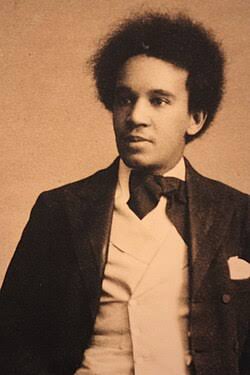
Samuel Coleridge Taylor, the well known black composer, lived at 30 Dagnall Park, Selhurst. His father practised as a doctor in the area, and Coleridge Taylor was allegedly ‘discovered’ by a Croydon violin teacher who saw him playing marbles in the street, clutching a tiny violin in one hand and some marbles in the other. In 1890, at the age of 15, he entered the Royal College of Music as a violin student. His musical education was paid for, according to one account, by a Croydon choirmaster; he weathered racist treatment by fellow students to move towards composing. His ‘Hiawatha’s Wedding Feast’, “captivated the public” in 1898 and established him as one of Britain’s outstanding young composers. For 15 years it was the most popular English choral-orchestral work, though he made little money from it (the publishers reaped the profits).
Visiting the USA he became a focus for the pride ambition and hopes of millions of Black Americans, being celebrated and feted.
His reception in America was very different from his everyday experience in his native country. His daughter tells of the real pain caused him by the coarse insults of Croydon street lads:
“When he saw them approaching along the street he held my hand more tightly, gripping it until. it almost hurt.” He was evidently ripping her hand to stop himself retaliating. Once, at least, he had enough and, when a ‘big lad’ shouted ‘Blackie’, seized the offender by the scruff of the neck and beat him with his walking-stick. But the prejudice he met was not confined to street boys. His white wife Jessie – she had been a fellow-student at the Royal College of Music, and they were married in 1899 despite her parents’ objection to a ‘mixed marriage’ – recalled some instances: the two ‘silk-hatted “toffs” who insulted the couple as they passed them in the street; the lady who, when the composer was taking a bow at a performance of Six Sorrow Songs, loudly exclaimed to her companion: ‘What a killing little Nigger!”; the Church of England canon who, a guest at tea, leaned forward, gazed at the composer, and remarked: ‘It really is surprising: you eat like we do, dress like we do, and talk as we do”
Coleridge Taylor’s experiences of racism made him an activist in the pan Africa Movement. He took charge of the musical side of the programme at the Pan-African Conference held at Westminster Town Hall in July 1900, and was elected to the executive committee of the Pan-African Association. In 1911 he represented ‘the African race’ at the First Universal Races Congress in London.
Samuel Coleridge Taylor died of double pneumonia at the tragically early age of 37 in 1912.
The first Commonwealth migrants to arrive in numbers were predominantly Asian, followed later by African-Caribbean people, whose numbers rose from 1,669 in 1961 to 6,000 in 1971 and continued to grow thereafter, with many new relocating from sites of ‘first settlement’ like Brixton.
The context was also of redevelopment, demolition and Compulsory purchasing in Croydon town centre, and the closure of the airport in the 1950s. Change was de-stabilising the imperial suburb, andonce the ‘frontline of the colour bar’, as the sociologist Les Back described it, Croydon was becoming increasingly multi-racial.
1950s Croydon was also a centre for teddy boys, a product of new youth rebellion but also focused on violence and racism. Jamie Reid, who grew up in Shirley: “The place was full of gangs: Pretty Boys, Cosh Boys and early Teddy Boys. Teenagers hung around the city centre and its coffee bars: for the price of a cup of coffee, they could sit around in a Lyons’ Corner House all Saturday. They would parade the streets in their drapes: this was their patch”.
But when the Union Movement staged a revival in 1962, efforts to meet openly in Croydon were repeatedly rebuffed with a hail of orange peel, eggs and cigarette packets, and the sound of motorcycles and references to the war.
Over the hill in West Norwood, meanwhile, John Tyndall’s Greater Britain Movement (then trying to move away from over Nazism to a more British fash identity) set up a HQ in Norwood High St along with the Viking Press; here in 1965, shortly after GBM members had been battered by anti-fascists in Dalston, Tyndall claimed to have been shot at in an anti-fascist assassination attempt. This shooting may have been staged by the mad old fuhrer himself though.
The League of Empire Loyalists and John Tyndall’s National Labour Party (based in Thornton Heath), merged with other groups in 1967 to form the National Front (NF), which moved their HQ to 50 Pawsons Road, Thornton Heath in 1972.
The NF grew to be the largest far right grouping thus far, winning 1000 votes in Croydon North in 1974.
The National Front held paper sales on Thornton Heath high street, where they sometimes clashed there with left-wing newspaper sellers.
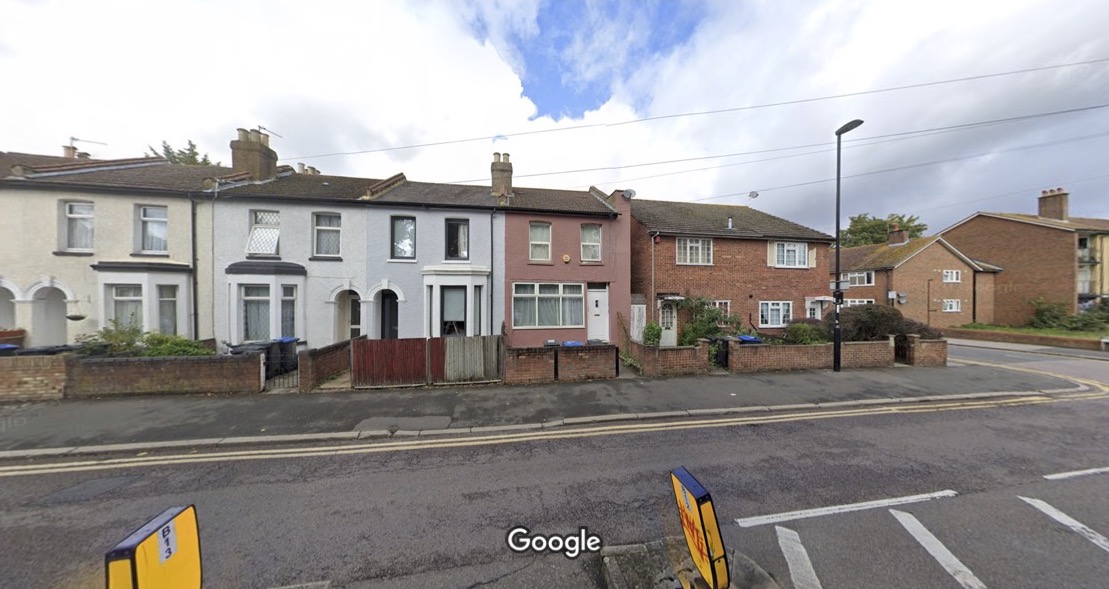
Former BECTU deputy general secretary Roy Lockett remembered a large anti-racist meeting close to Thornton Heath Clock Tower in the early 1980s. Given responsibility for organising the stewards, he recalled his dismay upon discovering that they were a ‘group of schoolboys’. Fearful as the meeting was approached by about twenty men with ‘concrete on their boots it was with relief that he discovered they were Fire Brigades Union members arriving to help with stewarding.
Racist tensions between what some Whites felt Croydon should be and its changing reality could be expressed in day to day incidents:
Black Feminist writer and cultural critic Hazel Carby attended school in Croydon during these years. “My mum and dad went into Croydon to shop every Saturday, never failed. The two things I most remember about Alders is the huge display they did during the Cuban missile crisis demonstrating that a nuclear missile dropped on central London would put us right in the middle of the fire storm area and I realised that hiding under our desks wouldn’t exactly help, and the time when I was picking up some wool (I used to knit a lot) and a middle-aged woman started to scream about ‘niggers being allowed to touch the wool and now no-one could buy it.’”
“You would often see graffiti with KEEP BRITAIN WHITE, WOGS OUT, NF and all sorts on walls and bus shelters around Croydon
and Thornton Heath and repeatedly told to “Fuck off back to your own country” “
But racism also brought violent clashes: racist attacks and Black self-defence, in the 1970s-1990s.
One Black Marxist organisation which formed locally in the 1970s was the Croydon and Brixton Collective, also known as the Croydon Black Marxist Collective. This group established Frontlines, a newspaper based at a former UK Black Panther Party headquarters in South Norwood.
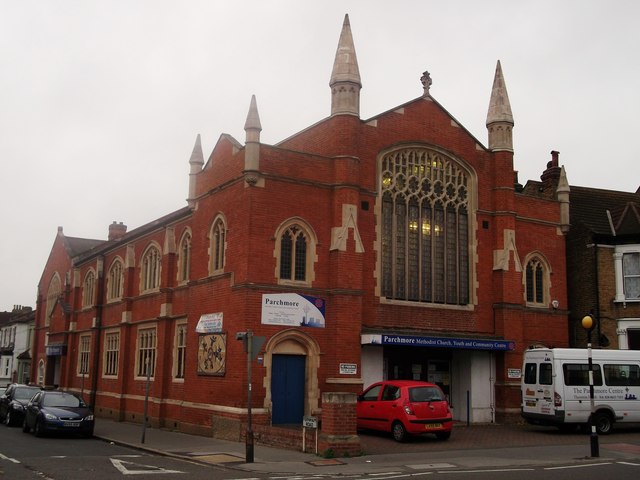
Thornton Heath did witness efforts at supporting those moving to the area, including the work of the Parchmore Methodist Church. Black youths, which included some older guys around during the Sir Radics sound system days, used to congregate at the Parchmore Youth Club.
Mainly playing pool and listening to reggae music, “it was just a general hang out.”
In 1971, a petition to shut down the youth centre was challenged by its users and a group of white teenagers marched to the town hall in support of their black friends – who stayed away out of fear of the police. By the early 1980s, however, it was a target for young white supporters of the National Front. “One night, skinheads attacked a group of lads who had left the Parchmore club to go home, with a couple being seriously injured after the assault.”
Anti-fascist magazine Searchlight reported an attack on Ruskin House in 1980, and an NF march from outlying New Addington in February 1981; a picture sent to a local newspaper showed youths in ‘Klan gear’ in front of a burning cross.
“Following the skinheads attack, the next night at the youth club, it is rumoured that the elders of the community were trying to keep the youths off the street but how it panned out, a massive mob of black youths from Thornton Heath and the surrounding areas had descended to the Parchmore Club. The atmosphere was described as hostile and rumours of tools hidden in alleyways and under cars, something was surely going to kick off.”
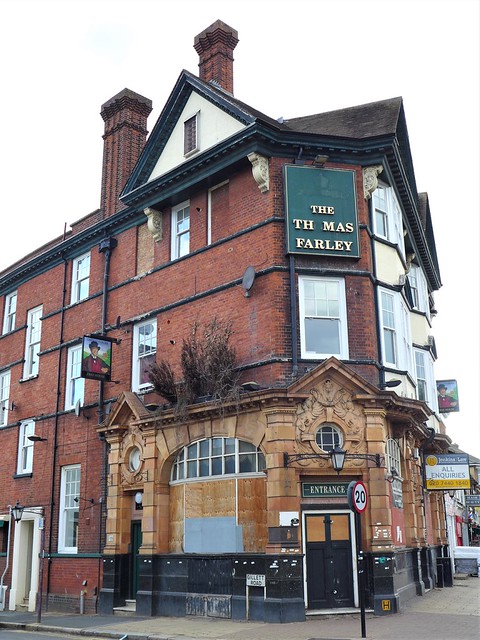
On 1st June 1981, a group of young Black people gathered at Melfort Park to plan an attack on the Pawsons Road NF HQ and the Wilton Arms pub, seen as another notorious centre of NF activity. The evening ended up with running battles with police and skinheads as a crowd of youths descended towards Pawsons Road, intent on steaming the skinhead gangs and smashing up the NF headquarters. As the pub was stormed, one man – leader of a local football firm and reportedly an NF member – had his arm badly cut but the attack was repulsed. As the group moved on, an uninvolved white teenager – Terence May – was pulled from a motorcycle sidecar and killed. In the aftermath, fifteen young Black men and boys were arrested and tried with a range of offences from riotous assembly to murder.
While the defence lawyers pointed out the months of racist attacks that preceded the events at the Wilton. A bulletin produced by the ‘Friends and Family of the Croydon 15’ claimed Wilton Arms drinkers shouted ‘Sieg Heil’ at passing Black people, and that a girl had been attacked outside another nearby pub ‘by a gang of about 50 whites’ on 31 May, the night before the Terence May killing. Prosecution witnesses recanted testimony asserting police coercion during interviews, the legal apparatus manoeuvred to prevent the trial becoming a case against racist justice.
Newspapers made comparisons to the uprisings in Brixton in April, in which some of the participants had apparently been involved. The Times called it ‘an unremarkable and apparently untroubled suburb’, noting that the area was ‘pleasant and the terraces well kept’. That the area’s ‘moral climate’ had been tested, then, was due to the intrusion of something from outside: the ‘overspill’ of the ‘inner city’.
Radical Black activists counterpose this attempt to portray Croydon as Orwell and also the white fascists had envisioned it, a peaceful haven of whiteness, arguing that the apparently-peaceful ‘moral climate’ of Thornton Heath was a thin veneer covering prejudice and segregation. After a trial record-breaking for its length, ten defendants were found guilty of riot, five of affray, and one – Ronald Pilgrim – of manslaughter.
Thornton Heath activists Femi Adelaja and Winford Jamieson organised another meeting at Melfort Park, founding a Croydon Black Peoples Action Committee. 43 Wellesley Road, a disused building in Croydon town centre – sought, unsuccessfully, by the Association of Jamaicans for several years – was squatted and turned into ‘Base Uhuru’, headquarters of the Croydon Black Peoples Action Committee and a Police Monitoring Unit, which eventually received funds from both the council and the GLC. The centre suffered a fire-bomb attack which destroyed a large part of the group’s equipment. Femi Adelaja’s house set on fire in summer 1983.
In their provocatively titled newspaper, The Sniper, the group complained the electricity providers, Seeboard, were ‘assisting anybody who wanted to obstruct the self help project Croydon black youths have set up’, and that BT were reluctant to install a telephone ‘which could have been used to alert other black youths to rally at the centre’.
The Action Committee later collapsed in the wake of the arson attack and serious disagreements between its leaders, and Adelaja died during a courtcase in 1988.
The National Front remained active locally. Rising star Nick Griffin turned 50 Pawsons Road into a ‘hotbed for young nationalists from around the country’, making an effort to recruit from ‘the ruffians and hooligans’ on local estates. In 1985, an ‘Ulster NF’ member moved into Pawsons Road, and by 1986 had been charged with assault. The same year, the NF split into two. Part of the Croydon branch aligned with Griffin’s ‘Political Soldiers’ against the traditionalist ‘Flag’ group, with the two squabbling to the local press.
The early 1990s saw John Tyndall’s British National Party form a Croydon branch. Croydon had far-right bands like Sudden Impact (also known as the Croydon Criminals), and a leader of BNP-linked paramilitaries Combat 18 lived in Thornton Heath. Unsurprisingly, violence increased. In 1992, Anti-Fascist Action reported on a St. George’s Day attack on two gay men by NF-supporting skinheads.
Then, on 31 July, 1992 , 24-year-old Afghan refugee Ruhullah Aramesh was beaten up in Thornton Heath by a gang of white youths after trying to protect his female relatives from harassment. He died in hospital two days later. In the aftermath, a BNP sticker was put up outside his family home; after drawing attention to the prevalence of racist violence, the Croydon Race Equality Council offices were plastered with ‘posters recalling the old Nazi anthem “Tomorrow Belongs to Me”’.
Protest marches were organised in September 1992 (by the Anti-Nazi League) and June 1993 (by the Anti-Racist Alliance), with the latter attracting up to 6000 anti-racists.
The area continues to throw up far right activists; Britain First’s Jayda Fransen, who first came to attention whilst living in South Norwood.
A good read: Daniel Frost, “We’re going to do a Special Branch on the Special Branch: Black youth activism in 1980s Croydon”
Time for a lunar eclipse
“Walking along Wellesley Road after dark and watching Lunar House turn shades of red I wondered if there are not other ghosts among us. Reckless stowaways who hide in the undercarriages of planes are literally falling out of the skies along the Gatwick flight path. The planes carrying their corpses literally pass over the offices of immigration in Croydon. These are the hidden fatalities of the government’s firm stand against asylum seekers and refugees. Recently a motorist saw a figure falling thousands of feet into a Surrey field close to Croydon. The body was never found – this green and pleasant land ate it. Perhaps, following Krzysztof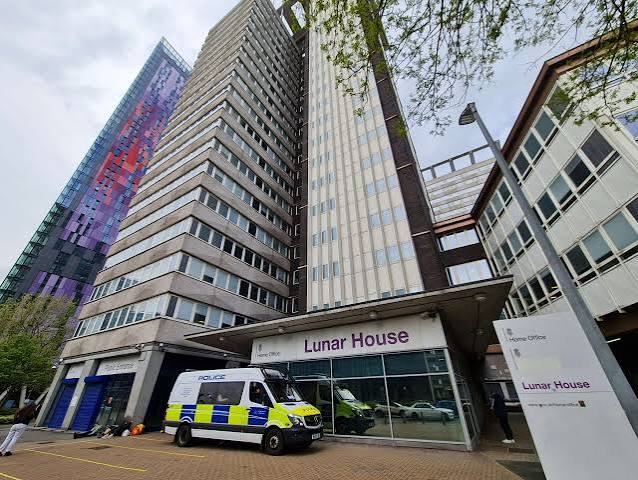 Wodiczko’s brilliant lead, the faces of asylum seekers and refugees surviving in detention centres need to be projectedonto Lunar House.”
(Les Back)
Central Croydon’s redevelopment didn’t only displace the older working class – it built institutions that towered over, dwarfed and controlled the newer migrant population of London.
Lunar House is a now vacant 20-storey office block in Croydon, in South London. It is situated at 40 Wellesley Road, on its east side, and formerly housed the headquarters of UK Visas and Immigration, a division of the Home Office in the United Kingdom. In 2024 the Home Office moved round the corner to Ruskin Square.
Lunar House was the primary Home Office ‘reporting centre’ in London, where asylum seekers must sign on monthly, biweekly, or weekly while their cases for refugee or settled status are assessed (a process that takes years). These routine check-ins are often used to detain asylum seekers & haul them off to detention centres or deportation.
Anti-detention and migrant solidarity groups frequently monitor the site, protest routine signing-in appointments, and provide legal support document detentions, and campaign to abolish mandatory reporting bail conditions, administrative detention and the surveillance of migrants
Attending any appointment at Lunar House was designed to humiliate and overawe, and services and facilities at Lunar House have been found to be dire- inadequate child protection procedures, the quality of facilities for applicants, the quality and fairness of transactions, the quality of IT and record keeping and the working conditions of staff were all judged appalling.
The hostile environment for migrants was a systemic and vicious program of detention, surveillance, arrest, deportation, spiced with a leavening of muckspreading about migrants and asylum seekers which continues to produce the racist violence we are experiencing in 2026.
Blaming ‘foreigners’ for sexual violence (while many of the racists “Protecting Our Women and Girls” are convicted domestic abusers… But the real winners are the powerful and wealthy who see working class people fighting and demonising each other, not uniting and overthrowing the powerful.
Still, its heartening to know some people can still get on nice little earner on the side. In 2006, the Home Office announced that it would investigate claims of a “sex-for-visas” scheme operated from Lunar House. Subsequently, an official was suspended after being recorded making arrangements to pay an applicant for sex. Makes you proud to be British.
Lunar House is currently empty after the Home Office moved out and is due to be converted into flats. Living in Lunar House? Bad juju or what?
Fuck the Police
Policing has come in for some opposition in the Croydon area… South Norwood Police Station shop was petrol bombed (around 1988?)
TV drama the Bill was also famously filmed around Croydon. In Hermes Way, Wallington, c. 2004-5?, actors filming the Bill were unappreciative of a bit of local constructive criticism, as some lads fired a shotgun at them from nearby flats and then legged it. Actors dived for cover apparently. “A loud crack sent everyone diving for cover.” Heh heh heh.
21st Century
OK that’s all ancient history… what about today? What’s going down?
South Norwood Tourist Board
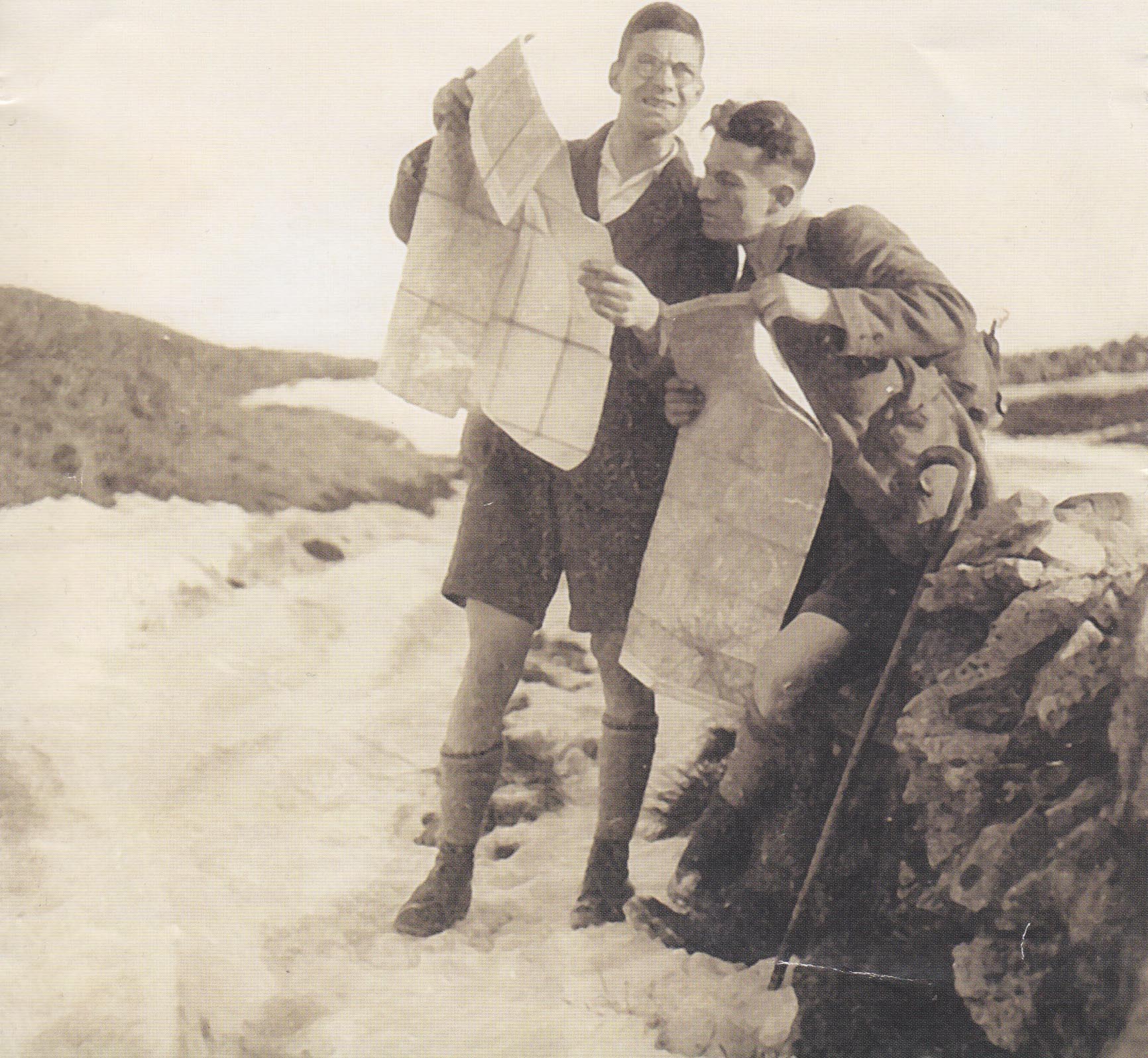
South Norwood Tourist Board, a local collective of troublemakers, have been livening up the area in recent years. Among other exploits they have
organised “PicklesFest” in honour of the dog that found the stolen football World Cup trophy in 1966 on Beulah Hill in Upper Norwood..
Challenged the Lake District for their title (as Norwood has more ‘lakes’ officially); proclaimed the area independent as the People’s Republic of South Norwood after a referendum sparked by Croydon Council neglect…
Renamed the lake in South Norwood Country Park as Lake Conan after Conan Doyle who lived in South Norwood.
Organised a winter shelter for the street homeless, as well as helping create the Sensible Garden (see above).
Tourist Board co-founder and longtime anarchist ne’er-do-well Ian Bone is not in great health – we send our good vibes…
Blog site InsideCroydon have been exposing council corruption and incompetence, denouncing MPs’ skulduggery, campaigning for a better way and generally celebrating local life, since 2010, despite libel threats from the powers that be:
Residents of Council flats at Regina Road in South Norwood have been fighting to espouse the scandal of the disrepair and council neglect of their homes and secured a plan to demolish the tower blocks and build new homes.
Also worth a look:
https://burncroydon.tumblr.com/


Leave a Reply