This article is not meant as a stream of consciousness ramble (not in itself a bad thing!) It is a draft towards the introduction to a collection of articles on various aspects of this subject (to be collated into a book at some point ‘down the road’). But hopefully it can be read as an essay in itself.
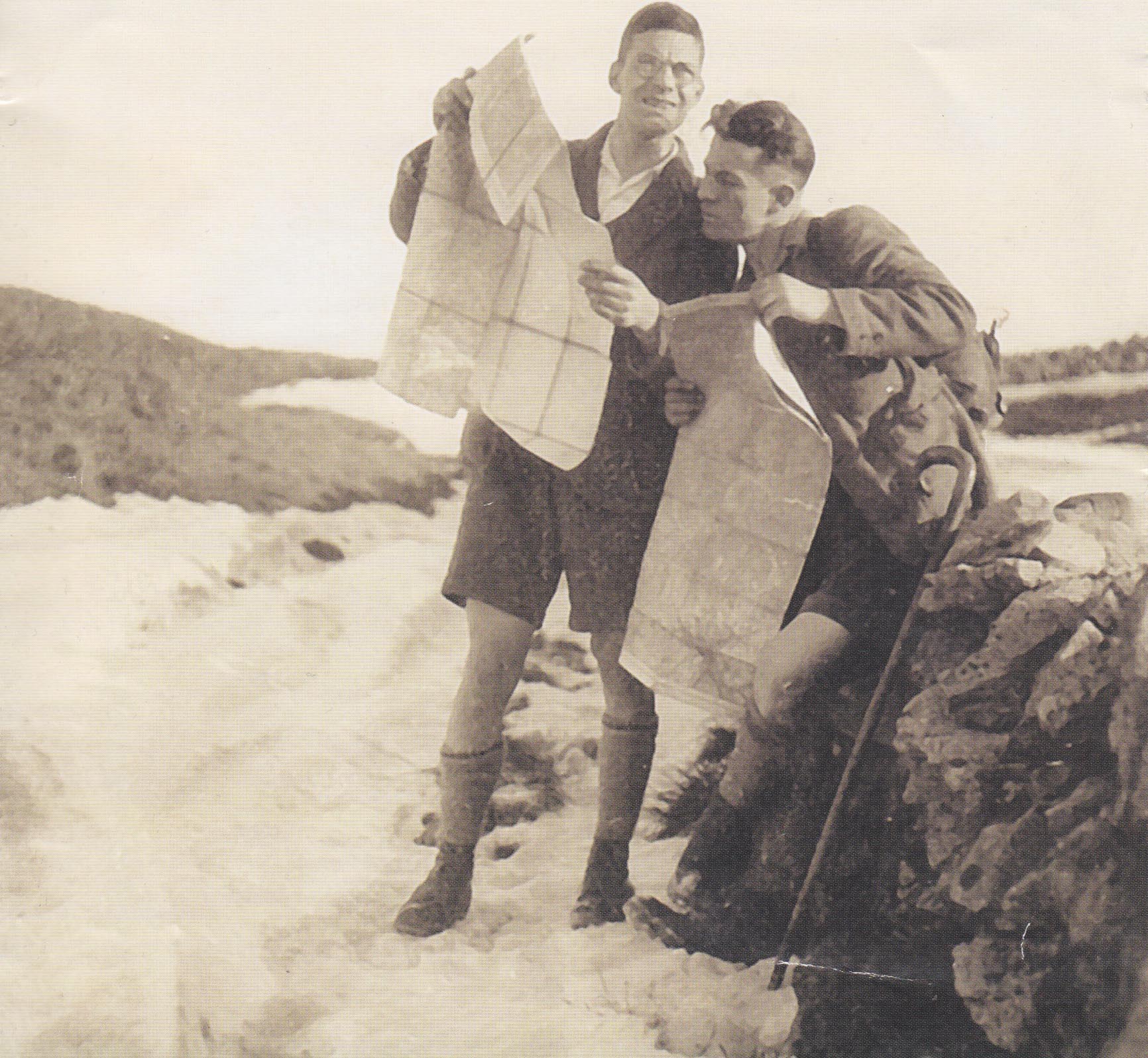
The title is central: ‘Desire Lines’. Whose desire? What do we desire? Where do we want to go? How to get there? Who’s stopping us and why? But also – Who travels? How? Why? What are they running from? Towards? Who built the road? Who mapped it out? Why that way?
Brought up as a walker in the open country, but by socialists, so taught also on occasion to trespass when we came to the estates of the rich – paths, tracks, the routes we tread, always had a vital importance to me. Later I found myself helping to block roads, to protest, to prevent movement of materials being transported to fuel oppression and death, in support of strikers, and to denounce and win space from the hellhound car culture we viewed as central to a capitalism that was destroying the climate and atomising our existence. Sometimes simply to make a choking motorway a liveable space for a few hours. Also attempting to navigate roads as a cyclist and then a van driver, trying to stay safe and reasonably sane.
Paths and roads I think are central to human existence past and present, and who gets to control them, where they are built and laid, how they are used, or blocked, are crucial questions, and worth studying. This is not from any academic interest – but first of all from practical inquiry into infrastructure we take for granted, but that is also loaded with meaning, power, history, and symbolism, as well as the custom and ritual that grows up around the practical use of resources.
It’s Mighty Hard Road that these Poor Feet Have Trod
Humans have been wandering for as long as we have been a distinct species, and making paths, tracks or routes for presumably almost as long. For most of human history it’s likely we were primarily nomadic; wandering was second nature, settling down strange, and borders largely unheard of.
Things have changed since class divisions and civilisation slowly emerged and imposed on us all. We are segregated and penned in by borders and fences, millions kept from one place by the armies of another.

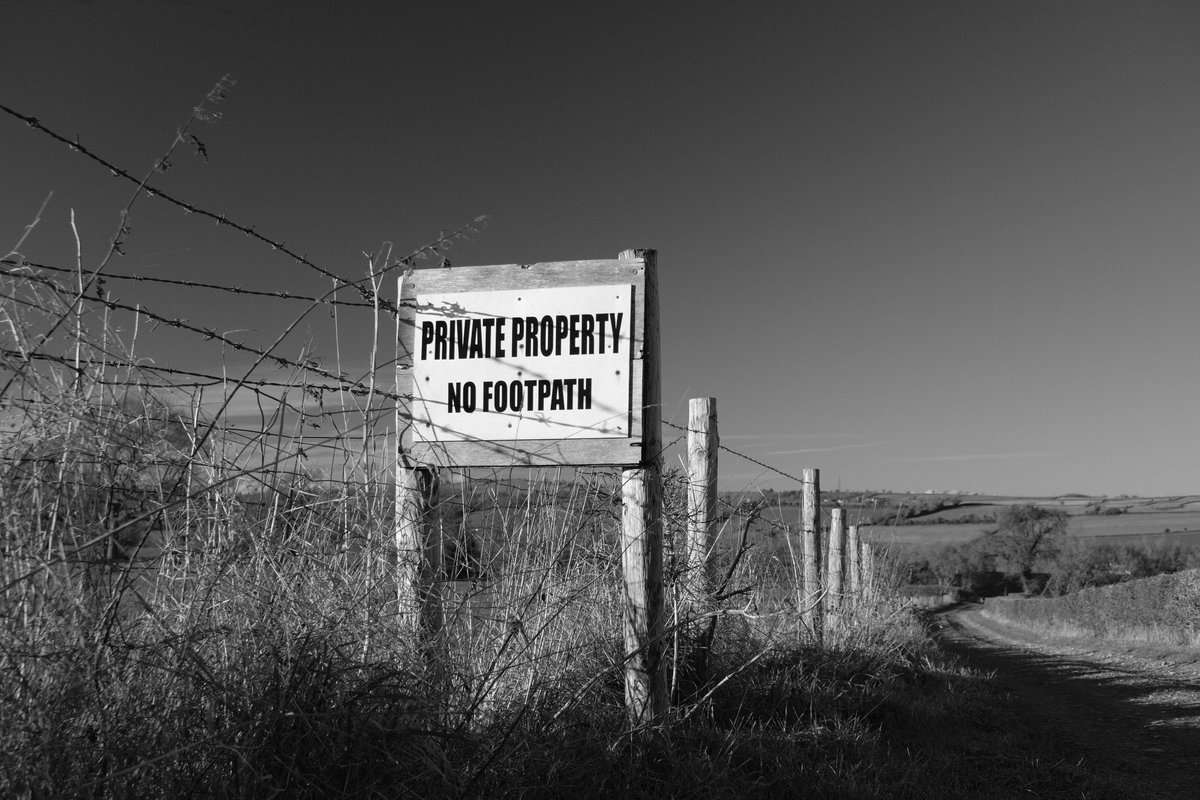
Huge motorways allow us to move at speed across the world, but gates block roads and walls are built to keep some people from straying into some areas. Usually this is to do with money, power, class, colour – you can buy your way in to (or are taught to support) keeping others out. Barbed wire cuts across some paths, sometimes because whole peoples are on the move, fleeing war, starvation, poverty – sometimes because a wealthy landowner wants to prevent a few ramblers seeing over his fence.
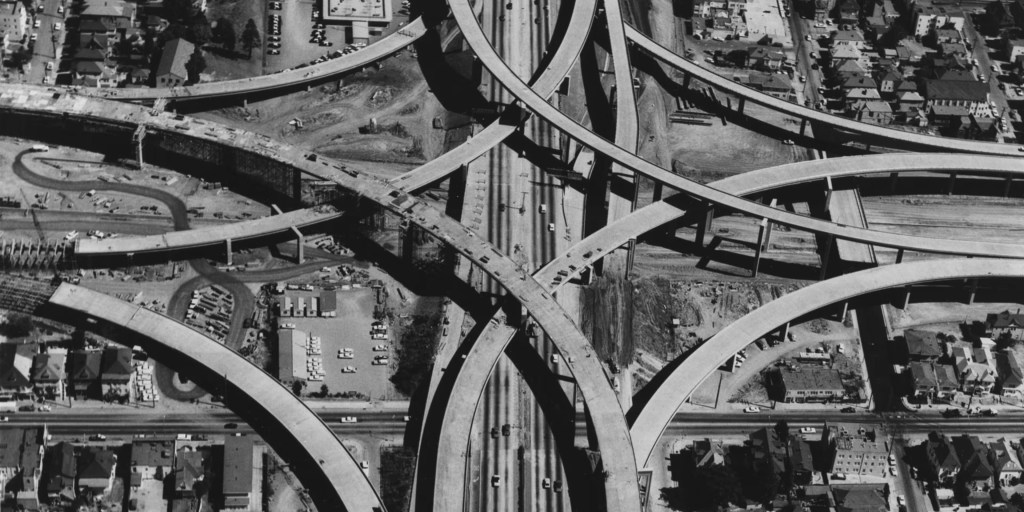
It seems a long way from reworking a barely visible single file track under the trees in Africa way back when, to the 10-lane interstate on pillars rushing above the cities, but did the creation of paths, routes walked more than once, form an early step towards routine and settlement? A conquest of the natural world by imposing on it? Easier to move if you follow an established path, but also a separation out, a move from blending in with the wildwood or steppe to domination over it?
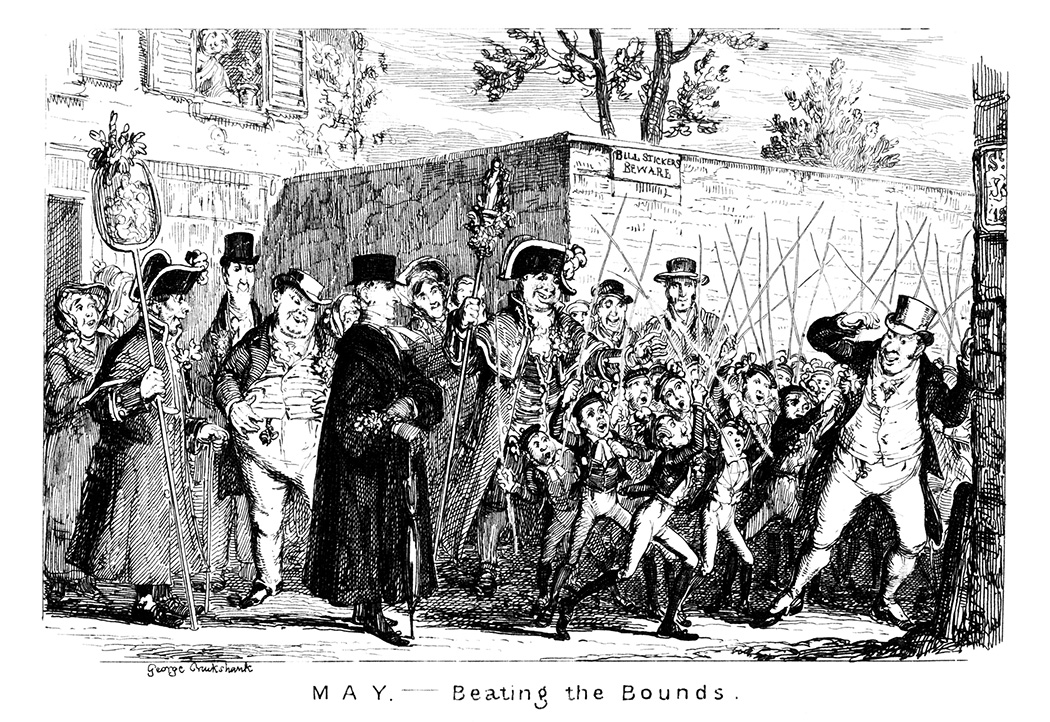
It makes me think of the ‘Beating the Bounds’ traditions – the old English custom of annually walking the parish boundary to re-establish and mark out a border.
But we also should bring up that enclosure of common land in England (a process that over 400 years completely altered people’s relations to land) was often heavily linked to/crucial to the financing of the laying out of new and better roads – to transport goods and foodstuffs and also people. The two processes were integral. Fencing land off from many went hand in hand with making travel more rapid (in some cases did this allow those driven from using the commons to move to the cities in search of work quicker?) Also remember that materials dug from the commons before or after they were enclosed, eg gravel, were extracted to physically build the roads.
I found myself in a dark wood
The forests, the wild wood, were scary, full of fear, darkness, uncertainty, untamed beasts – imposing paths and roads on it maybe conquered that… For a nomad, walking into the unknown is a risk, don’t know where you’re going or what will happen to you when you get there – but a retrodden path gives security, the known, the familiar, control.
Back to the links between enclosure and roads again – open space and common or ‘waste’ land was often seen (by those concerned with progress and profit) to be not only less productive, but also disorderly in itself – a lack of enclosure implying a lack of discipline. The squatters who built cottages on the commons and gathered its resources to live off were seen as living too easy and not submitting to the doctrine of hard work. The ease of access to commons’ collective free resources was explicitly cited as encouraging idleness among the poor who should be deprived of this larder to make them work harder.
Commons and waste land were also disorderly because they hosted fairs (rowdy, riotous, fond of drink and sex), sheltered rebels, gypsies and outcasts (today street drinkers)… the wild wood wasn’t just teeming with wild beasts and darkness, it brought out the wild and the dark in humans.
Outlaws and rebels in the woods: tales of Robin Hood – obviously medieval poor folk retold these fables round their scanty fires, embellishing them in their barely suppressed desires to give the Lord of the Manor a clout & nick his wallet.
Later, maybe the more refined rewrites felt the need to make poor Robin a toff himself, unfairly cast upon hard times. Or is the infuriating grovelly tendency of the downtrodden to imagine that bad as the rich bastards all seemed to be, there must be a good un, a saviour… The same blind faith that trusted king Richard II in 1381 (“he’s a good king, it’s his bad advisors to blame for everything!”) before the spotty twat ordered their heads cut off. His namesake King Richard I is always a goody who returns from exile to end oppression, in the Robin Hood stories (though in reality he taxed the country dry, to fund his religious wars).
There’s also the long medieval association of Robin Hood with Mayday revels – not surprising this cheeky rebel shows up in an annual festival of freedom, riot and licence (as well as wild sex in the woods. Robin’s band dressed in ‘lincoln green’ – medieval code for gay love).
So woods are dark and dangerous.
But roads are progress. Straight and conquering. Lit up and assertive of man’s power over nature.
“Never tire of the road
Never tire of the rolling wheel
Never tire of the ways of the world
Way out yonder is a-calling me
And the dark road leads me onwards
And the highway, that’s my home”
– ‘Never Tire of the Road’ , Andy Irvine
The flip side of the control and security bit, is the joy of the explorer, setting out and walking, driving, cycling, travelling however, a route you have never been down before – the thrill of discovery and the possibility of surprise. Not knowing where you’ll end up.
This is also a feature of the annual workers’ Beanos in the old days – it’s exciting to be setting out on holiday.
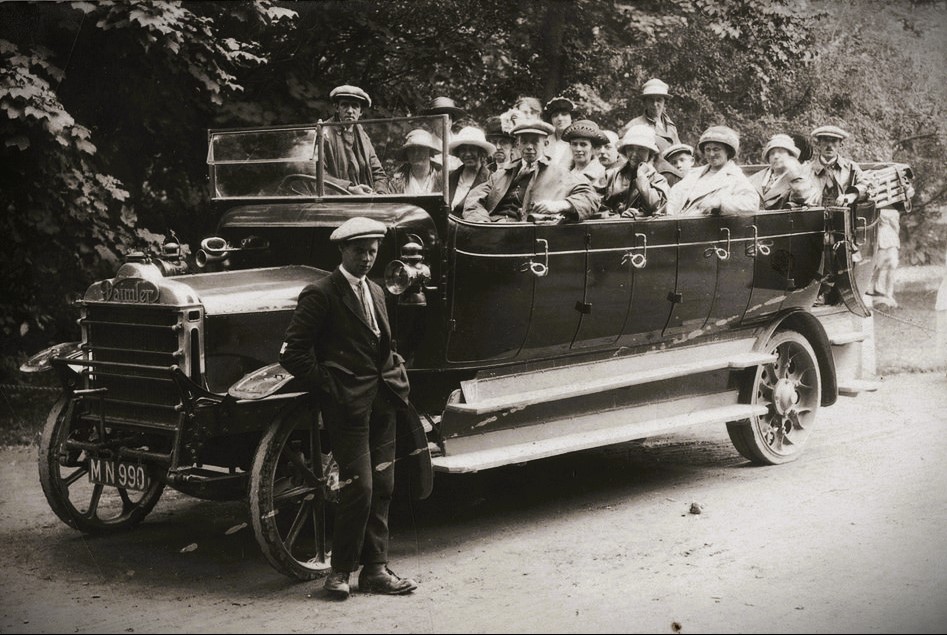
Or travelling through the city, on top of a bus or above the roofs on as train, maybe at night, pondering the cityscape, nowhere to be.
And everything was made for you and meAll of it was made for you and me‘Cause it just belongs to you and me
(‘The Passenger’, Iggy Pop)
But the joy is largely a product of your survival or subsistence not depending on the journey. It’s less a thrill and more terrifying if you have nothing to go back to, if the journey is survival. If you are harassed, detained, deported, moved on at every turn. Then you tire of the road.
Desire Lines
The term ‘desire path’ was coined by French scientist, philosopher and poet Gaston Bachelard in his 1958 book La Poétique de l’Éspace (‘The Poetics of Space’). He described them as paths ‘created by usage’ which pedestrians have taken to get ‘from point A to point B more quickly than the predetermined paths (like sidewalks) that have been put in place.
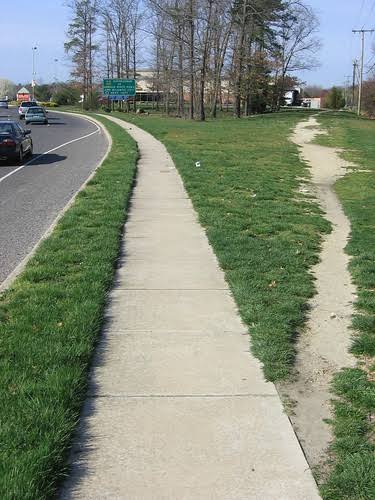
The idea of ‘desire lines’ or desire paths is lovely, as it sits right at the crux of how paths and roads are poised between common use, egalitarian, for all, and the opposite – profit, exploitation, conquest and division.
Roads and paths are on the one hand obviously practical, mapped and travelled for a purpose.
On the other hand they are loaded with symbolic meaning, weighted with folklore and omens, and over time enriched by the human use and association.
You can see Desire Lines as an assertion of free movement and anti-property laws, against landlords & social controllers – “We walk where we desire” Won’t be told to move?
But also the opposite: to establish the most efficient route, cut down travel time, help move people faster to where they need to be [to make money for someone]. We need to move quicker because time is money – ours, the boss’s. ‘Cutting corners’ most obviously today brings to mind contractors shaving costs and increasing profits – often at the expense of people’s lives, quality of life, quality of goods or housing .
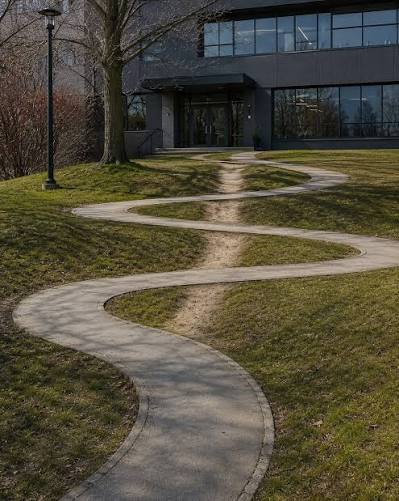
Can desire lines also subvert the need to move faster, to defeat the need for profit to transport more efficiently over our prone bodies?
Desire and need – there’s Theirs and there’s Ours.
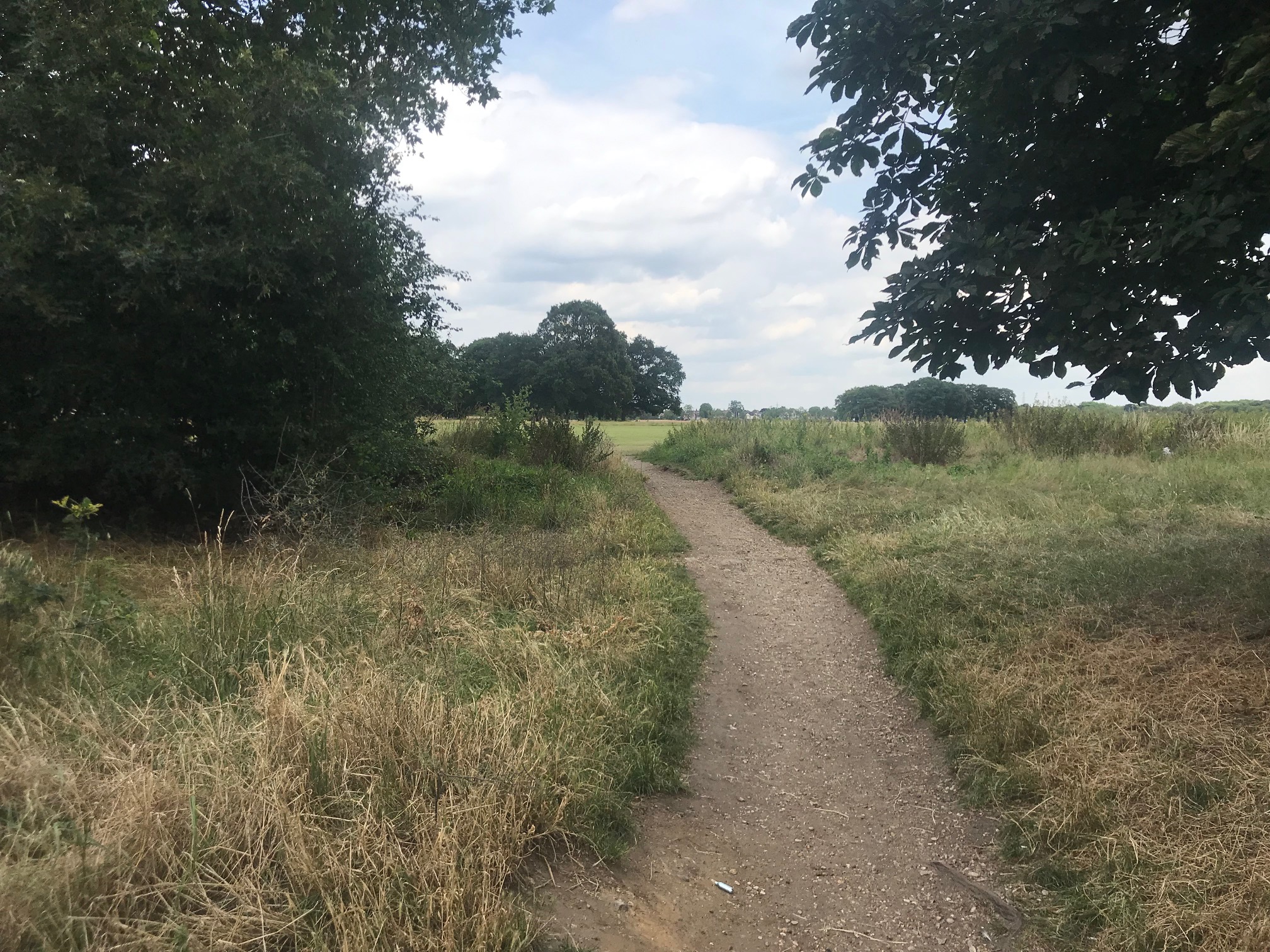
Roads can facilitate empire building – moving armies, post, news, tax gatherers can travel faster, connecting, unifying. The Roman Emperors knew the score.
But stack up against that, roads as avenues of ideas and exchange – the Silk Road, moving ideas as well as materials, allowing language, religion, story and culture to osmose across a world. A street market can slow you down and sell you stuff, and also be part of your social circle. Bantering with stall holders about Arsenal and the price of bananas.
Whatever the purpose of a road, like most things, it changes in use and is subverted, altered, diverted, occupied, because humans are changers/exchangers, thieves, tinkerers and cheeky rebels.
Rights of way & right of access to open space, set against the needs of capital /property, bulldozing for social control, class divide & profit, are crucial to the development of roads in cities (and beyond) in the modern era.
“My brothers and my sisters are stranded on this roadA hot and dusty road that a million feet have trodRich man took my home and drove me from my doorAnd I ain’t got no home in this world anymore”
– ‘I ain’t got no home in this world anymore’, Woody Guthrie
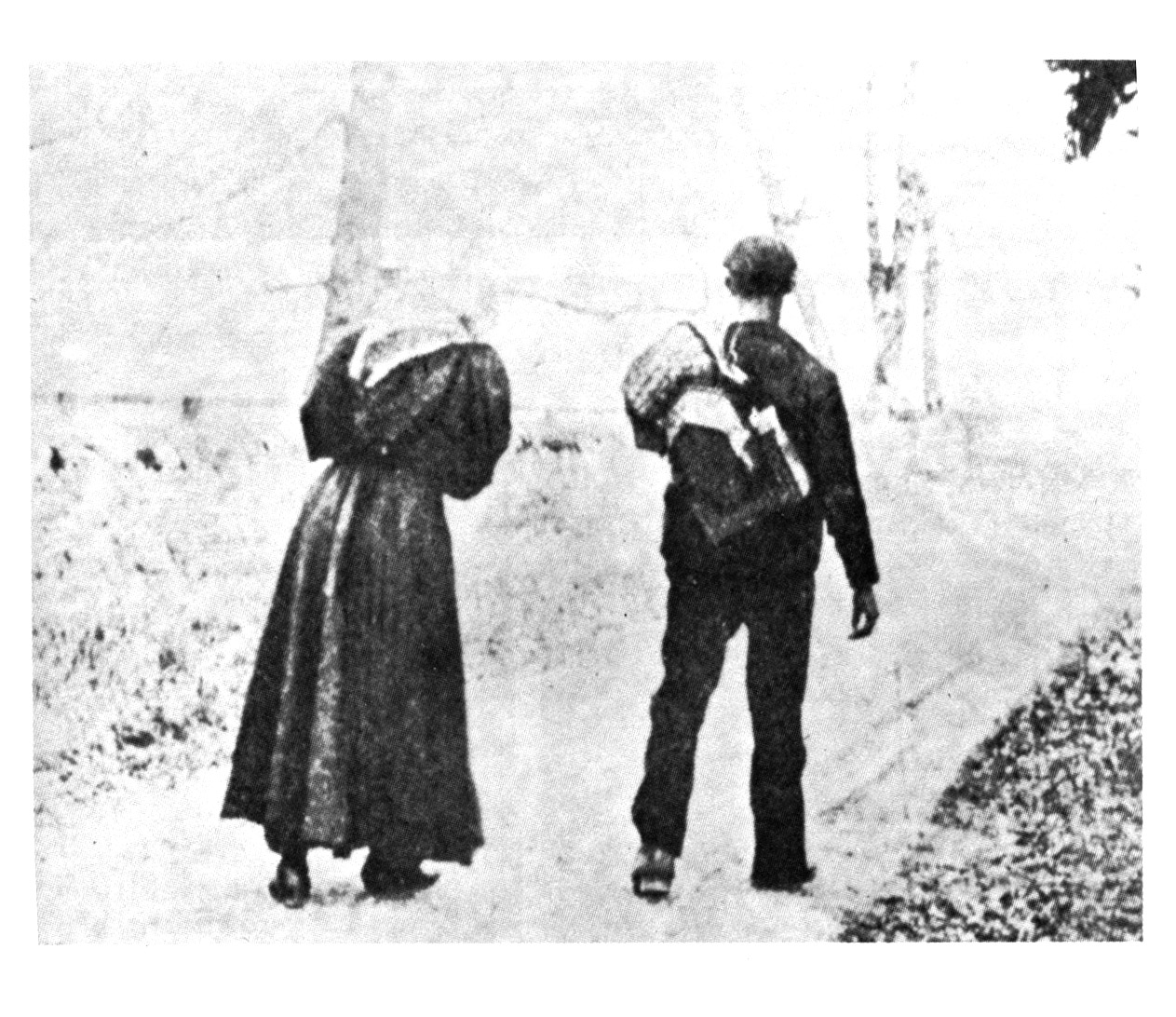
But these relations are rooted in older practices – on the one hand, repression, on the other, resistance and subversion.
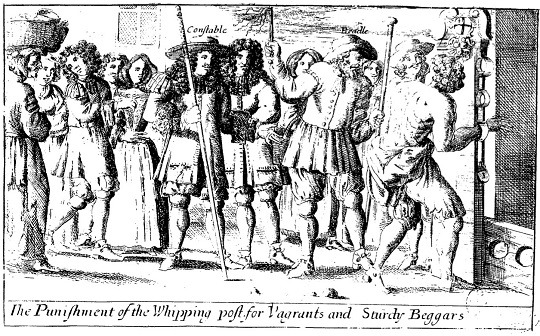
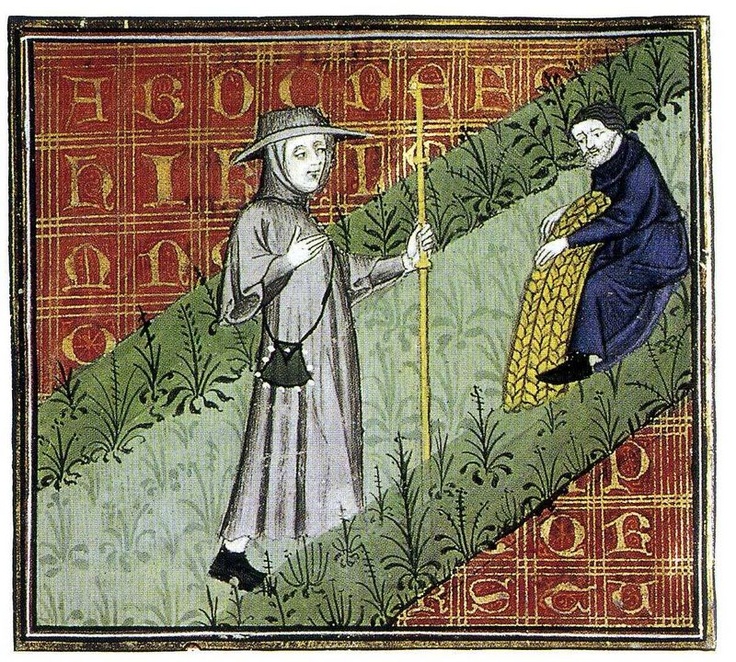
Authorities were always seeking control over roads, paths and moving around – in the medieval laws controlling the movement of nomads, the vagrancy laws and restrictions on wandering people and the travelling poor, the laws making being a Roma/Gypsy a hanging offence, the Ordinances and Statutes of Labour ruling that serfs couldn’t up and go work for someone else for better pay, in the Master and Servant Act . Developing into slavery & migration laws/detention, vagrancy laws, conscription into armies.
Not just blocking movement – our bodies are theirs, not ours: in the US women’s autonomy over their own bodies can be controlled by law – eg anti-abortion laws. Control of space becomes control of our very being.
(Mind you it was fine to walk the Pilgrims Ways – wandering was ok if for religious reasons. Two Tier policing!)
(Although the masochism of the old extreme pilgrimage self-sacrifice has now been supplanted by more modern religions: my body is my temple. Health, fitness, self punishment taken to cult levels. And joggers who expect you to move sharpish out of their way when they run straight at you because they are fit and you’re not.
It’s true you can still crawl up Croatian Catholic mountains on your knees, if that floats your boat – but meanwhile doing the caminos is now so trendy!)
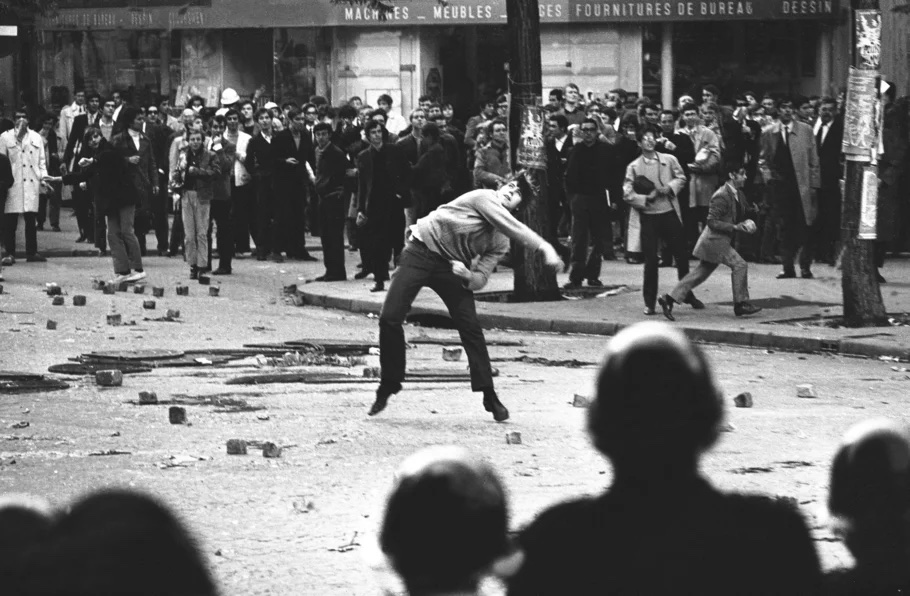
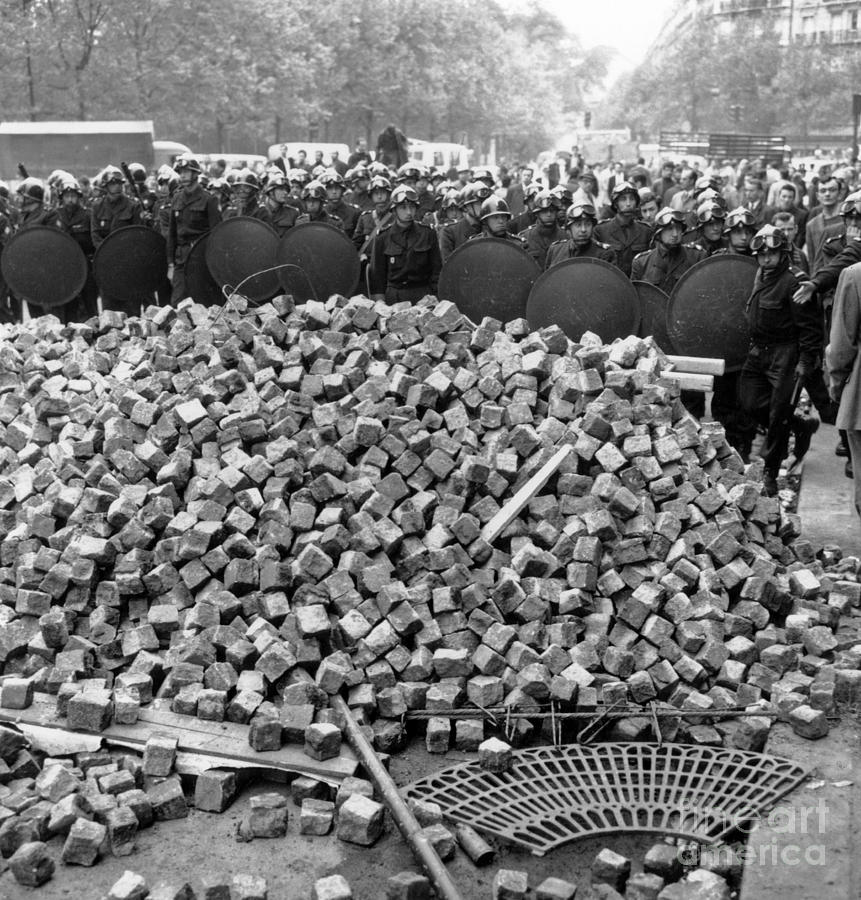
But the urges to control were resisted from below, in a myriad of ways – the constant pushback, breaking bending and tweaking the laws, establishing loopholes and back ways, blocking, rebuilding and diverting paths to our own uses. The famous May 68 slogan goes ‘Beneath the Pavement, the Beach’ – but what littered the streets every morning after the rioting? Cobblestones used as ammunition against the police. Literally digging up the road to resist, an attempt to lay out a road to a freer future.
“There’s a city in my mind
Come along and take that ride
It’s alright, baby, it’s alright
And it’s very far away
But it’s growing day by day
And it’s alright, baby, it’s alright”
– ‘Road to Nowhere’, Talking Heads
The journey isn’t just the destination; what you build with IS what you build.
Beat on the Brat
Hand in hand with stopping free movement of people, was the need to demarcate the extent of your ends. Centuries before postcode gang wars, Beating The Bounds was actually carried out on ‘Gang’ Days (from German, meaning to go, or walk). The annual ritual eventually shed its early ‘please bless the local crops’ fertility prayer and evolved into a neighbourhood watch/Boundary Commission, establishing who’s in and who’s out, exclusion vs Inclusion, bonding residents as well as punishing those who encroached on common land or breached agreements. Complicated and contradictory. Also remembering that the ‘beating’ was often quite literal – children were thrashed ritually at certain places on the walk, to impress the memory on them.
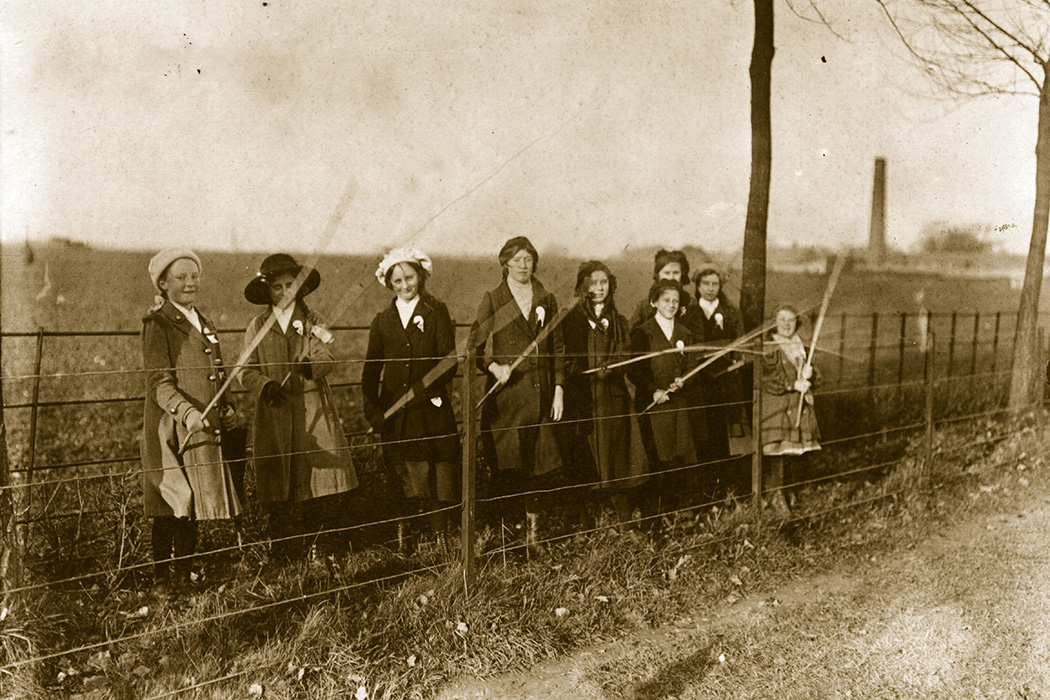
The Beating the Bounds custom has been revived in some modern places as a campaigning tactic: the New Lammas Lands Defence Committee ‘Beat the bounds’ around Leyton Lammas Lands in the 1990s to commemorate the 1892 riotous defence of access to the lands against enclosure, and to protest newer enclosures, which remain an issue locally. In 2018 Brighton residents Beat the Bounds of Whitehawk Hill Nature Reserve to defend against development:
The Open Spaces Society encourages communities to ‘beat the bounds’ of your local common or village green to keep it open. A good idea, as this can help maintain a sense of community ownership and access, when so many open spaces are faced with enclosure, development, being built over… But we can repurpose to edit out the genuinely ‘don’t want your sort round here’ NIMBYism of expelling wanderers from the parish.
Religious rites around beating the bounds may have been born in superstition and magic too – paths and roads are magical. Not just the the old straight tracks, the leylines supposedly linking us psychically across space, the secret paths and fairy roads.
And crossroads. Hazardous places.
Apart from the Devil hanging out at the Crossroads waiting to grant you your desire in trade for your soul… there’s Papa Legba, Vodoun Keeper of intersections, roads, doors, a ‘psychpomp’ who guides you to the spirit world (or just sets you on the right path). And Hecate, another guardian of entrances (as well as of light, magic, witchcraft, herbs and ghosts). You’d better leave her an offering as you pass.
A crossroads is full of potential, roads to choose; what direction will you travel? What happens to the journeys you never make? – is the Devil a symbol of choice and human free will here? Robert Johnson knows)
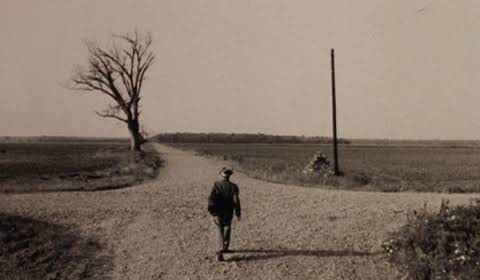
A crossroads is a ‘neither here nor there place’ – on the edge, a meeting of worlds; a shadowy Kings Cross station with a lot of mystical cabbies offering to transport you places. Its land that belongs to no one, ideal for burying suicides, hanged witches, and other undesirables. Hangings also sometimes took place at major road junctions.
At the crossroads people meet together (always dangerous), where words, ideas, can be exchanged, again potentially threatening the status quo. Are crossroads like port cities – spaces of cross-fertilisation, mashups, cultural fusion? Places where choices are open, the future is unwritten – you can make your own future? Hence the devil, an unconscious fear (in the powers that be) of future revolt and subversion (no you CANNOT make your own future!)
Rights of way – walking a path gives you a right to walk it. Use determines it. Not whoever ‘owns’ the land. Like law of Adverse Possession – occupy land or a house for 12 years and you get to own it? You establish that right by use. Commons had similar rules – use developed through years by custom and endless battles with the landlord established a right to that use.
Does that weirdly reflect in open road, biker and car culture eg US Route 66 and anti-Low Traffic Neighbourhood campaigns? Free movement is a right and driving my car where I want is non-negotiable… ?
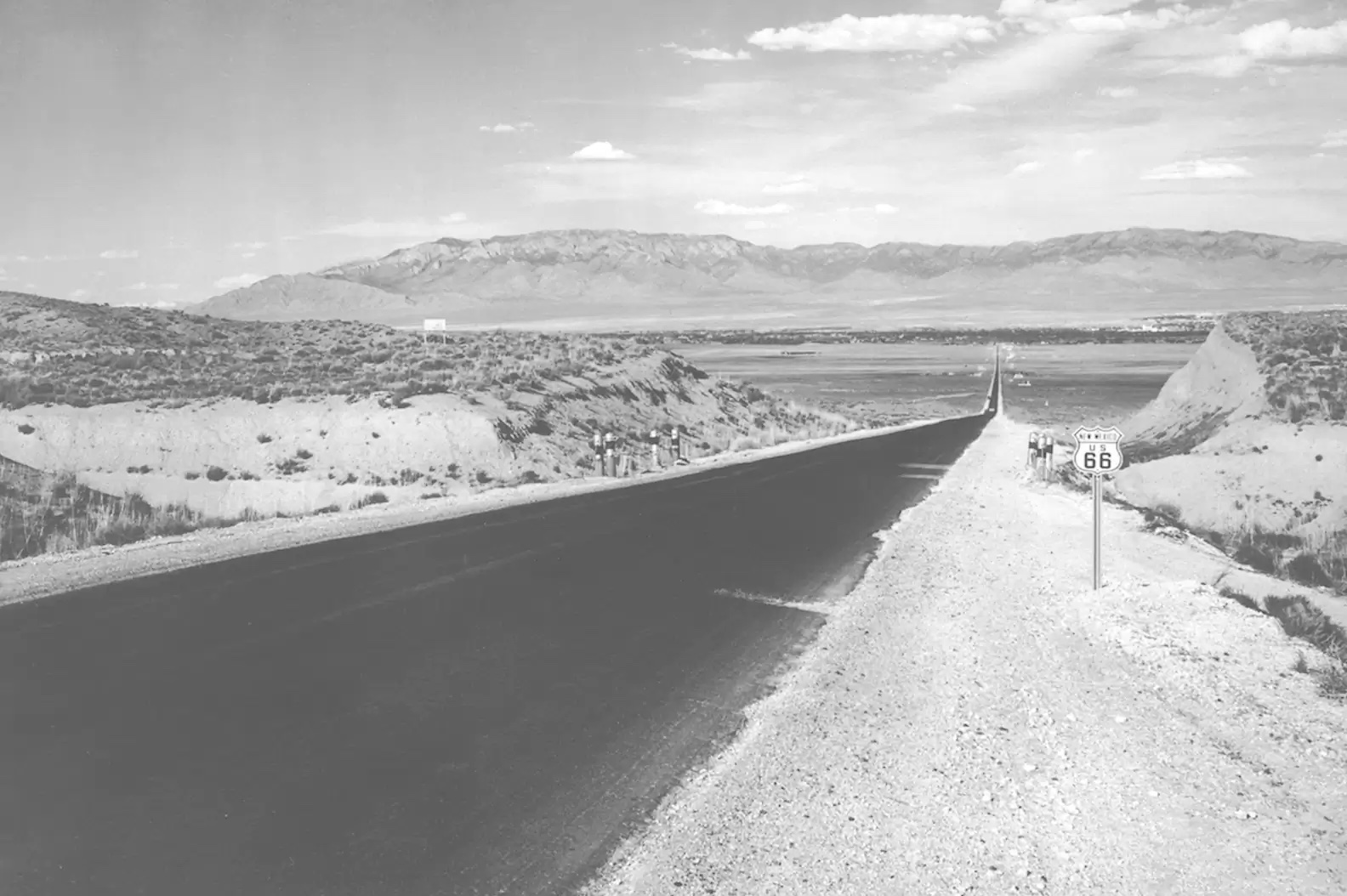
Not only roads but cars are sacred.
Progress is often described as a road or path. Career paths. Marxist guerillas are on the Shining Path. Referrals and algorithms follow pathways.
“There were also in the same place two other ways besides that which came straight from the gate; one turned to the left hand, and the other to the right, at the bottom of the hill; but the narrow way lay right up the hill, and the name of the going up the side of the hill is called Difficulty.”
– ‘The Pilgrims Progress’, John Bunyan
Bunyan’s pilgrim progresses along the only one true path; and there’s a correct way to walk it.
All very linear.
Linear is, however, not how life actually really runs. People are not as often travelling a linear path that advances straight-forwardly.
I’d say it’s not too far out to suggest life tends more to spirals, increasing or decreasing circles, sometimes to mazes or M.C. Escher type-neverends.
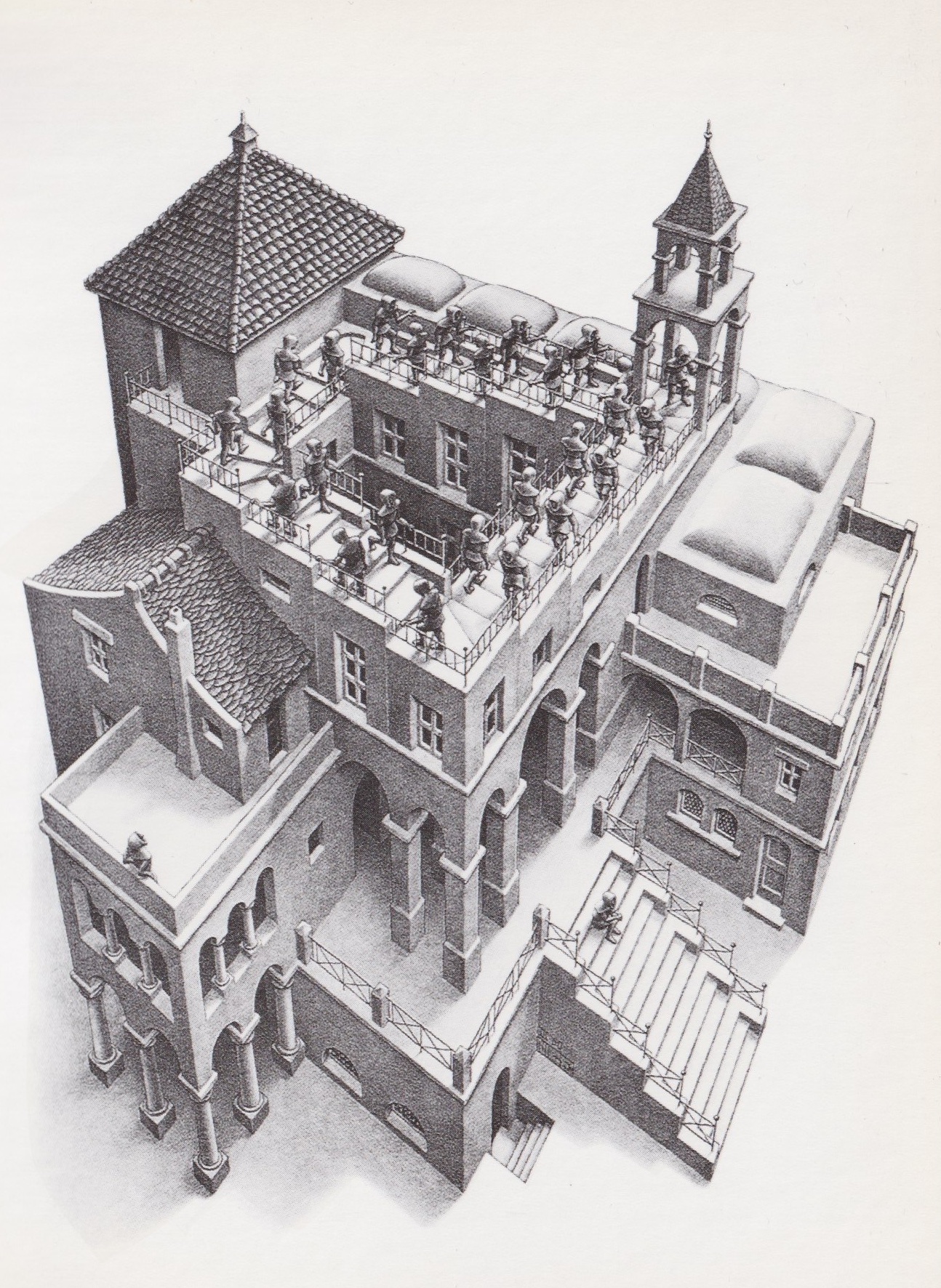
Take the wrong turn at the Crossroads and you’ll end up on the Road to Hell, on the Road to Rack and Ruin, travelling down the Lost Highway (with Hank Williams, dead on the back seat of his car.)
Roads have mystical symbolism for capitalist culture too – not just economic or for clearance, but representing direction, force, power, modernity (especially motorways and so on) – use of names is employed to express this too. A street in West London is called Capital Interchange Way – where you interchange in the capital? Or where capital is exchanged?
Moving from medieval to modern, as noted above, enclosure of common land was often linked to the need to finance new roads. From the 18th century new roads were increasingly ‘turnpikes’ – paid for by tolls on travellers. By the mid-19th century about a fifth of the road network in England and Wales was turnpiked.
Not obviously gonna be popular – especially if you’re skint.
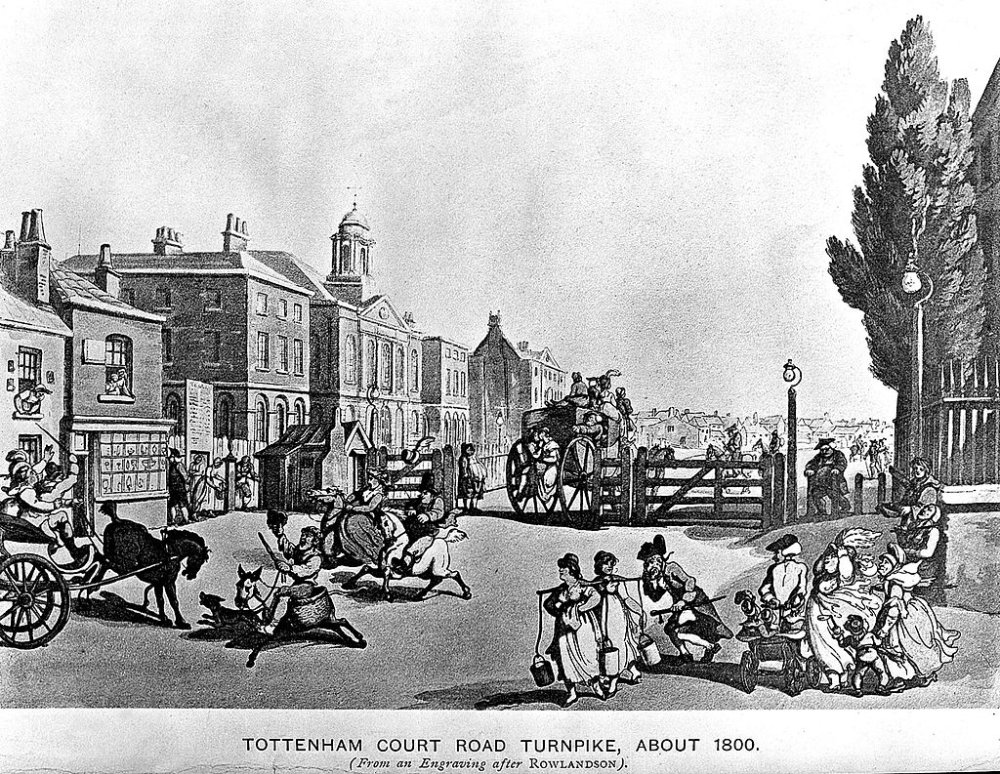
Overt and often violent resistance characterised the imposition of toll roads. From the late 1720s, and for some two decades thereafter, there were riotous disturbances in England against turnpikes; 1839-43, tenant farmers in west Wales protesting against the high level of turnpike tolls (a big expense for small farmers, who used the turnpikes to take livestock / produce to market, and to collect lime for use as a fertiliser) launched the ‘Rebecca Riots’, men disguised as women, calling themselves ‘Rebecca and her daughters’ attacked the toll-gates until the authorities quelled the riots using troops. Some Rebecca rioters were transported.
Dodging around the tollgate was also common; new paths were sometimes created to bypass the gate to shirk the toll. The Bullock Road running slightly to the west of the Great North Road on higher ground between Wandsford and Alconbury, and the ancient Sewstern Lane between Newark and Stamford, are remnants of toll-dodging paths. A path went round New Cross Gate tollgate in Southeast London too: a gate that gave its name to a station & wider area was not always respected.
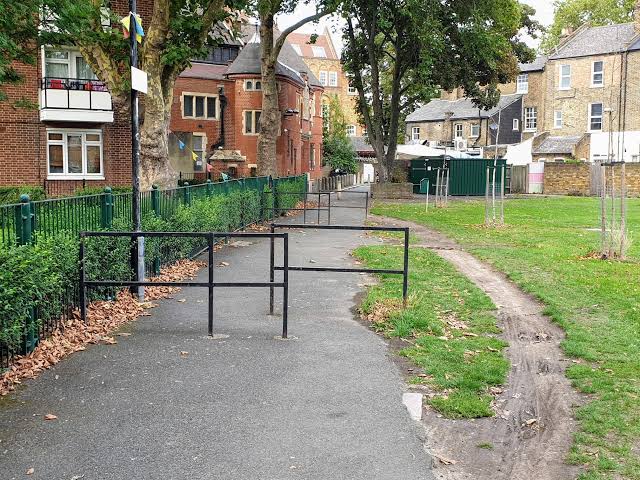
Sometimes you bend, sometimes you standSometimes you turn your back to the wind
– ‘Life is a highway’, Tom Cochrane)
Similarly to wastelands and commons, tollgates were said to become gathering places for the idle, dissolute, criminal elements. They became to be considered eyesores, often surrounded by taverns, and with gatekeepers considered often surly or to lack deference for the wealthy traveller. The abolition of tollgates from the 1850s onwards was however mainly linked to agitation for ‘social & economic progress’ – quicker movement of goods etc, a liberal laissez faire cause celebre. That this took place at the same time as bulldozing slums to build new high roads (see below) was not coincidental. Quick free movement of commerce, clear anything and anyone that blocks speedy progress. Victorian writers were fond of comparing the City to a human body – blockage points like tollgates were aneurysms. (While the rookery inhabitants were generally described in terms of insect colonies – not even human).
The Victorians came to the conclusion re turnpikes that the ‘user pays’ per journey principle to fund road repairs was unviable, as the whole community benefits from easy transportation; though they had same difficulties in coming up with a workable alternative to status quo as road policy debaters today.
Gated Communities
In London – which we write a lot about – rich and poor cheek live by jowl. Less partitioned than other cities maybe? The council estate can sit next to the Airbnb/pied a terre, the HMO among the middle class townhouses, the mansion next to the flats… Yes there’s rich bits and poor bits but the lines are blurred.
Worth mentioning re social mix – this these days always means moving poor folk out and better off in.
This was not always the case – the London County Council’s building of the Woodberry Down Estate in North London in the 1930s/40s was accused of social cleansing of the opposite kind: constructing social housing blocks for ‘slum dwellers’ which displaced older more middle class residents… ooh, could be done again. And the government requisitioned hotels and other buildings during World War 2 for housing bombed out folk, sometimes outraging the posher residents they ended up among.
But attempts are always being made to segregate. Blocking the roads to stop the plebs passing by your front gate became as trendy in the 18th and 19th centuries as buying a flat in an area you consider edgy cos it’s exciting, then complaining to the Council about the ‘nuisance’ of the nearby pub (that has hosted music nights since 1899), is in our own time.
From the late 18th to the late 19th century aristocratic landlords of large estates in central London erected gates to prevent travel and transport through their domain or people and goods they considered was lowering the tone. The most famous being the Dukes of Bedford’s several gates around their Bloomsbury holdings.
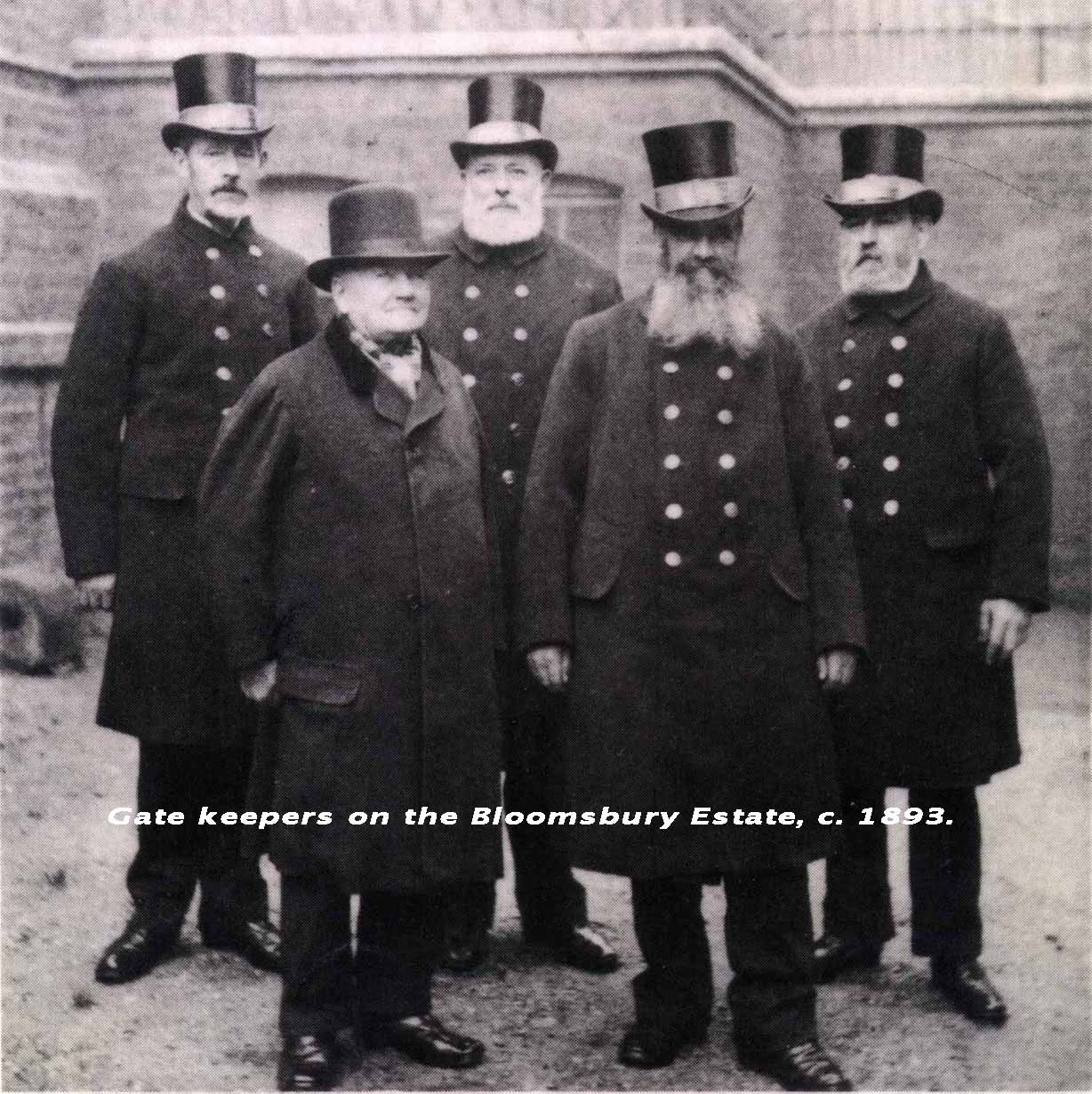
And it ended up not just being the rich – if private roads were the purlieu of them at the top, eg the Kings Road, and the Bloomsbury gates – it trickled down: segregating yourself from the hoi polloi gives you someone to look down on, so it became aspirational – walls and gates were built to keep apart strata of social class that were barely distinguishable.
The rich can more easily bend, block, abolish routes where the proles can’t.
But closing roads and paths always sparked a fierce response – from the Hyde Park riots challenging private riding in the park (1855) , the Richmond Park rights of way shenanigans, Timothy Bennett forcing the re-opening of Bushy Park… the Kensington riots 1837 … the Taylor’s Lane (Sydenham) affair of 1867 and so on…
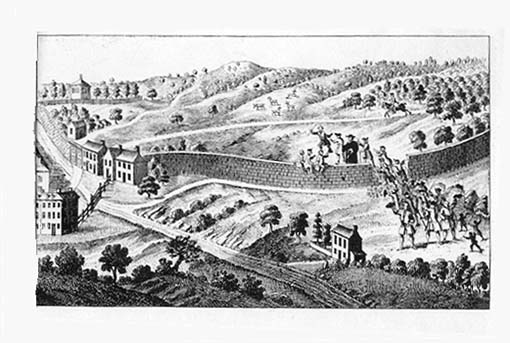
The idea the well-to-do could block a path was a red rag to a mob – walking the old paths was sacred and honoured. Again some of this is practical – why allow the gentry to make you to walk further to work or church (after they forced you to attend bloody church in the first place?!)
Their mark on this land is still seen and still laid
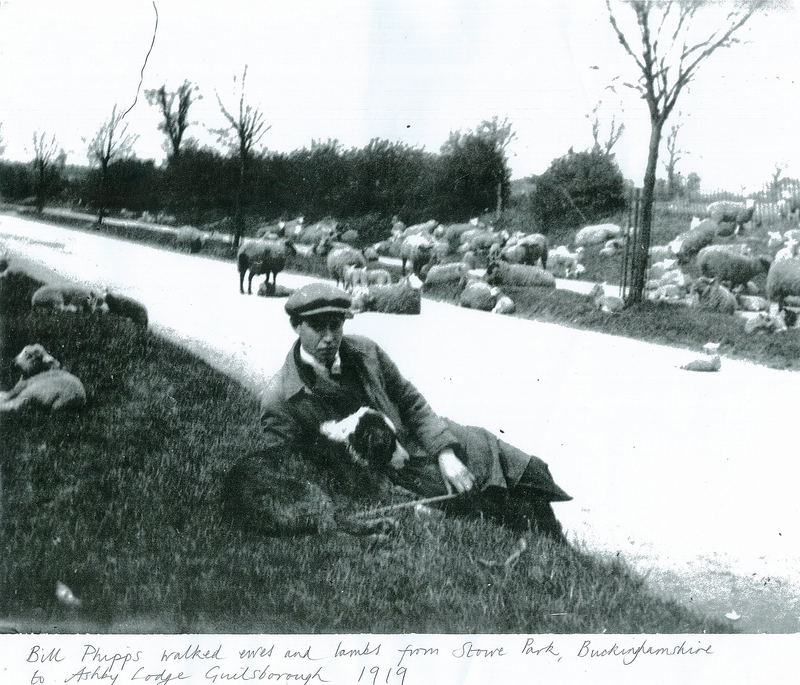
Who used these roads and paths and built them? The cattle drovers who escorted herds of animals from their grazing grounds to the towns and cities established hundreds of drove roads across England, Wales, Scotland.
Drove roads weren’t always straight and wide like the old roman jobs, many trekked precarious passes and highland glens, over the shoulders of hills and through bleak wilderness, or took to the byways to avoid the toll gates and the crowded main roads. Cattle hooves cut into the earth to carve out hollow ways.
A harsh outdoor life, involving accumulated knowledge – of livestock, landscapes, routes, watering places, prices, markets; producing an independent breed with a reputation for cunning and occasional skulduggery, alternately despised and entrusted to carry wealth.
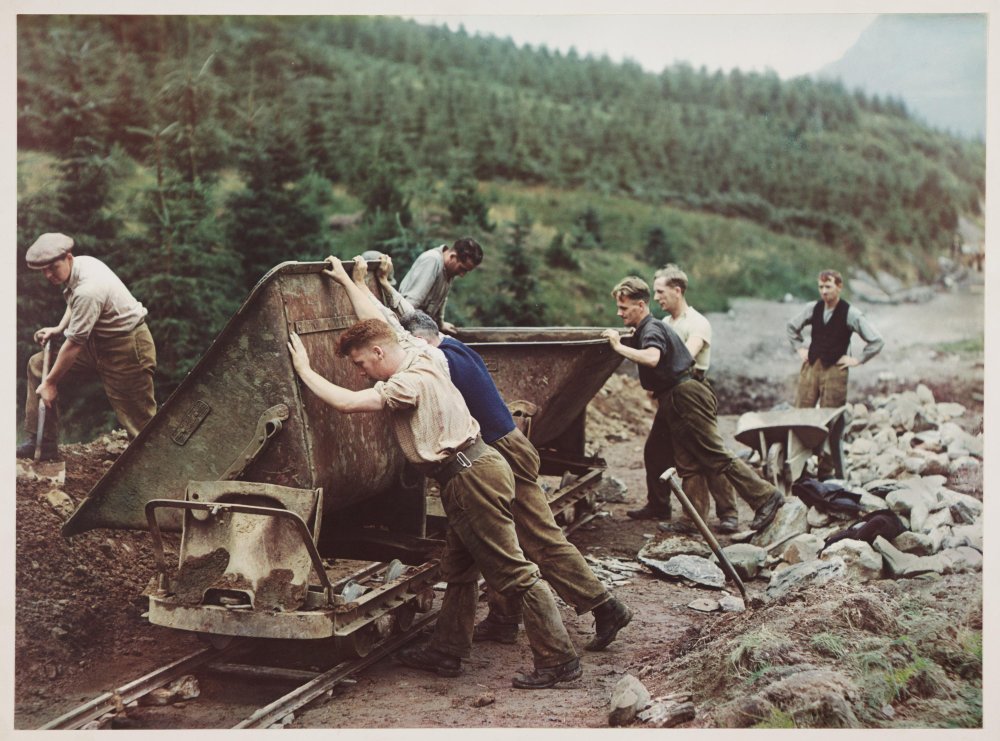
Navvies culture was similarly hard and physically taxing – the ‘navigators’ who built the roads, the canals, the railways and then the motorways were famously tough, hard-living, and had to be… migratory, criss-crossing the land like the routes they laid down, put up in shacks and shanties, often killed by their work, literally buried in the earth they shifted. Usually shunned and dreaded by the better classes who used the product of their work but considered them undesirables. Welcomed only by publicans!
Truckers and others who drive long distance for a living… Romany wandering from common to wood to village… workmen on the tramp looking for a job… The highways echo with them though most of their stories were never recorded. (Although there are oral histories of the later 20th century, eg of working on building the M1 motorway)
Access Makes the Heart Go Wander
“Driving, driving, driving on the Autobahn
In front of us lies a wide valley
The sun shines with glittering rays”
– ‘Autobahn’, Kraftwerk (translation)
The late 19th century saw the beginning of struggles by both urban working class movements and more well to do ramblers over access to open space within towns and cities for recreation and healthy exercise – reviving furious battles to maintain or establish urban green spaces. And as rambling and climbing became popular pastimes, thence to battles to access land in rural areas that their ancestors had been dispossessed from. This led to famous struggles around access and against trespass as at Winter Hill in Lancashire and Kinder Scout in the Peak District in 1932.
And in parallel – In the 1800s/90s when bicycles started to be mass-produced and became affordable to many working class people, suddenly, thousands of workers could easily get out of the cities to the beach country. Upsetting the upper and middle classes used to being the only ones able to access resorts… Outraged toffee-nosed commentators with influence in the Press whipped up a hysteria of the day – workers on bicycles were dangerous and irresponsible and branded as ‘Scorchers’.
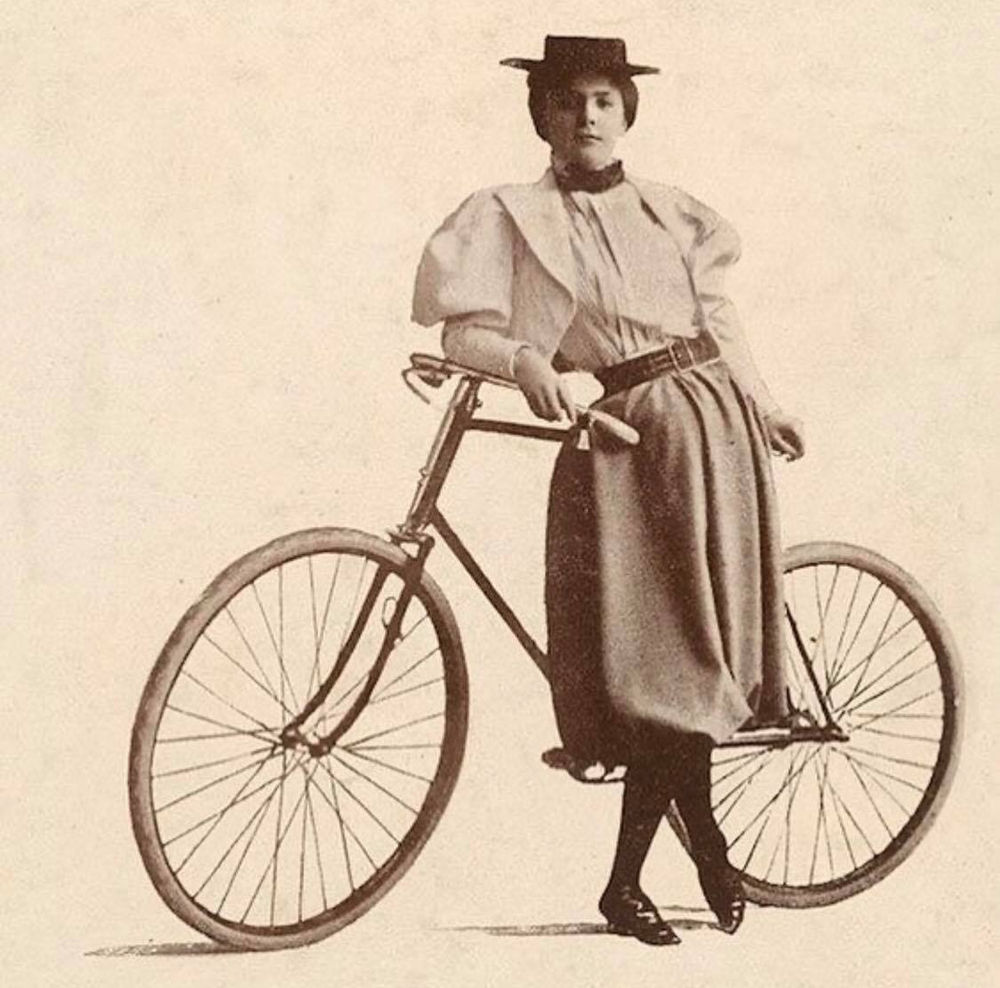
Not long after, Clarion cycle clubs made up of socialists set up, pedalling out to the villages, having fun but also leafletting about the cause… Soon followed by Clarion vans (and later women’s suffrage vans, spreading the word. Sadly the 1909 suffragette airship was the only one of its kind!)
Access continues to evolve… Industrial decline and gentrification through the 1980s onward in London actually enabled the opening up of lots of leisure paths that never were before, usually along the rivers: on the banks of the Thames, Wandle, and more. Industry that once depended on water power or transport closed down, and factories fell into ruin, became overgrown, then were demolished and parkland walks along the streams laid out.
Mass redundancy and unemployment and the building of umpteens of private flats most of us will never afford was the crowbar though: a complex development. Making the most public and accessible of a disastrous economic trajectory?
This has opened up views and places to explore, undeniably… Grumpily, though, we recall how in the 1980s it was fun to scramble into factories that gone back to seed, that had become derelict, along pathways that were inaccessible, unofficial, haven’t yet been tidied up, you had to climb through trees and trespass places you weren’t supposed to go. Twas fun.
Those brilliant wild paths have been officialised, and are much more accessible. signposted paved walks, More accessible for more people and egalitarian, (but I miss the other way !)
We’re also missing the urban wild spaces created by decline of industry eg Beckton, the Bricklayers Arms – left to go green, used by kids, teens for vast playgrounds… Nunhead Reservoir, where we used to break in to watch the sunset and drink – unofficial access now replaced by authoritarian restriction.
Things that are underground and transgressive become officially adopted and then the autonomy goes out of it! When you have to break the law its cool and its yours – when they recuperate it, it’s out of your hands, out of your control, back in the hands of the ‘proper authorities’. It feels less like your space a bit.
Ok, this is all debatable..! Access Legislation that has opened up massive areas of open land up to walkers that was previously blocked, in the last 25 years, is obviously a great step forward. Proper paths are quite good if you’re infirm or wheelchairbound.
But in the country, farmers still obviously block footpaths to walkers all the time. Rural-urban aggro: economy vs leisure, function vs ambience. There’s all sorts of complications here: townie-bumpkin mud slinging, class, real political clashes. We should go into this more too sometime.
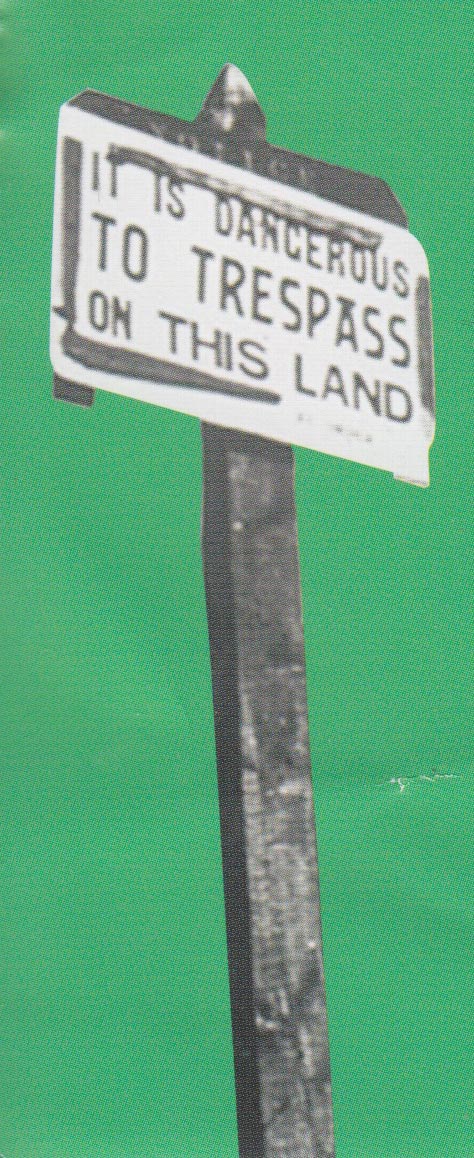
Let in air, light, police
(Paul’s graphic ‘your home has been chosen’)
If the rich could block the plebs from crossing their turf – sometimes the opposite applied – roads were driven through neighbourhoods to disperse and control the rowdy poor.
The Romans of the Imperial era knew what a well-made and well-maintained good straight road meant – you could move troops quickly to beat up and cow any locals who started to complain about the Emperor’s taxes. Roads = Empire.
Britain built its own empire and roads – then railways – following on from its naval supremacy as vital in the early rationalisation of colonised space.
General Wade’s new roads in the 18th century Scottish Highlands allowed rebellious clan culture to be more easily destroyed and later for sheep to be driven in to replace evicted people.
Baron Hausmann’s wide new highways in 1860s Paris were an attempt to counter the feared Paris Mob, a dispersed and streetwise body which had overthrown 3 monarchies in 70 years, adept in alleys and narrow streets, (where cavalry couldn’t penetrate).
Going even further, 19th century London saw new main roads being planned and built deliberately along routes to enable the demolition of old slums and rookeries, poor, overcrowded and often disorderly communities.
Between 1844 and 1905, New Oxford Street in St Giles, Farringdon Road, Shaftesbury Avenue, Victoria Street in Westminster, Commercial Street in Spitalfields, Bethnal Green Road, Stamford Street in Southwark, Aldwych & Kingsway were all built with the deliberate aim of bulldozing notorious slums and getting rid of their inhabitants.
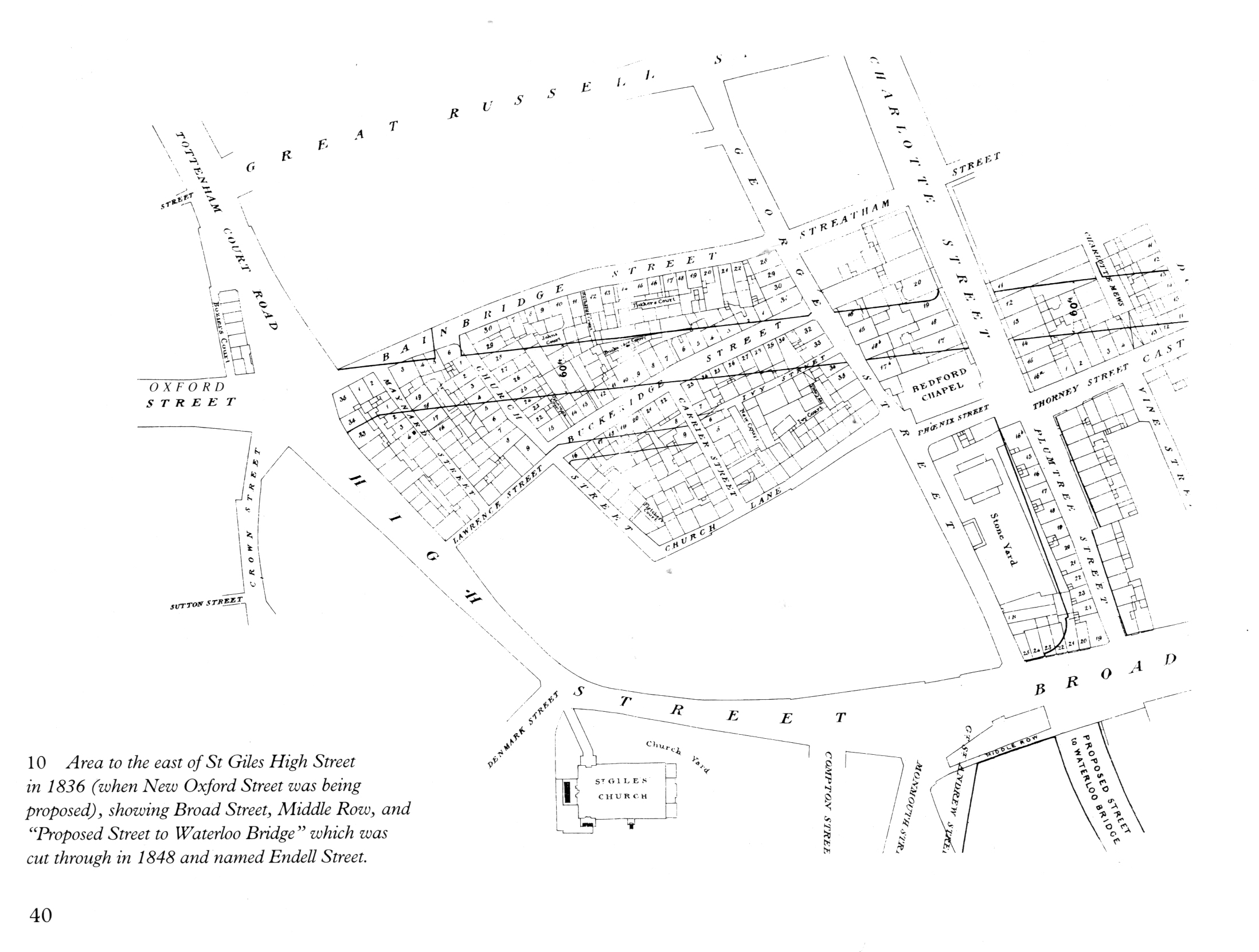
The dispersal of these troublesome folk, their removal from proximity from centres of power was the object – as in Paris. His Majesty King Mob, London’s riotous crowds often coalesced in these barrios, putting fear of uprising and social crime into the powers that be.
These demolitions show a direct parallel to the process of enclosures of land – especially enclosures of ‘waste’ and open spaces where fairs were held, revels took place, people lived outside or gathered for fun and protest, where gypsies camped. The people using the place were a reason, sometimes the main reason – to fence off the land and ‘improve’ it. In the Scottish Highlands the whole way of life was shredded to ‘improve’ the land, by emptying all the residents out and replacing them with sheep. The landlords justified it by calling them lazy dirty and feckless.
Magic again: Opposed to and imposed on wild woods, moors, wild places like highlands, unenclosed land, wild city spaces like rookeries – roads can conquer wilderness & impose order; magical repression. Also wondrously you can save some of the poor from bad ideas if you remove them from ‘sources of infection’ – places with bad vibes that induce rebelliousness and criminality which are of course mindsets, or genetic, not economic in origin. Obvs!
As noted above – the gates in Bloomsbury are at their height when roads built through poor areas to destroy rookeries are beginning but the tollgates are being taken down – the rich making their places inaccessible is paralleled by greater interference in the housing of the working classes, and urgent improvement in main road speeds. To be fair these two impetuses could have come from different factions of the bourgeoisie, but none of these things are in fact incompatible.
The rich really didn’t have privacy from their underlings till the 19th century. Now, they could wall themselves off properly for the first time.
Not only were they able to expand the empire throughout the world, they could more easily extend control into their own backyard, and their conspicuous consumption and conspicuous self isolation from the poor became more marked. One law for them and one for us was now easier and more profitable to impose.
This continues into today – lives of the working class face increasing surveillance, sanction and control: CCTV, benefits checks, documents needed, IDs required and so on, while the wealthy can hide behind super injunctions, offshore accounts… Free movement for the super-rich is paralleled by tighter restrictions for the rest of us.
But social control has always gone along with ‘progress’.
Early Social Housing was often built to ‘replace’ the rookeries demolished in the 19th century, but it was loaded with social control and moral structures, to divide and conquer the potentially revolutionary workers and set their minds to the moral way of life. As enclosure was integral to rural road improvement, new enclosures of the mind and behaviour were laid out in the urban reshaping. But setting rents high and rules restrictive they excluded most of the poor they cleared – sometimes intentionally.
Today the great grandchildren of the commentators (and inheritors of the land) who whipped up campaigns to clear these slums clamour for the removal of ‘unproductive’ classes from inner city social housing that replaced the rookeries.
You have no right to live play etc where we want to, if they think otherwise… Like those who used common land and enjoyed its free resources, council tenants living among high rent areas are immoral for existing.
Funny though – for all the 19th century urge to destroy warrens & rookeries of inner London and make straight lines, so many 20th century council estates were built to almost replicate them… North Peckham Estate, Thamesmead, Stockwell Park: deliberate recreations of a model, intricate, dark, linked by off ground walkways, and full of places of concealment / always likely to be havens for ne-er do wells and a territory suited to both crime and urban resistance, excluding law n order. It took 30-40 years for that trend to be reversed again to today’s generally separate blocks, though by the early 80s council planners (often nudged by police) were removing estate walkways along which crowds moved above ground in riots and from which ‘concrete rain’ could be lobbed down at police.
Riots and rebellious cultures led to many changes in urban architecture, post 1981 uprisings especially – not just the removal of bridges but the removal of whole roads. The ‘Brixton Triangle’ – Railton Road, Mayall Road – was the nexus of the April 1981 riot, allowing crowds to move back and sideways flexibly. After ’81, the end of Mayall Road was demolished and blocked, replaced by the building of Bob Marley Way and Marcus Garvey Way, both dead ends: no crowd movement possible. Round the corner, the squatted blues clubs of Dexter Road, heart of the rebel culture of the area, had to be completely obliterated in the 1982 crackdown, replaced by social space, though empty.

Funny how use of space has changed in Railton Road; when we blocked the streets in the 80s & 90s it was with petrol bombs and barricades. The street was full of people always. Now it’s a Low Traffic Neighbourhood. Seems empty always.
This is more related to gentrification and removal of working class black people than barriers on cars though.
Off the Rails
We haven’t really talked about railways here, though like new roads they were sometimes used to bulldoze the poor from inner cities. Not going to go into rail much; a different article that would be. But the huge profitability of railways, sponsored by rich MPs (rail company shareholders), able to bulldoze anywhere, is relevant maybe to this essay, as is the “psychic break in social thinking caused by railways” (Lawrence Eaton) – among many other revolutionary developments, possibly most importantly speed became seen as the measure of progress. This carried over into transport innovation re roads.
Note though that paradoxically railway building increased city congestion in London, just as more and faster cars means traffic is slower.
While rail travel has been crucial for 180 years to modern social structure, it has along sat a bit uneasily with capitalist consumer culture – moving a lot of people at once might be efficient but the infrastructural costs are crippling – making people buy cars slows travel down immensely but jacks up the financial returns. Kerching!
Hence the 1960s Beeching rail cuts, along with road promotion, and in the US the killing off of rail by road capitalist interests?
Rail lines were openers up though socially, allowing people to move further from work so long as fares were cheap.
Railways played a huge part in the spread of city suburbs, also in modern cities lubricates the creep of gentrification. When the London tube comes to Bermondsey or Hackney the middle class come to colonise.
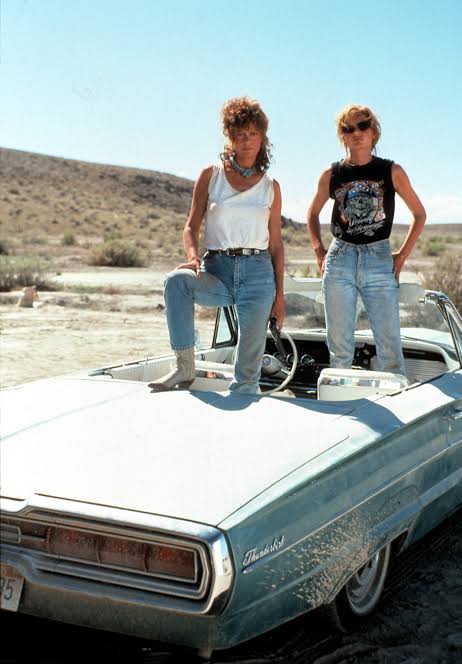
But the reverse is true: roads can represent escape from trapped futures. The road can carry you outta here if where you live is shit; kids hanging out at bus stations for kicks know. Thelma and Louise know.
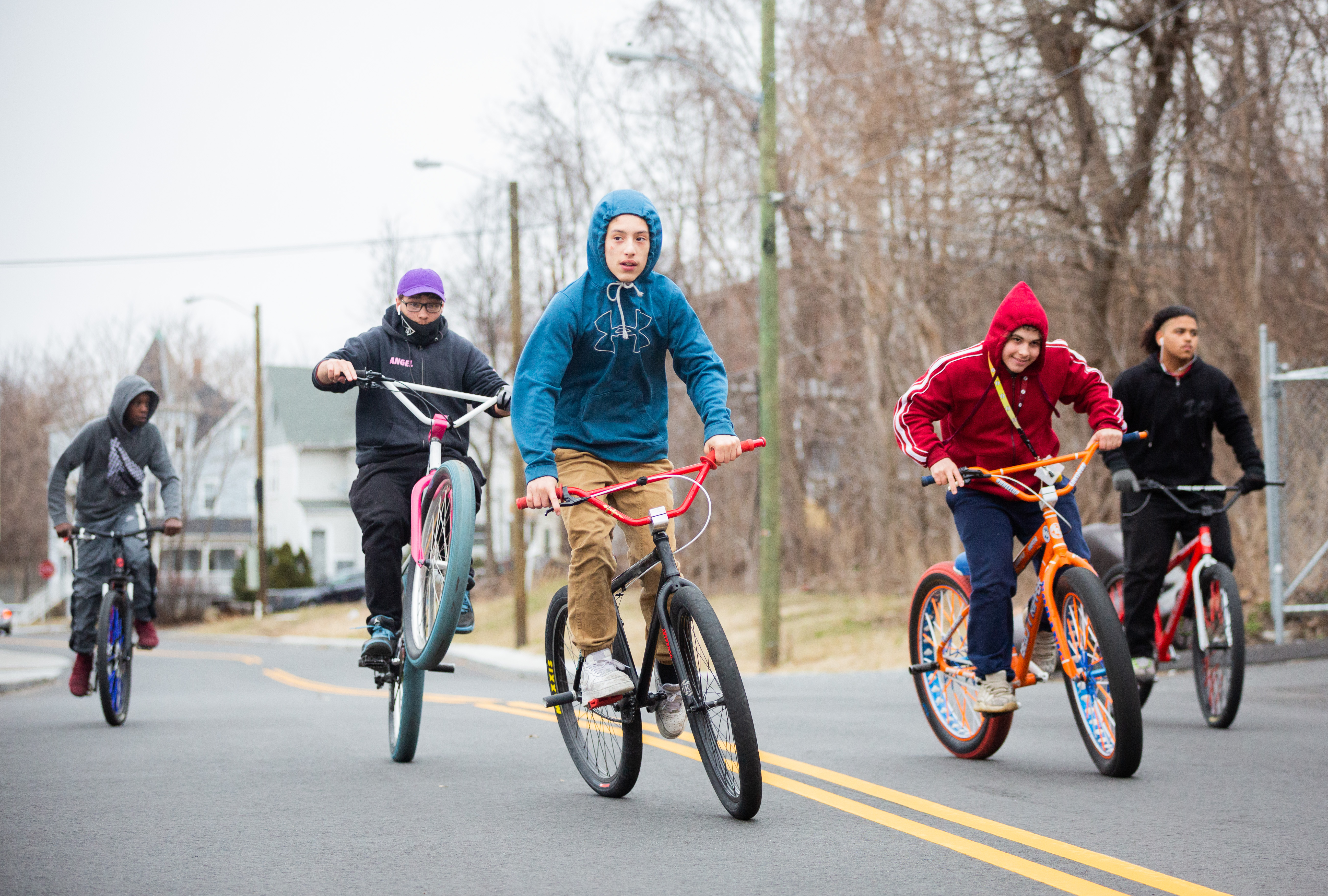
Whose streets? Our streets!
There are legitimate ways to use a road – to travel along it. Other uses are not necessarily to be encouraged, as they may subvert the highways’ true role (ie cause economic, social or political disruption).
So ‘control of streets’ by the ‘properly constituted authorities’ is vital. Street football, pickets and demonstrations, blockades, local speakers’ corners, Critical Mass Bike rides, crowds hanging out on ‘frontlines’, must all be cleared away as obstructions to linear progress along the highway. Or making money. And even then: costermongers and illegal barrow boys must be harassed out too. Street markets – well it depends if its cheap food for migrant communities or posh bread and fancy olives. (Disclaimer – I like olives)
Just as rowdy Fairs, wastelands, romany stopping places all had to eliminated – the potential for loss of control of space to elements that don’t obey the rules/live by the mores means disorderly or unlicensed activities on roads have to be crushed.
Kids using the crap city streets as a playground may not face as overt police violence but gradually the proliferation of cars has largely done for it.
And the street sleeping homeless – if visible they are undesirables, although product of broken housing/health/social systems they are to blame for being seen. Burn their tents.
But this sparks resistance. Police clearing socialist speaking pitches in 1880s London only stimulated higher crowds. Special Patrol Group cops trying to force Brixton black youth off Railton Road led to uprising in 1981.
Older routes were both processional and rowdy; as used by crowds. Hollow ways were tracks physically worn into the earth by long use. But are there social ‘hollow ways’ too? Roads and paths so long used they enter into our un/consciousness? The roads that mobs & demos always used eg the well-trod road from the City of London to Parliament saw countless protest marches and battles along it, and places of conflict – the City gates, Temple Bar.
Also the road those condemned to hang were taken from Newgate Prison to Tyburn – up the ‘heavy hill’ at Holborn bridge, along Oxford Street, stopping to be handed a pint in many pubs; all imprinted in London’s working class culture.
Like Beating the Bounds: the pubs and stopping places holding shared meaning. As in a circular progress around the parish, there are linear routes with accumulated resonance.
To some extent transport cafes on motorways echo the Tyburn route pubs? Ace Cafe? Service stations? The Pilgrims ways eg the Old Kent Road… driving the A303 into the West? The Snake Pass; the A5 to Holyhead? The USA is full of such resonance.
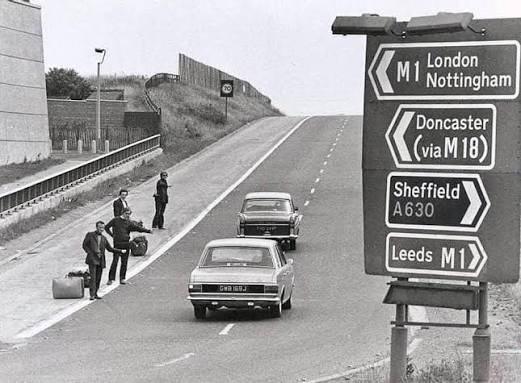
Personal rituals on a journey are important too – coming home or leaving home, there are markers that tell you “I’m nearly there’ or “I’ve left my ends”. Hitching up the M1 to Sheffield from London always had those for me – the now gone laybys at Brent Cross and the rocks at Watford Gap are etched into my mind, as is the long run of the Parkway down into Sheffield City Centre.
My mother held that you could with ritual magic protect the home backdatedly. As we turned the last corner into our home street after a holiday she would always say “I hope the house hasn’t burned down”, this being an amulet projecting back through time.
Roads were also fruitful venues for anti-social crime (and social crime): highwaymen targeted travellers on the high roads, Camberwell’s poor folk loitered near the Cock Inn, to spot wealthy disembarkers from stagecoaches, Islington’s St John Street/Pentonville Road sheltered so many robbers they got their own mounted police. If 18th century thieves hid out on wild places, heaths and commons, the roads & the rich travellers on them were meat and drink.
The stopping places among the road weren’t just rest stops for the weary journeyer – they were havens too for the rebels. Roadside inns and pubs were known to be haunts of highwaymen. Landlords doubled as tipsters to the gentlemen of the road.
(Just as they sheltered poachers in the royal parks – sometimes being prosecuted like John Huntridge of Richmond, who turned the tables on the odious Prime Mincer Walpole)
Where do Transport caffs fit in to this? Bikers in the Ace cafe etc? And Box Hill Sundays? Bank Holiday mass biker meet ups? Not sure. Showing off your collectivity or parading your own vehicle? Illegal drag meet-ups? And joy riding – Subverting car culture or reinforcing it? Getting round the high cost of (maybe illusory?) automotive autonomy by bypassing the buying bit? Speed freakery and kicks as antidote to the death sentence of boredom, wage slavery, poverty?
Travelling the road long distance though now is bloody expensive.
What happened to hitchhiking? Hitching culture – travelling free – was once everywhere but has nearly vanished in Britain. Like squatting, it was a trespass against capital. That Bloody Rutger Hauer film? Increasing individualism since Thatcher? My car is my castle?
This is Respectable Street
“Its in the look they give you down their nose
All part of decency’s jigsaw, I suppose”
– ‘Respectable Street’, XTC
Wealth could buy you gates against the plebs, even if they were just passing through.
London tram routes sometimes were routed elsewhere when the rich residents protested they’d affect house prices; eg no trams went up into Hampstead.
Gardens in posh squares were reserved for rich residents in Belgravia, Kensington. No danger of encountering rough types in the rhododendrons! (unless you were looking for that kind of thing)
And as noted above, by the classic era of suburban English stepfordism, blocking access to those ‘beneath’ you had ceased to be the unique perquisite of the very wealthy. In the 1920s and 30s, walls were built across streets to keep riffraff from new estates out of slightly more upmarket areas – in the Oxford suburb of Cutteslowe most infamously, but also at Downham in SE London and elsewhere.
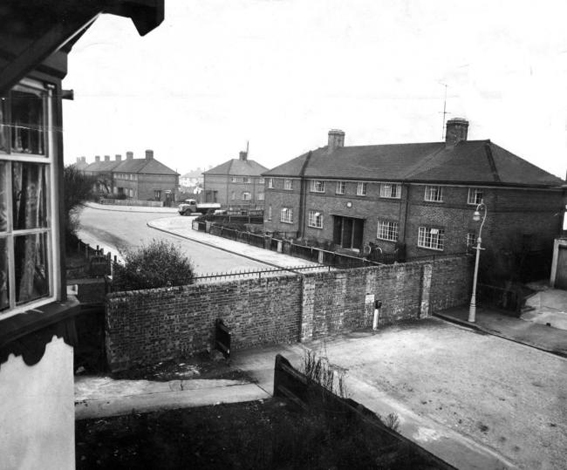
Norwood New Town in South London was built to house the working classes necessary for the building of local schemes and to serve the local well-to-do, but walled up one three sides to prevent them wandering into posher parts of the suburb. No wonder some watered down the hill in Penge & got in fights with the cops (and each other).
The Scots were pioneers in resisting class walls, winning the battle to demolish Harvies Dike in the 1820s, and the Glen Tilt agitation in 1847.
It’s not just a UK phenomenon. in Dublin in the 1960s and 1970s as the city’s suburbs expanded dramatically (as London did in the 1920s and 30s) there were numerous cases of adjacent local authority and private housing estates being separated from each other by walls, bollards or open spaces – in places like Tallaght, Donaghmede, Coolock, Greenhills and Rathfarnham.
The sharpest point about some of the urban walls was that often they divided people not so very different from each other: eg at Cutteslowe the residents on both sides were largely skilled workers or clerks, but the housing tenure was council housing on one side and private on the other. Snobbery and aspiration rule de nation!
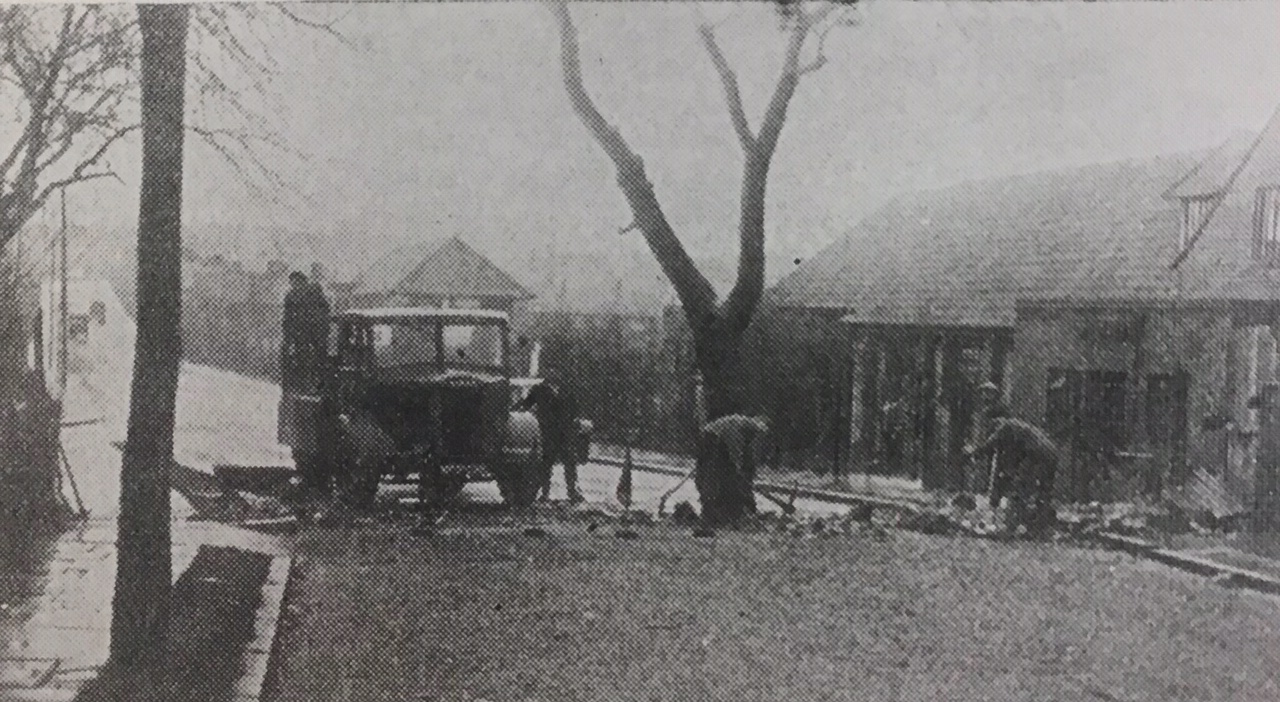
But if there were streets whose prestigious class had to be defended, like we saw with the rookeries bulldozed to build high roads, there were also postcodes of black infamy. Booth’s poverty maps attempted to chart and quantify this, inking in class and predestined social strata, cartographic phrenology. Places so bad that taxi drivers reject the fare. The Railton Road Brixton ‘Frontline’, Campbell Bunk in Islington…
They’re Going to build a Motorway Through My Back Garden
“They says to ease the traffic flow
A bit of my back garden had to go”
– ‘They’re Going to Build a Motorway’, Leon Rosselson
Famously LA was designed as a city of cars where noone walks – no one who IS anyone, anyway.
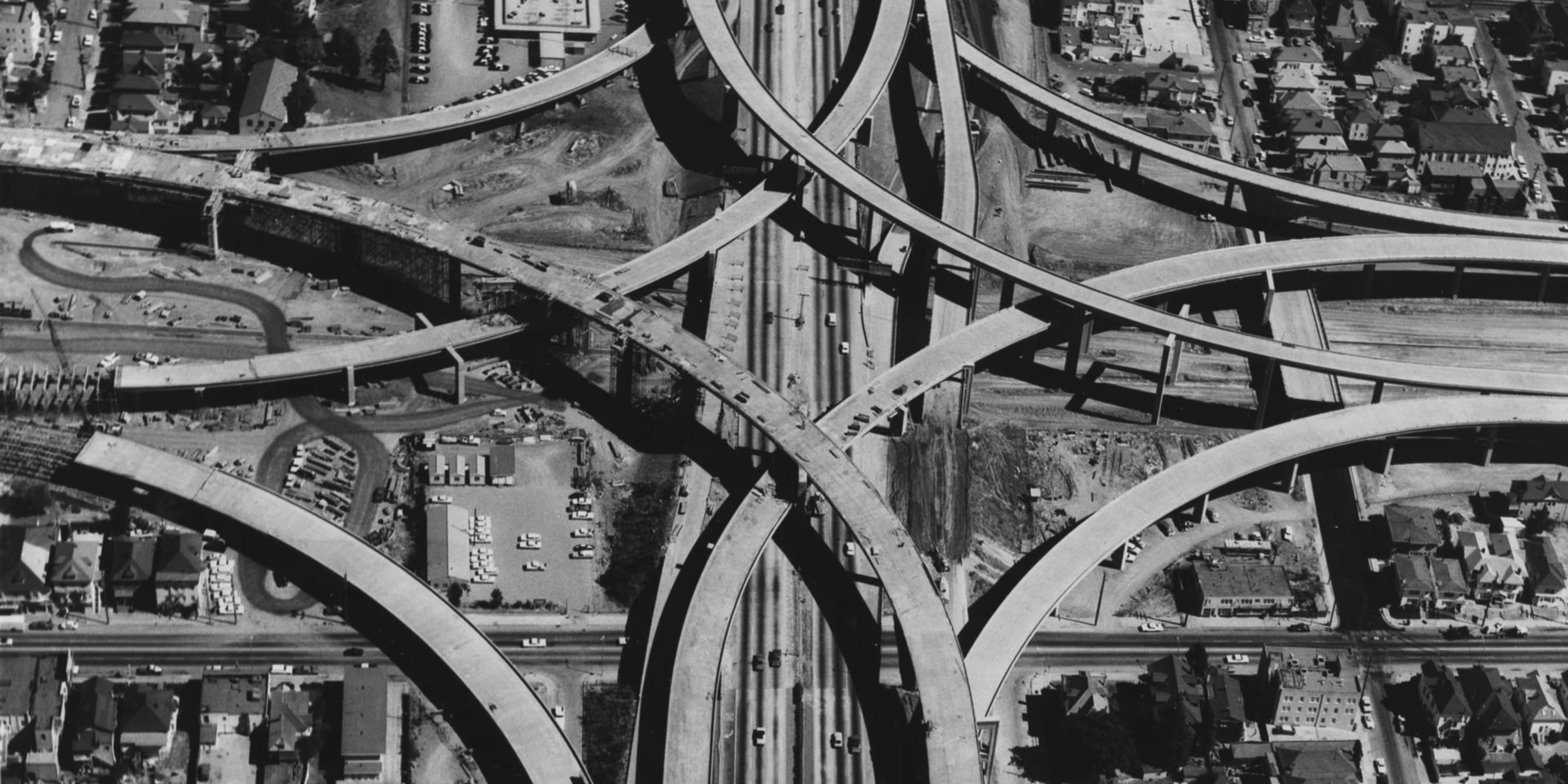
But travelling by car or even tube can disconnect you – not only from the outside environment but also from working out how one area links to another. Mapping a whole city for your own use often requires walking or maybe cycling – moving slow enough to clock where you are. When I first came to London I used to go out to get lost, journeying at random to find out where the road led. Mind I was on the dole and had the time. But I found funky places I would never have set out to end up at.
London nearly ended up as LA in the 1970s: The many Ringways routes feverishly drawn up by transport & urban planners in the 1960s and 70s envisioned a capital encircled and cross crossed by concentric and bisecting motorways and 6-lane carriageways that would remove traffic from the areas people lived in but make it quick and way to drive around. The vast web of roads would have involved mass demolition of thousands of houses and eventually came mostly to nowt, partly scuppered by the huge cost in an increasingly tight economy, but much more fundamentally by an uproar of collective resistance from residents threatened by loss of their homes.
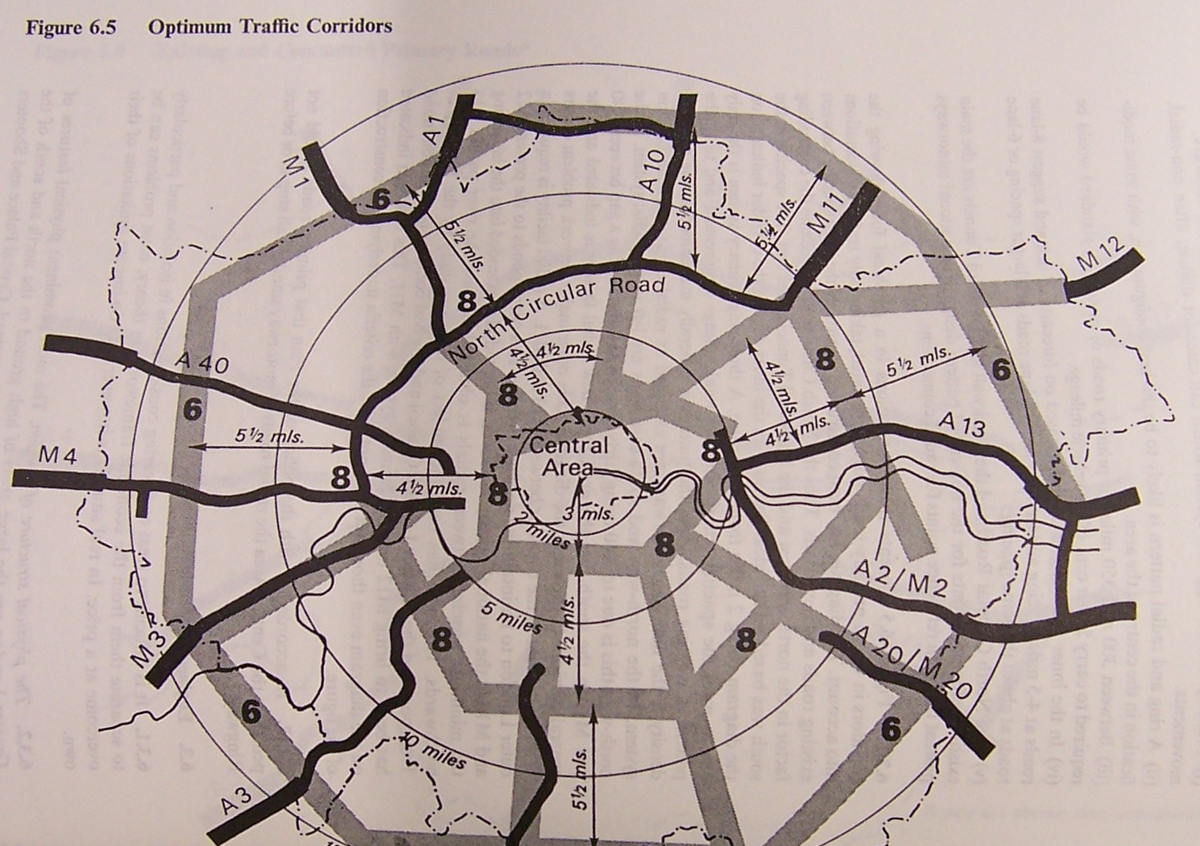
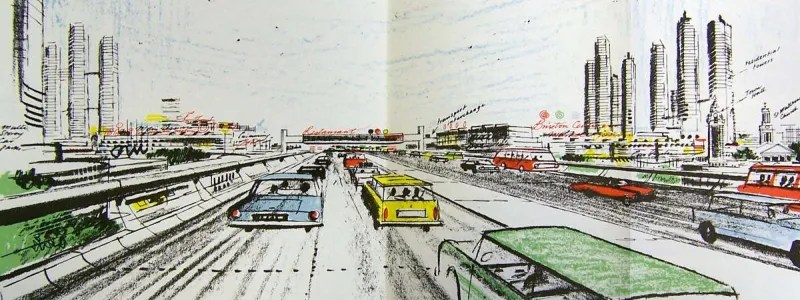
The origin of the Ringway plan was however at least in part utopian – seen as an ecological and social project, in dread of the projected congestion growing car ownership threatened, in a city still dominated by existing tiny & narrow streets. The idea was to hide new motorways underground or raised above ground, out of the public space as much as possible. The minds that dreamed social housing blocks could be built as utopian city machines for good living thought you could make most of the city more habitable by separating cars and people.
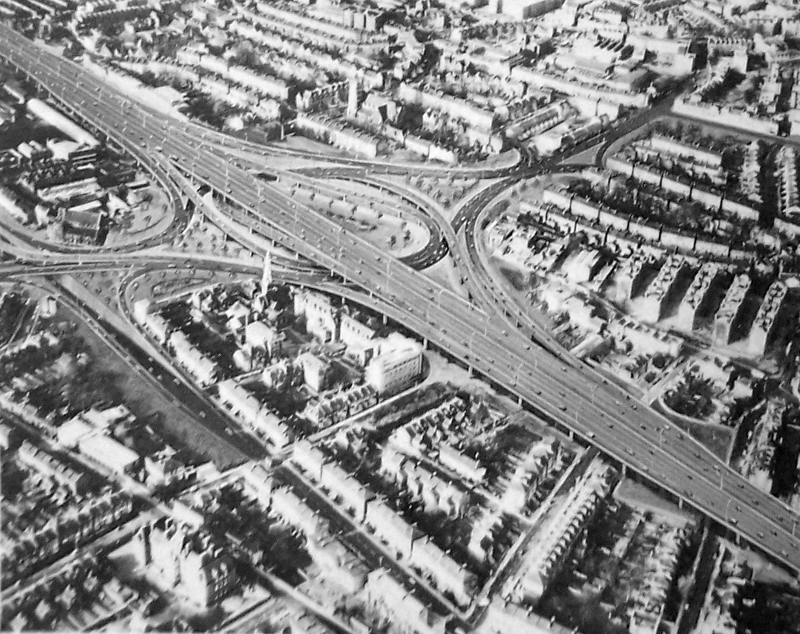
Up and down the Westway, in and out the lights
– ‘Londons Burning’, The Clash
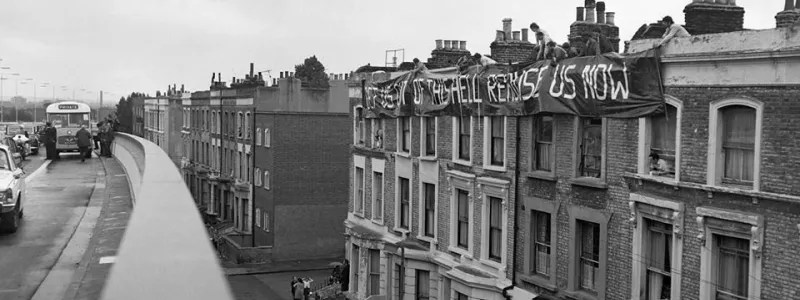
Socially progressive aims can often turn out shite (especially when imposed on most of us by an elite who see things from outside). But schemes built thus integrating worthy aims with control, repression, elitism and/or indifference can unintentionally (and specially when resisted collectively) create new space we can inhabit. The thousands of London houses bought up and emptied under Compulsory Purchase Orders to make way for never-built Ringways, then left unoccupied, fell into the hands of squatters who built amazing alternatives, eg in Brixton.
1570s Westminster enclosure fences created hideyholes for ne’er-do-wells; parkour emerged to navigate brutalist concrete; South Bank undercrofts were adopted by skaters; the Westway roofed Carnival sound systems.
I spent all summer with a breakdancer lover
And a Korg vocoder in a westway gutter
– ‘Electrosex’, Go-Kart Mozart
The Ringways went the way of other grandiose plans to overhaul London which never happened.
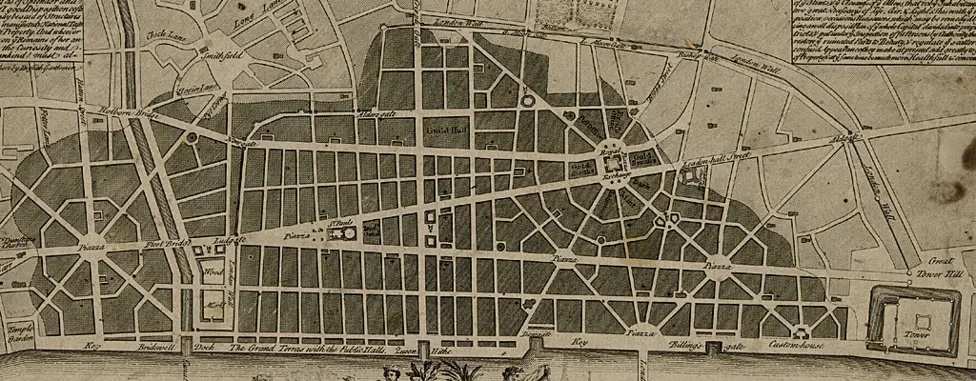
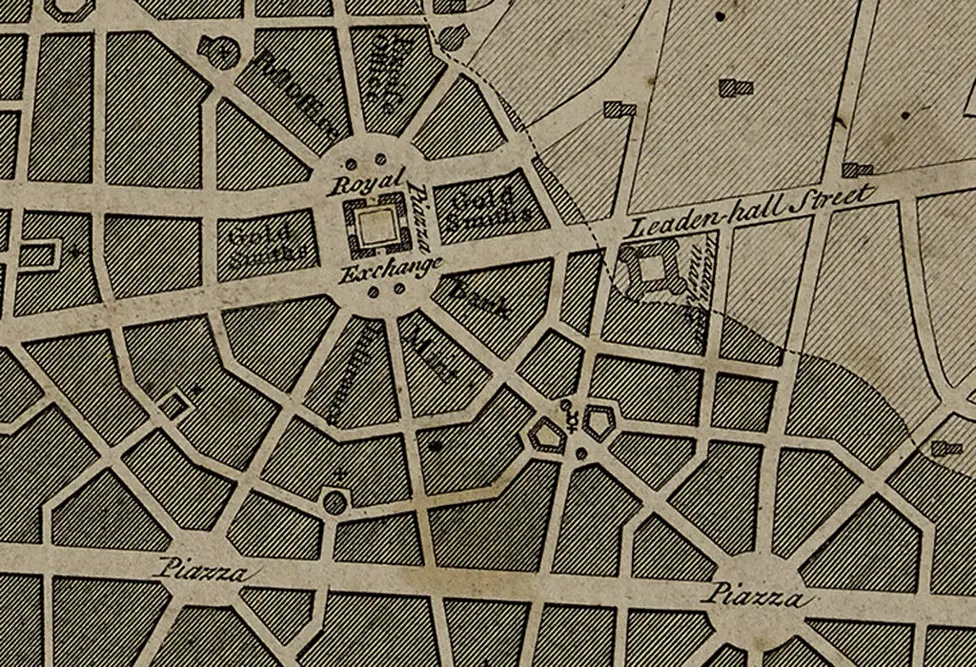
After the 1666 Great Fire devastated much of the City, Christopher Wren submitted a plan to reconstruct the whole area on a logical grid system of streets. Handed in to king Charles 6 days after the Fire, which looks a bit suspicious, tbh, Chris, can we check your pockets for a tinderbox?
Changed Priorities Ahead
The most mind expanding event to my thinking of the 1990s anti-roads /Reclaim the Streets movements was not the great victories – brilliant as they were – but the time we squatted a motorway for the day – the M41 in West London.
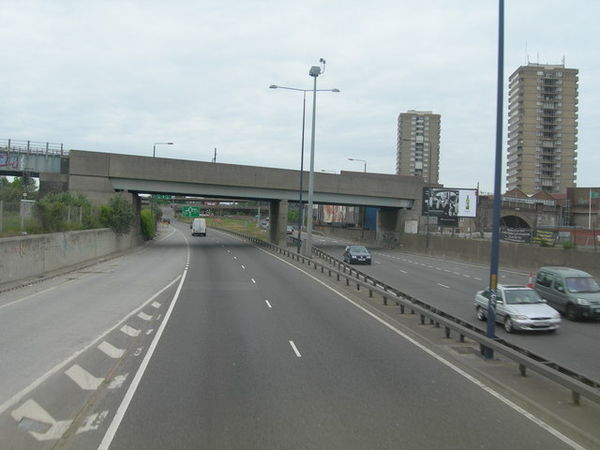
Coincidentally, occupying one of the few bits of Ringway they actually got built !
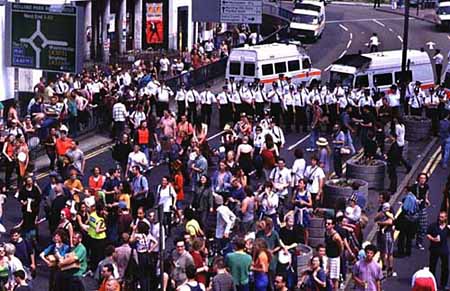
The Anti roads campaigns of the 1990s, against the building of (mainly rural) motorways and major roads through Oxleas Wood, Twyford Down, the Newbury Bypass, the M11 Link Road and many more, created a diverse and fluid movement which merged with squatting, rave sound systems, combining practical blockading and sabotage with both weird mystical hoodoo and Middle English respectability. And it halted a massive road building government plan. Partly why the 1994 Criminal Justice Bill had it in its sights, and why RTS and the anti-roads campaigns were heavily spied on by undercover police officers from Special Branch.
Reclaim the Streets (RTS) evolved from a protest group about cars through the London end of the anti roads movement into something more complex. In its classic period RTS gave birth to some fantastic moments – politicising the idea of subversion of a road as ‘going somewhere’: squatting motorways, planting trees on them, building street furniture in squatted anti M11 Claremont Road, turfing pavement, turning water hydrants into new London rivers… de-constructing the road as a linear route.
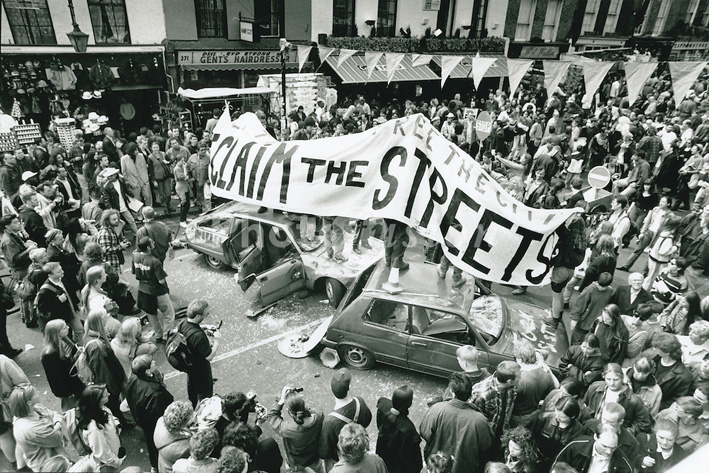
RTS inspired 1000s of similar actions, and a thread runs from the 90s through Climate Camps to Extinction Rebellion street blockades…
It’s also interesting that roads camps often grew from the travelling elements that once would have been called the ‘Convoy’. Although much of the 1980s peace convoy had been dispersed… ironic in that the original convoy had been smashed as a nomadic threat for living on the roads.
RTS and anti-roads camps actually reflect the dual nature of the movement – from the eminently practical and local to the dreaming and fantastical. And you need both to move things forward.
When writing a statement to the Inquiry into Undercover Policing, Core Participants who had been involved in Reclaim the Streets pointed out that many of the ideas about fossil fuels, car use, public space, etc had been radical enough to get us spied on by the secret state, in the 1990s, but have now come to be considered mainstream socially. As it ever is with political and social change.
It’s not just that on the surface some of the road/space parts of RTS ideas are now mainstream – that the overton window shifted (we helped shift it?) – although the more socially radical dreams we talked about seem even more out of political fashion than in the 1990s. Windows can be closed as well as opened.
It’s also that any social movement that’s at all effective leaves dual legacies – some actual change in social relations, generally combined with a commodification of part of your message/image/ideas turned into ideology.
Capitalism will sell you anything – your radical threat repackaged as pose. Or as a nice but harmless once a year play street.
Here in my car
“Here in my car
I feel safest of all…
It’s the only way to live
In cars..”
– ‘Cars’, Gary Numan
At various times anyone opposing road-building plans has been accused of standing in the way of progress. But when progress is a steam-roller heading your way… what else to do? In the old Nottingham folktale, the Fools of Gotham pretended to be mad to fend off a visit from the King’s Progress, blocking his road being laid over their meadows.
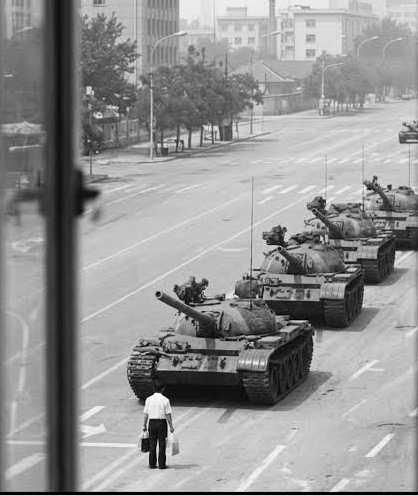
One of most iconic images of modern protest – the bloke in China standing in front of the Army tanks sent in to crush the Tiananmen Square protests. Standing in the Way of Control. The ancient sages said: So can one just man defeat an ARMY!
Progress for who and why?
“Mass motoring effects an absolute triumph of bourgeois ideology on the level of daily life. It gives and supports in everyone the illusion that each individual can seek his or her own benefit at the expense of everyone else. Take the cruel and aggressive selfishness of the driver who at any moment is figuratively killing the “others,” who appear merely as physical obstacles to his or her own speed. This aggressive and competitive selfishness marks the arrival of universally bourgeois behavior, and has come into being since driving has become commonplace. “
-‘The Social Ideology of the Motorcar’, André Gorz
Inside your car it’s private, like you’re shutting out the urban wildwood. You aren’t forced to sit next to strangers or people you object to (apart from your family!) You can travel at your own speed (well, sort of)… to the destination of your choice (again, sort of). Play your own music. Slob out and smell if you want (though lots of blokes do that on the tube as well…)
Cars are undeniably convenient if you have to shift a lot of luggage, can’t get down the steps at the tube station; have to get to the back of beyond.
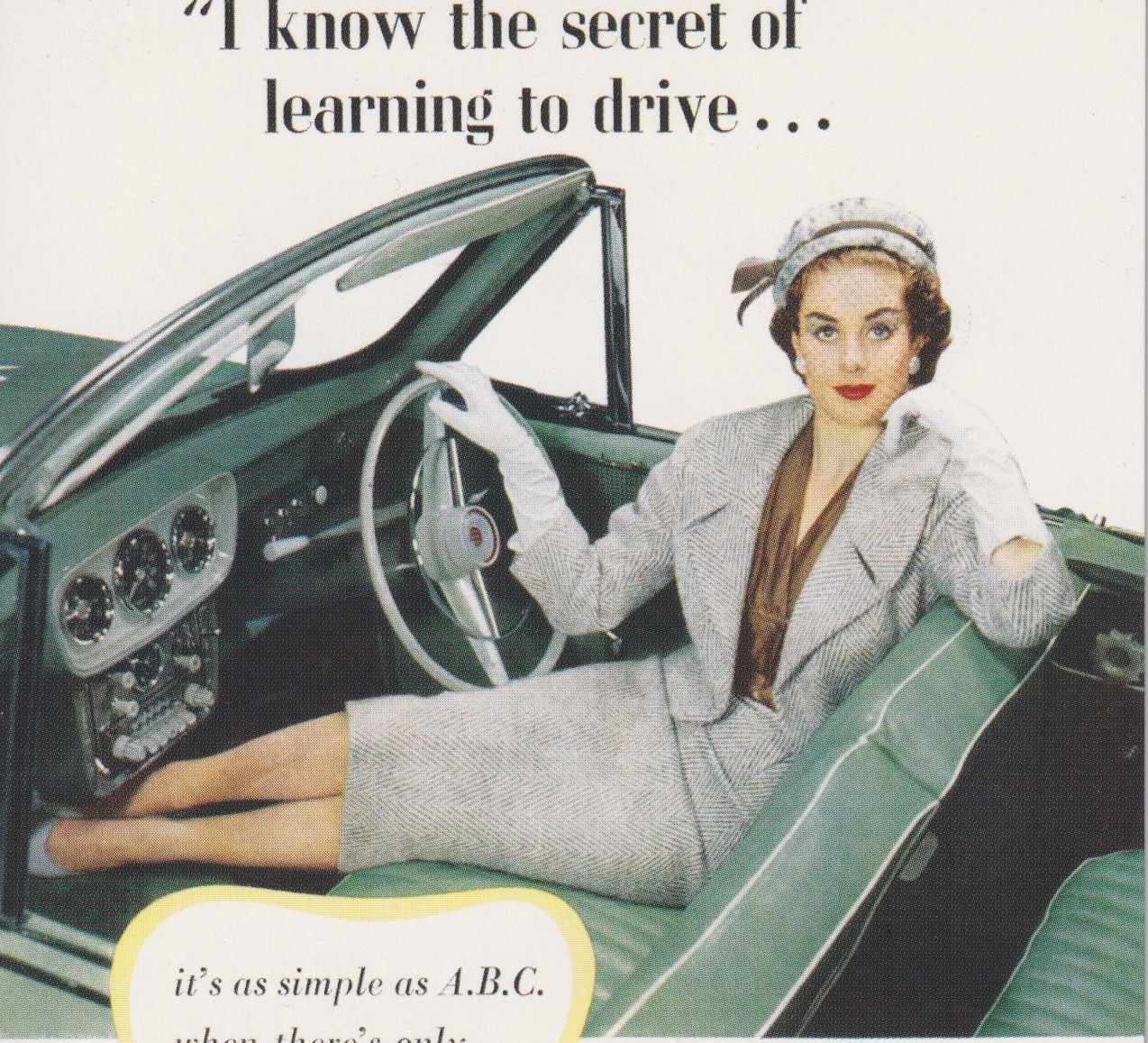
The way that cars are sold to people goes way beyond the illusion of freedom though; it’s aspiration in a nutshell. The shiny wheels in the suburban driveway; achievement, self-reliance; but also something to show to the neighbours. A lot of car culture is about display, parading your success, and car advertisers know that and play on it. Part of the wider mass expansion of leisure – the exploitation of human pleasure. Obviously car selling is almost the peak of this – car ads are more and more mini-movies, selling you freedom of the open road, the sexual magnetism slipping behind the wheel bestows, the erotic thrill of speed, the rabid jealousy of the neighbours.
“Heard the neighbour slam his car door
Don’t he realise this is Respectable Street?
What d’you think he bought that car for?
‘Cause he realise this is Respectable Street.”
– ‘Respectable Street’, XTC
But as André Gorz pointed out – actually when you get down to it, the freedom to move far and fast is illusory as you’re stuck in a traffic jam on the Cromwell Road. And in fact the neighbours have the same car as you.
(Though the simple act if walking for pleasure can also be commodified. Not just THE OUTDOOR GEAR. More tat for your rucksack than you can possibly carry further than the storage cupboard. But also the competitive/performative side – Doing the caminos next year, man. Mountain therapy – the very real benefits of green space turned into a commodity.)
Hitching a Ride on a Tinfoil Dustcart
These days UK road policy veers periodically from pro- to anti- road expansion. In London congestion, pollution and traffic snarl-ups have largely led most local councils towards trying to restrict car use by creating ‘Mini-Hollands’ or ‘Low Traffic Neighbourhoods’ (LTNs) – blocking some suburban roads to cars, especially those which have previously become ‘rat runs’. Opposition to LTNs in London is linked to campaigns against the Low/Ultra Low Emission Zones, undeniably aimed at reducing air pollution, and campaigns against speed restrictions and speed cameras (which has expanded to direct sabotage of cameras, including a bombing which set fire to nearby houses). New dedicated bike routes in the capital have also come under heavy attack.
LTNs generally mean if you have to drive or choose to drive, it’ll take you longer. Admittedly annoying if you have to drive for work or for other reasons. Maybe all you can say re LTNs is that you’re bound to support the ones that make space near you nicer and don’t impede your car trip to the shops & oppose the vice versa.
LTNs enrage drivers who feel there should be fewer restrictions on their freedom to drive where they want. All sorts of accusations are thrown around – tyranny, ableism, class prejudice… The debate often quickly lurches into conspiracy theory country: LTNs are part of plots to control the population, stop people moving around outside your own area. Sometimes this is connected to the “15 minute cities” discussion – that neighbourhoods could be re-constructed to mean all amenities are within 15 minutes walk for most of us. Obviously this is more like how social and economic life used to be before out of town shopping centres, hyper-centralised facilities you often have to drive to.
But 15 minute cities and LTNs are “obviously” a plot to put us all in camps, part of the Great Reset.
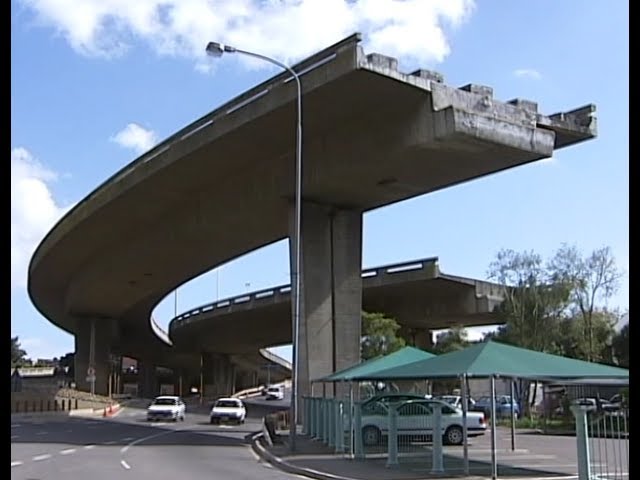
I’d be interested though to know the crossover between those who romanticise a 20th century past where everyone knew their place, there was ‘no violence’ etc/despise modern ‘snowflake’ culture, and those who believe making neighbourhoods more pleasant and localised is worse than Nazism.
You can demand the ultimate and permanent freedom to move where you want but be furiously opposed to that freedom for others – how many pro car/anti-15 minute cities theorists are pro- freedom of movement for migrants or travellers?
Outrage at Extinction Rebellion road occupations – how dare you prevent my right to drive? But rightwing papers that howl ‘hippies are blocking ambulances’ applaud fascists mobbing lifeboat crews for rescuing migrants in the channel, or countryside alliance tractors closing bridges. The Hammersmith Bridge debate in London is also related to this: the huge cost of repairing an old bridge to make it safe for motor traffic has left it open only to cyclists and pedestrians. It is posited as a cost issue not a deliberate policy closure; the decision leaves some areas with much longer car journeys. Again, if you are affected then it’s an outrage, though many others are perfectly fine with the decision. It’s notable that on the south side the posher residents are narked they can’t drive their kids over to the private schools on the north side, while Hammersmith residents (much lower car ownership) are less bothered.
A comment from one campaigner online was, I thought, interesting: “LTNs are the modern equivalent of the Cuttleslowe Wall”. Is that true do we think? Not in the sense that an LTN road is open to walkers and cyclists, often buses, unlike Cutteslowe which blocked everything.
But it’s also true that someone often has to live along the main roads and who’s that? Generally people in flats etc along roads that can’t be mini-hollanded are lower income than those who live in LTNs, so the increased congestion and pollution along these arteries affects some classes more than others.
A lot of our ramblings along road and path above hinge around the contradiction between ‘our’ freedom to move (nothing must stand in Your way mother Rebecca!) & ‘theirs’; our blocking of roads (RTS XR strikes etc) and theirs (the Duke of Bedford).
It’s not really about morals but interests… and interests do change and conflict.
Always Crashing in the Same Car
Press campaigns against Low Traffic Neighbourhoods, Low Emission Zones, bike lanes etc can often be linked directly to interests; the same people own newspapers who invest in fossil fuel companies. More cars = more profits.
Fossil fuel companies fund the even more demented Spiked & other pools in the rabid commentariat swamp to back their denouncing Extinction Rebellion demos, LTNs, anything that slows down petrol head rule, often giving it a slant of ‘they’re all middle class hippy ideologues’. Not like them sensible rightwing middle class ideologues.
Fossil fuels companies also fund thinktanks like Policy Exchange, who then pay ex-police bigwigs like Richard Walton to write reports demanding more repression of anti-climate change demonstrators. Of a piece with his past involved in laundering intel from undercover police officers spying on supporters of the family of Stephen Lawrence, murdered by racists, in an attempt to deflect criticism of police inaction and corruption.
These commentators are often similarly engaged in rubbishing campaigns against plans to build more housing on green space, labelling opponents NIMBYs; while dressing this up as ‘we need more housing to solve the housing crisis’ – who has shares in house building companies? The question of what kind of housing gets built, for who, and who has control of it, doesn’t often feature in their columns, as private flats makes profits but don’t solve any crisis. What we need is more social housing – requisitioning the thousands of empty corporate flats and rent controls on the private sector would be a start. Which they also oppose.
Goin down that road feelin bad
I’m a goin where the water tastes like wine…
And I aint gonna be treated this way
– ‘Goin down that road feelin bad’, Woody Guthrie
The juggernaut of climate change has to at least slow for the next few generations to even have a chance of living on a habitable planet – for this generation the catastrophe has already hit in many countries. While capitalism can go green, the urge to not burn everything is seen as highly unprofitable and anyone loudly campaigning to not let everything burn must be severely ridiculed and if possible imprisoned.
Like the ringways, like some elements of social housing, there is as utopian impulse to the ideas behind LTNs and 15-minute cities – we can make the city function as a pleasant place with amenities, housing, green space, social space integrated.
Much of the reform that birthed social housing though was determined by a realisation that if this was not done by those in power – a partial concession while most of capitalism remained intact – the fear was that working class people would reform everything, by force, from below eventually.
LTNs don’t really fit this pattern (as sadly the threat of working class revolution is currently minimal).
A section of those who plan urban space genuinely think a more pleasant urban environment might be nice. Others disagree.
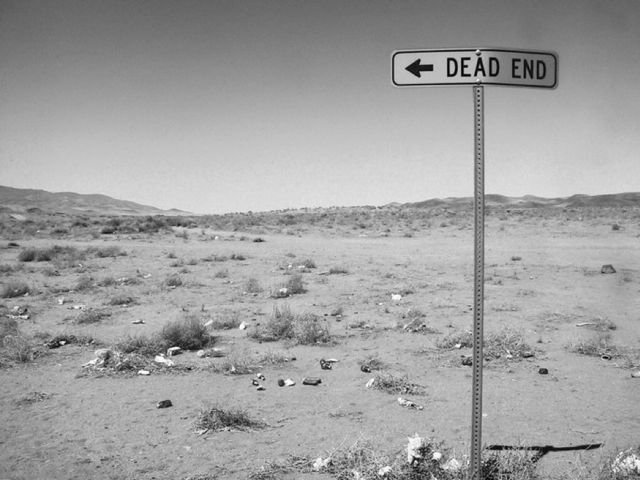
To some extent do LTNs run against the later 20th/early 21st century trend for city space – increasing privatisation, gating of communities, even the public space being in fact privately or corporately owned and subject to subtle controls and restrictions. Opponents of LTNs might though claim that they actually represent more of the same along these lines.
So are they in fact more like the private public spaces ? controlled & permissive as long as you’re behaving yourself along certain expectations? More like the recuperated official street parties – tolerated commons hollowed out?
Or are they a nod to desire lines – rejecting the car as freedom ideology, slowing life down, freeing streets up for a more social way?
Rushing Roulette
In other ways the City is not slowing down. The proliferation of electric scooters and e-bikes – is this changing the city? It may be me getting old, but London roads seem increasingly chaotic and illogical, at least in some parts.
People going the wrong way down the road. Pedestrians also wandering into the street looking at their phones. Scooters shooting in all directions. Moped “learners” weaving through traffic.
Everyone’s taking their life in their hands.
A lot of this may be driven by the shit wages and time pressures of bike delivery riders – but there’s also the inexperienced selfishness of lime bike users – “look directions, accepted conventions and shared spatial considerateness don’t apply to me.” Desire Lines as Selfish Atomisation – fuck everyone else.
Tbf car drivers are very like this also. But there’s no unity of pedestrian & cyclist vs driver: it seems sometimes more a war of all against all. Muskolini’s driverless taxis can only add extra chaos and rushing roulettery.
I mean – we all share the street, the pavement, we should aim to be conscious of others. Be aware and considerate and move aside for the less mobile, and so on. But this is not the norm. The norm is to make others move out of our way, crowd them, ignore their presence, jostle them. Spatial awareness at a minimum. Human pinball in the rush hour. But the City for instance, is only viable if we share it and co-operate – it breaks down if we extend survival of the fastest and fittest into pedestrian etiquette. Sometimes you wonder if people walk with their eyes shut.
Alot of this comes down to sexual politics… Men dominate spaces, and patriarchy chicken is no fun. Manspreading ain’t just for trains… when male supremacy rules the street, women beware.
Which can cast a new light on some of the chin-scratchings above about urban space. Crowds in the street can be liberatory, but also threatening if its all drunk men after the football. As a friend pointed out – “everything stops for football crowds – men! No crowd of women would be allowed to gather and block Holloway Road every Saturday” TBF football is also big money – but the point stands.
Women should be free to walk without fear. This is as much for individual men as for urban planners to think about. Street culture and street architecture can also reinforce or ease women’s fear of male violence.
Rollin down the Road
“Please notify my next of kin
This wheel shall explode”
– ‘This Wheel’s on Fire’, Bob Dylan & Rick Danko
Privatisation inside your car is not the only way – these days jogging, walking, scooting, with your headphones on, inside your bubble, often ignorant of others and not taking them into account – alienation – you’re privatised in your head. Even on crowded public transport you can be all alone.
Speed is the dream – but often because we actually have so much to get done – go to work, pick up the kids, get to the airport, don’t miss the train… Can a society be built where we can slow down a bit? Do we want to? Speed is actually the most fun when you DON”T have a deadline – rolling down the coast road, wind in your hair – pushing 90… (This speed is only for information purposes and not to be tried at home).
In classic sci-fi novel, ‘Tiger! Tiger!’, Alfred Bester depicted a civilisation where everyone could ‘jaunt’ – teleport themselves anywhere. In this scenario, the ultra-rich pride themselves on physically travelling by other, older, slower means – “I’m so rich I don’t have to hurry, not like the herd.”
Will the rich want to move slower than rest of us? Walking slower in the mental city can be the mark of the tourist – someone at leisure to look around (unless its those with less mobility…)
——————————————————————————–
Where in the World Are We Going?
We haven’t really thought up any Conclusions for The Future. Lets all keep on struggling to make roads and paths open, socialised and accessible, and fight the powers that restrict. But THINK and talk about these things too.
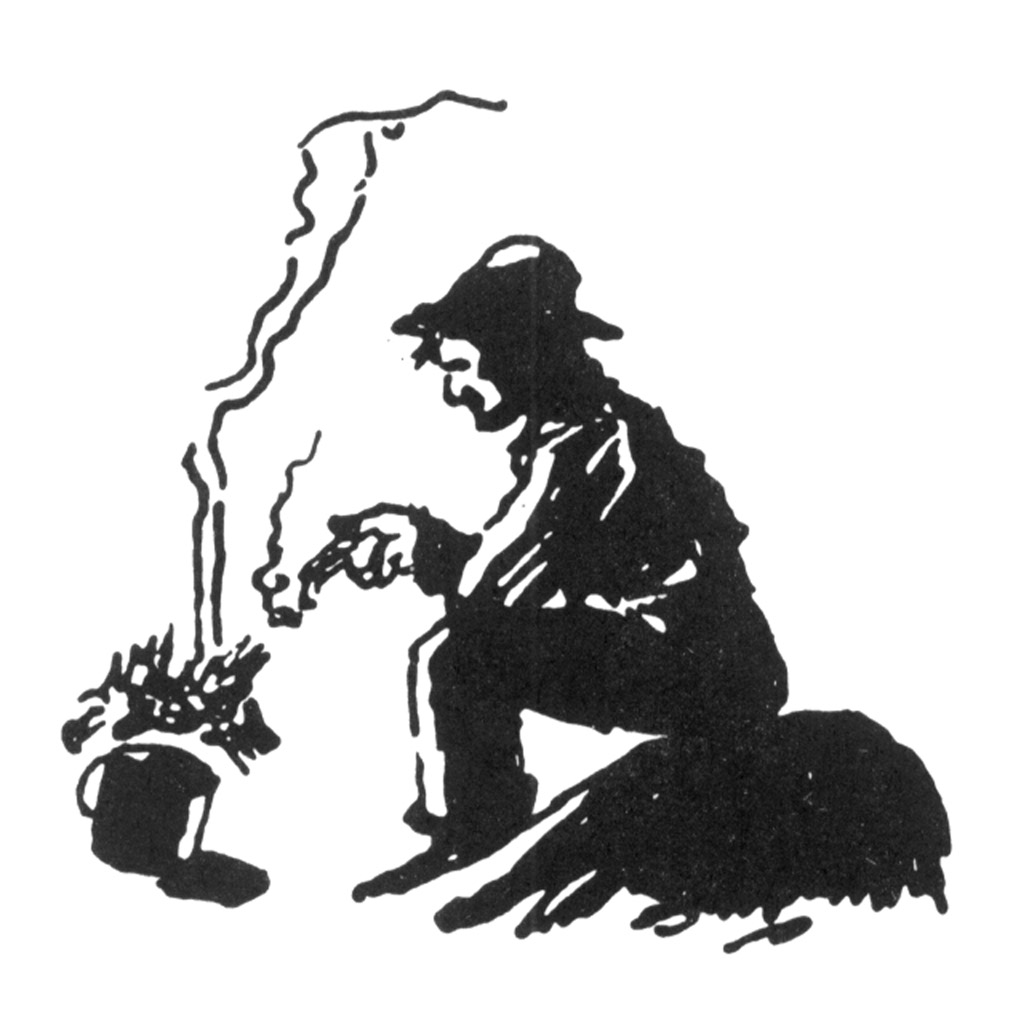
Maybe we’ll just put one foot in front of the other.
——————————————————————————–
“Don’t let them ever fool you
Or take you by surprise
The dirty smell of the politician or the man with the greed in his eyes
They’ll smile at you while they tie your hands, spend your money and stain the land
Alone we beg but together we demand
And we’ll burn down all their lies”
– ‘Never Tire of the Road’, Andy Irvine


Leave a Reply