Solid as a Rock
A Short Account of some events in Waltham Forest during the 1926 General Strike
This is a short and admittedly incomplete text. We have done some research into the events of the General Strike in the Waltham Forest area, but much more investigation needs to be done.
Records appear scanty; most of the following is gleaned from reading the local newspapers from 1926 in Waltham Forest Archives. In other London boroughs, much more info is available on activities on the trades councils and local unions; oral histories and written accounts by union organisers exist.
If such are out there for the Waltham Forest area we haven’t yet located them.
If you have anything to add to the following please get in touch.
The Nine Days
The British General Strike of May 1926 was sparked by a dispute between the coal-miners and the coal-owners. In the coal industry the private mine owners had, for over a year prior to May 1926, been attempting to force reductions in wages and increases in hours worked. On July 31st 1925 the Conservative government opted, in return for industrial peace, to offer a nine month subsidy to the coal industry, a condition of which was the withdrawal by the coal-owners of notices of wage reductions. This subsidy was due to expire in April 1926, and an outbreak of a dispute between miners and employers was widely expected. Immediately the subsidy ended, the coal-owners posted lock-out notices, as the miners refused to accept any reduction in wages or increase in hours worked: “Not a penny off the pay, not a minute on the day.”
Pressure had built up from millions of the workers in trade unions, calling for a General Strike in support of the miners. This pressure forced the hand of the General Council of the Trades Union Congress, who proposed “coordinated action” – this proposal was endorsed on May 1st at a delegate meeting in Farringdon Hall by a conference of Trade Union Executives representing 4 million workers. The leaders of the Trades Union Congress were still intent on negotiating with the Government. The government, however, broke off negotiations on the morning of May 3rd on account of wildcat strike action taken by the printers of the Daily Mail, who late on May 2nd refused to print a Mail editorial attacking the Trade Unions. The leaders of the TUC, although opposed to such a step, were left with no alternative but to call a General Strike to begin on May 4th.
On May 4th workers’ response to the call to strike surprised everyone. All transport ground to a halt, no newspapers appeared, most manufacturing industries stopped, workers who were not called out by their unions came out independently, and many who were not members of any trade union joined the strike.
However, of the two sides, the Government was definitely the better prepared. Since the subsidy had been agreed in 1925, they had been working behind the scenes to ensure that if a General Strike broke out, it would be outmanouevred and defeated. In September 1925 they encouraged the forming of the ‘Organisation for Maintenance of Supplies’ (OMS) composed of upstanding members of the middle class, run by retired army officers, which collected lists of volunteers who would be willing to do the jobs of striking workers in the event of a General Strike. On May lst the Government declared a State of Emergency, which suspended civil liberties and allowed them greater freedom to arrest and imprison so-called ‘dissidents’.
The TUC, on the contrary, made no preparations. The TUC leaders thought, or indeed hoped, that the strike would be over very quickly, one way or the other. At a local level, however, area-based Trades Councils responded by organising in an impromptu but efficient fashion. They formed themselves into Councils of Action, of which there were 131 throughout the country.
These Councils of Action took over control of traffic, picketing factories that were on strike to ensure that the “volunteers” didn’t get in, picketing factories not on strike in an attempt to persuade the workers to join the stoppage, in some places distribution of food and information, and alleviation of cases of great distress. In many places the Councils of Action became the only authority, the nearest thing to workers’ local control and autonomy in the history of modern Britain. And they had the support of the vast majority of workers in most cases.
This development of the Councils of Action worried the Government more than anything else, and it was these organisations that were subjected to the toughest repression by the police. The possession of a newsletter produced by a Council of Action became a crime that could lead to two or three months hard labour – whilst the tame organ of the TUC, ‘The British Worker’, which encouraged passivity, urging the strikers to go for walks in the country, was allowed to continue printing after an initial five hour stoppage.
After days of secret negotiations with the Government, the TUC informed Baldwin, the Tory Prime Minister, that the strike was off, and the news was broadcast at 1 pm on May 12th. The news shattered the strikers and the Councils of Action, who had seen the strike gaining in strength every day and felt success was imminent.
The workers’ strength and willingness to stop work had clearly intimidated some members of the TUC General Council, such as J. Thomas, who said he “dreaded” that the strike would “get out of the hands of responsible executives”.
When the strikers discovered that the settlement had not included any guarantees about reinstatement anger and disbelief were widespread, and they initially decided to stay out, so that on May 13th there were actually more workers on strike than on any other day. But this quickly collapsed (an unofficial strike would also have meant no strike pay) and the workers were left to barter with their individual employers over the terms of their return, with the result that many people didn’t get their job back, many trade unionists were blacklisted, and many others had to grovel to employers to be take back.
Only the miners were left on strike, remaining out until November when they were finally starved into submission and forced to accept the mineowners’ wage cuts, longer hours, and worse working conditions.
The Three Boroughs
National government’s plan to beat the Strike relied heavily on the organisation and co-operation of the local Councils.
What is now the borough of Waltham Forest was in 1926 divided into three areas administratively – the Urban Districts of Walthamstow, Leyton and Chingford.
Walthamstow
Following the arrival of the railway in 1870, Walthamstow’s population exploded from around 4,500 in 1850 to nearly 133,000 by the 1930s as workers commuted to central London.
In the early part of the 20th century, Walthamstow became a large working class suburb with a growing industrial base, in electrical engineering, and in the manufacture of motor vehicles, scientific and photographic instruments and apparatus, and celluloid and casein compositions. Smaller craft industries included making pattern cards, tinware, brushes, dolls’ houses, billiard tables, pianos, lamps, scales, and baby carriages. Clothing firms, many of them employing outworkers, were mainly engaged in the collar, shirt, blouse, and neckwear trades. Glass and rubber goods, typewriter equipment, briar pipes, false teeth, and screws, all became significant local products before 1918.
The present large factory sites at Hale End and in Fulbourne Road, and the broad factory complex in Blackhorse Lane, originated in this early stage of Walthamstow’s industrial growth. Other firms were dispersed mainly in Forest Road, High Street, Hoe Street, and Shernhall Street. In 1897 96 factories and workshops were registered for inspection.
In 1921, however, although Walthamstow, after West Ham, had the most highly developed industry in south-west Essex, over 58 per cent of the occupied population still depended on employment outside the district.
The growth of industry resulted in a growing working class politics. Although from 1894 to 1921 the U.D.C. was controlled in turn by the Ratepayers’ Association, later called the Moderates (tories in effect) and the Radical and Progressive Association, Socialist or Labour candidates contested U.D.C. elections occasionally regularly from 1905, but without success before 1919. In 1919 the Socialists won 4 seats. They increased their representation in 1920, and in 1921 gained control of the council. They never lost it, though their majority was sometimes very small. They were assisted by the failure of shifting opposition groups to maintain a common front against them.
(‘Walthamstow: Local government and public services, in A History of the County of Essex: Volume 6. 1973)
Leyton
The Urban District of Leyton was described by the Independent Labour Party’s Fenner Brockway in the late 1920s as “two thirds working class, one third middle class”. Leyton and Leytonstone had grown from two Essex villages in the mid-19th century, to a population of 124,735 in 1911, an explosion made up of people moving in from Essex and East Anglia, escaping rural poverty and those moving out from the equally poor East End.
Leyton was unlike the industrial centres and docklands that lay to its south: there was not nearly as much industry – though one large factory in the area in the 1920s was the London Electric Wire Company in Church Road, which employed 1,300 workers. There was a scattering of small scale manufacturing: marmalade, sweets, shoes and church organs.
A fair number of Leytonians worked at the railway works in nearby Stratford. Many others worked on transport: on buses, trams and railways.
Leytonstone mixed a middle class enclave for City gents higher up the feeding chain than the clerks of Leyton. with some of the poorest parts of the district, in Lower Leytonstone.
Although the Independent Labour Party was the main leftwing grouping, Leyton didn’t elect its first trade union or Labour councillor until mid-way through during the first world war.
MP for Leyton East, Lt Colonel Cecil L’Estrange Malone, was elected as a right wing Coalition Liberal in 1918, only for him to become converted to the cause of Soviet Russia, join the British Socialist Party, and become Britain’s first Communist MP! Though he quickly moved to the right, shifting in the same Parliament to sit as a Labour MP
Chingford
Chingford had only recently begun to be built up with the extension of the railway from Walthamstow in 1873, and then trams to Chingford Mount. The population of the parish, which had risen slowly from 612 in 1801 to 1,387 in 1881, was only 9,000 in 1914. During the next few years growth was rapid: to 22,053 in 1931.
An area of farms and large country houses, with lots of open space and forest, was in the process of being transformed by people moving out from London to find more space. However, the area was still semi rural, with very little industry
The Councils’ Response
All three areas were run by elected Urban District Councils.
These Councils took very different positions politically towards the General Strike.
WALTHAMSTOW
In Walthamstow, the Labour Council was supportive of the Strike, and “the dominant majority on the Council, including Councillor Mrs. McEntee, J.P.,
the Chairman, were practically all members of the local strike committee.”
(Walthamstow Leyton & Chingford Guardian 14/5/1926)
In contrast to many other areas, the Council did not co-operate much with the government except in essentials, ie in the appointment of a Coal Controller.
The Council also did not engage much with the scab Volunteers. In many areas, volunteers, whether signed up with the local council or the
OMS, were employed to take the jobs usually done by strikers. Many were upper or middle class. Large number were sent to unload supplies at the docks, work to try and get transport running or if they had cars, drive people to work.
Other signed up as Special Constables, used to guard depots and other crucial buildings, and some of who were armed and enthusiastically helped regular police repress pickets.
However, Volunteers offering assistance at Walthamstow Town Hall had their names written down, but little else was done to actually get them doing anything to help keep services running or break the Strike.
Towards the end of the second week of the dispute, a volunteer recruiting office was opened in an old skating rink in Hoe Street and there was a “remarkable response to the call for help.” A large number of special constables apparently enrolled there. (Walthamstow Leyton & Chingford Guardian 14/5/1926)
I wonder if this office was at the British And Colonial Film Company Studios, 317-319 Hoe St, which had taken over an old skating rink and closed down in 1924? Now occupied by the old telephone exchange.
Mass resentment at the violent actions of the specials towards strikers, and at the scabbing ‘volunteers’ led to a physical attack on this recruiting office which was apparently “quickly repelled” (Walthamstow Leyton & Chingford Guardian 14/5/1926)
LEYTON
In contrast to Walthamstow, Leyton UDC enthusiastically supported the government and enrolled volunteers to fill in for strikers.
Leyton Council minutes actually indicate how councils were given a heads up from the Government about the impending strike, and asking them to collaborate with preparations. Council minutes from a meeting on 27th April, a week before the declaration of the Strike, contain the following discussion:
“The Clerk submitted a letter from the Divisional Food Officer for the London and Home Counties Division, notifying his appointment by the Board of Trade to the position, asking the Council’s co-operation in securing the maintenance of supplies of essential foodstuffs and the equitable distribution thereof should a state of emergency arise, and intimating that Mr. G. Callan has been appointed as Local Emergency Food Officer for the Council’s area, and also reported upon the matter and that application had been made for the use of the Vestry Room in Church Road for the Local Emergency Food Officer.
…
RESOLVED accordingly.”
(Leyton UD Council minutes 27/4/1926)
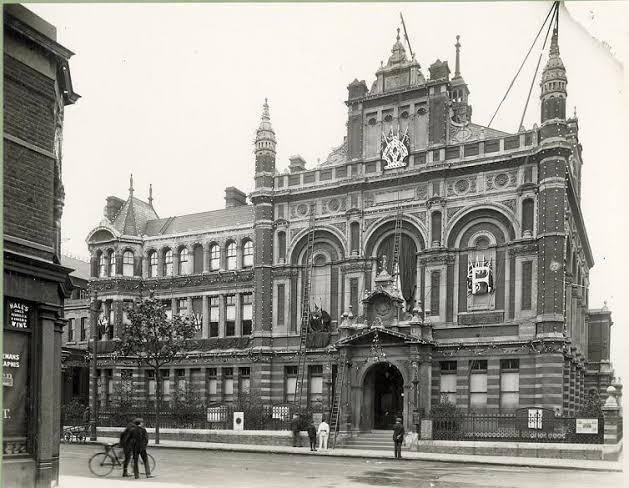
When the Strike was actually declared, Leyton appointed a Special Committee consisting of seven Members “with full power to deal with all matters arising out of or in connection with or incident to the present emergency, consisting of the Chairman and Vice-Chairman of the Council and Councillors Allanson, Bulgin, Curtis, Hyde and Smith.
The Council also immediately began recruiting volunteers. “Posters containing a National Appeal issued under the authority of His Majesty’s Government for Volunteers for the maintenance of essential services, which Appeal had to be issued under the name of a Representative of the Local Authority, were circulated through the District: the Clerk to the Council took charge of making arrangements to assist in the recruitment of these scabs.
“VOLUNTEERS.
The enrolment of volunteers in this district had been placed under the control of Sir James Hawkey, J.P., Chairman-of-Woodford Urban Council
At Leyton and Chingford the local authorities rendered whole-hearted assistance. For some months: Leyton Ratepayers’ Association had been prepared for an emergency of this nature and Mr. A. Heather, Chairman of West Leyton Unionist Association had been actively engaged for some time in organising the local branch of the O.M.S. When electricians came out at the Leyton works the station was quickly manned by the Government.”
(Walthamstow Leyton & Chingford Guardian 14/5/1926)
Council Staff volunteered to scab, in some cases; “The Clerk reported that enquiries had been made as to whether the Council would permit the members of the Staff who could be spared to volunteer their services for essential services.
RESOLVED (1) That permission be given to any member of the Staff to volunteer for essential and vital services, provided the Chief of his Department
is satisfied that the member in question can be released without prejudicing the efficiency of the service in which he is engaged; (2) That the members of the
Staff be permitted to enrol themselves in the Special Constabulary for service in the Town Hall and elsewhere in the Urban District after office hours.”
However, the Organisation for the Maintenance of Supplies seems to have recruited significantly fewer volunteer scabs in Leyton than on average signed up in other areas.
CHINGFORD
Information about Chingford is sparser; being a leafy suburb with a largely middle class population, the borough was far from a centre of strike activity.
The Urban District Council, like Leyton, through in its support behind the government.
“A letter, 19th May, was read from The Divisional officer, London and Home Counties Division offering to the Council his very gratified thanks for assistance rendered to the emergency Food officer from this area during the strike.
The Chairman of the Council (Gr. Little) also expressed the thanks concerned for the loyal assistance rendered during the Strike in the maintenance of supplies and public services.”
(Chingford UDC Minutes 2/7/1926)
More investigation is needed regarding Chingford…
How the Strike was organised locally
Walthamstow Trades Council set up an Emergency Committee, at the Labour HQ/office/meeting hall, at 342 Hoe Street, E17.
Unlike other trades councils, Walthamstow does not seem to have sent in any response to the Post-Strike questionnaire sent out by the Labour Research Department to discover how activities had been organised in different areas. Whereas in other areas a ‘Council of Action’ was often formed as an organising nexus, usually an alliance of trade union reps, Labour activists and others, this does not seem to have taken place in Walthamstow, though a central strike committee did form.
In other areas, strike committees or Councils of Action organised dispatch of pickets, publication of a strike bulletin, support for strikers and the families suffering loss of pay, and issued permits to travel or trade to local businesses.
This may have all taken place here, though evidence is lacking. The fact that the District Council was backing the Strike may have taken some impetus out of the need for some of this activity.
We know that Walthamstow Labour Party/Trades Council issued frequent typewritten bulletins and sold them. These bulletins were crucial in many areas, giving out information where news was hard to come by.
The Walthamstow Strike Committee did, we know, maintain contact with the District Council, intervening at one point to ask whether council workers from Lloyd Park seconded to work on ploughing at Chestnuts Farm were scabbing. The UDC responded: “We have considered letter, dated 8th May, from the Walthamstow Central Strike Committee, with reference to men normally engaged on Park work having been transferred to take the place of ploughmen who came out on strike at Chestnuts Farm.
We recommend the Committee be informed that no employee engaged in connection with the Parks went out on strike; and, further, that it is the custom for the staff at Lloyd Park to assist at Chestnuts Farm.”
(Walthamstow UD Council Sports Sub Committee m minutes 3/5/1926)
The Strike Committee made another query about the employment of nightwatchmen, though it is not clear what there question was regarding:
“We have considered letter dated 11th May, from the Walthamstow Central Strike Committee, with reference to the employment of night watchmen, and recommend no action be taken in the matter.”
(Walthamstow UD Council Highways & Town Planning Committee minutes 12/5/1926 )
The Strike Committee took action to ensure some factories were closed down. The Stepney Tyres Company received a deputation from the committee, and were informed that some 90 non-union workers must come out or they would be fetched out.
Local mass meetings of strikers and supporters were organised. Selborne Road Recreation Ground hosted large meetings on Saturday 8th, Sunday 9th of May, and Wednesday 12th May. The largest indoor strike meeting was at the Palace Theatre on Sunday evening (9th May), under the Chairmanship of Councillor McEntee, “when several miners addressed a large assembly, many of whom had waited in the street since midday. A party of miners have been entertained by a hospitality committee under Mrs. Woolf.”
Walthamstow Leyton & Chingford Guardian, 14/5/1926)
Support for the Strike in the area was described as strong. On May 6th the Trades Council reported to the TUC:
“The position here is as solid as a rock, have had difficulty in keeping men at work on essential Health services. Non-unionists are flocking to our side every hour… The electricity works running under our jurisdiction, great number of factories have had juice for power purposes cut off… In the main all are remaining calm and violence is exceptionally noticeable for its absence, we are using every endeavour to maintain peace…”
It was also reported of this area that “It is the greatest industrial cohesion ever known. The District Strike Executive has complete control of the local situation and is receiving wonderful support.”
(Islington Strike Bulletin, (undated, probably from 6 May?)
On 10th “all men not essential are out with the strikers.” But the fact that many men were not getting their strike pay was causing “grave unrest” by the 11th.
Leyton Trades Council set up a General Strike Committee, at their offices at Grove House, 452, High Road, Leyton.
The Committee consisted of a President, two Vice-Presidents, Secretary, Assistant Secretary, a Finance Committee of four members, Postal Sorters (2 members), Transport Officer and Assistant (12 motor bikes, 2 motor cars, numerous push bikes); and Organiser of Meetings, also an organiser of Concerts; Captain of Pickets and Assistant, a Doorkeeper, and a Typist.
All communications from the Strike Committee were ordered to be signed by the President or Secretary and responsibility between the Chiefs of the Sections was carefully allocated – this was deliberately set up to not “let anyone assume supreme authority”. The Committee organised all picketing for the borough centrally.
Publicity. A small Strike newssheet was issued by the Committee, which consisted of about 500 copies, being issued for eight days; which was quickly distributed as soon as it was printed.
(Leyton TC post-Strike Report, printed in “The General Strike 1926: Trades Councils in Action”, Emile Burns)
Workers Response and local support
“On Tuesday of last week the great national strike materialised.
The members of the affected trades in this district responded in a remarkable way to the call of the Trades Union Congress, with the result that railroad traffic was paralysed and on the roads the tram and General Omnibus Company’s services were entirely suspended.
Municipal employees, except those engaged on what may be regarded as distinctly public health service, such as dust and refuse collectors, lavatory attendants, etc., threw in their lot, and building operations entire ceased except on a number of houses and at the hospital.
However, it was claimed by Leyton Council a few days later that “The whole of the staff of the Leyton Urban District Council with the exception of the manual workers in the Electricity Department are all at work and have supported the Council most loyally.”
On May 9th a local preacher, Reverend Clark, seems to have given a sermon in general favour of the strike, or at least advocating what might be loosely termed ‘social justice’:
“MINISTER ON THE CRISIS
.
The Rev. F. H. Clark, preaching at Leyton Tabernacle on Sunday evening, touched upon the unrest in industry. Taking as his text That which is altogether just shalt thou follow” (Deuteronomy 16-20), the preacher declared there could be no peace in any order of society where justice was not promoted. This was the teaching of history and really the teaching of the New Testament. Decent people were tired of charity, thoughtful people were afraid lest it should make conditions worse rather than relieve them. Was it fair, he asked, that farm labourers should have to work for 30s. a week under present conditions, for skilled engineers to get less than dustmen, or that many miners should have to risk their lives for about 7s. per day? Was it realised, continued the Rev. Clark, that for every million tons of coal raised, six miners lost their lives, and 1,000 were maimed and marked for life? Was it realised that for a ton of coal costing, say, 30s. to 48, in London, a miner got 4s. 6d. It was not charity for which those men were asking.
The mines, added the speaker, ought to be the nation’s property in law, as they were in fact. Whatever the merits or demerits of the General Strike, the nation must see the miners through,
Exploitation was wrong, whether done by employers or employed.
(Leytonstone Express & Independent 15/5/1926)
The People Got the Power
On 5th May, workers at the Walthamstow municipal power station forced the shutting off of electric power.
POWER “CUT OFF.”
A remarkable state of affairs occurred when the electrical employees threatened strike action. Men belonging to the E.T.U. were called out and the E.P.A. men remaining at the station threatened that if power were not cut off from all trades except for the manufacture of food and other essentials they would leave the station works at 3 p.m. on Wednesday of last week.
Councillor Mrs. McEntee sought the advice of Councillor West, the leader of the Moderate majority on the Council on the question, and he meeting Councillor Fitt, proceeded to the Town Hall to consult with the lady chairman and the officials. The Moderate leaders’ wish at that period of the strike was to gain time in order that Government help might be obtained.
The greatest uncertainty prevailed in the town and the cutting off of the light and consequent plunging of the town into darkness might result in great disorder if not riot. He reluctantly agreed to the terms to be confirmed that evening by the Council in Committee that the power should be cut off in order that the lighting should be continued. He also stipulated that nothing should be done to stop electrical power before the Council meeting at 7.15 that evening. In a number of cases, however, power was cut off from firms in the late afternoon.
This was not brought to the knowledge of the anti-Socialists, who in the “interests of peace” did not vote against the resolution which they had no power
to prevent being carried.
The procedure adopted appeared to be as follows: When exception was taken to any firm continuing operations information was given to the Strike Committee and the electricity department communicated with. Thereupon an official rang the manager or head of the works up and politely informed him that his power was about to be cut off. Protests and appeals to industrial awards and Acts of Parliament were of little avail, as the official, acting of course under Labour dictation, had to tell the employers that there was no hope and that the power must be cut off, and cut off it was. In each case the employee of the Council was “armed” with a type-written letter signed by Mr. Spurr, the electrical engineer. In one factory he kept a firm hold of it and would not allow the document to go out of his hands. In consequence large numbers of men and women were forced against their wish to join the ranks of the unemployed.
Having thus succeeded, the strikers began to ride the high horse and cut off the power at the cinema theatres and the Palace Theatre because the
proprietors had the “audacity” to publish the wireless news. Councillor West again intervened and got an undertaking that if the cinema shows refrained from publishing strike news “juice” would be restored.
(Walthamstow Leyton & Chingford Guardian 14/5/1926)
The Walthamstow Leyton & Chingford Guardian reported on 12th May that “Practically all factories are idle in consequence of the withdrawal of electric power, in many instances before such a step had been authorised by the District Council.”
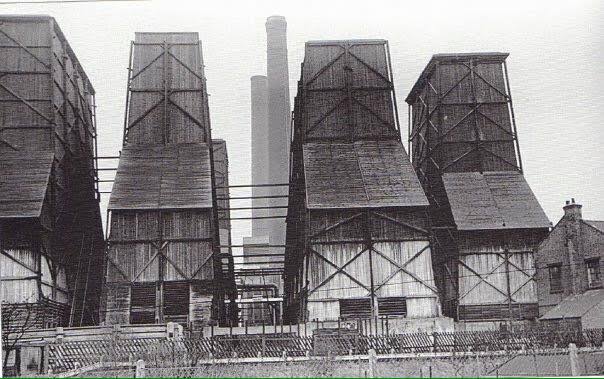
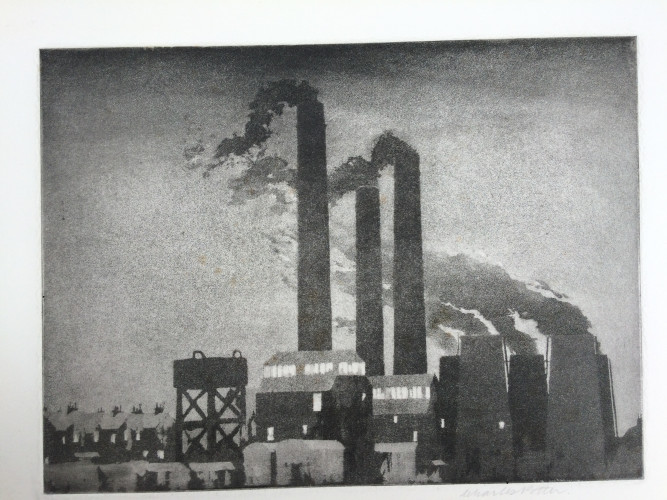
The Borough power station was located in in Exeter Street, just south of Walthamstow Central station; at the end of modern Exeter Road. It had three brick chimneys and an array of wooden cooling towers. After later decommissioning, it was subsequently demolished, apart from a small number of buildings housing Exeter Street electricity substation (which are still there).
Walthamstow Power Station supplied some of its electricity to the neighbouring borough of Leyton. At some point there was a proposal to cut off this supply. The opposition ‘Moderate’ Councillors (who had failed to prevent the shut-offs of “juice” in Walthamstow) protested this, but “could only secure a postponement of the decree until midnight.” [Not sure which day this was]
The Walthamstow Leyton & Chingford Guardian weighed in on the Walthamstow Council actions in withdrawing all power for industrial use, claiming this “had led to the closing of a number of factories and the consequent unemployment of a considerable number of workmen.”
Local businessmen met on 10th May to discuss the shut-down, and were not best pleased, regarding it as an illegal act:
“CUTTING OFF THE POWER. WAS IT LEGAL?
A meeting of business men, manufacturers and power users was held at the Tower Hotel on Tuesday to consider the action of the Council in cutting off the electrical power from their works.
After some discussion it was resolved that the action of the Walthamstow Chamber of Commerce in requesting Sir James Hawkey, the Civil Commissioner for the area, to take any steps necessary to obtain the resumption of supply be confirmed. A letter was therefore written as follows by the Chamber to the Civil Commissioner:-
11th May.
Dear Sir,
At a duly convened meeting of the Committee of the above Chamber held
last night, I was authorised to inform you that owing to the cutting off of supplies from the Walthamstow Electricity Power Station, close on 4,000 men and women in this town, employed by the undermentioned firms, have been thrown out of employment. This number excludes the several thousands already out on strike or intimidated out.
I was also authorised to request you to take such action under the Emergency Powers Act as is necessary to enable the power to be re-supplied.
This action of the Chamber of Commerce was strongly supported at a meeting of power users and manufacturers held to-day at the Tower Hotel.
It was considered useless to approach the Local Council, as a majority are in sympathy with the Strike and some are members of the local Strike Committee.
It is significant that the power was cut off in a number of cases before the Council met to decide the matter.
The Chamber of Commerce learn on undeniable authority that there is sufficient stocks to enable the Electricity Station to supply power for upwards of six weeks, although it has been suggested that the cutting off of the power was on the score of economy.
The list of firms indicated above and who would be prepared to start under
adequate protection if power were re-supplied is as follows:
-Armstrong,
E Bradbury, Ltd.,
A.B.C. Novelty Co.,
A Adler and Co.,
E. N. Bray, Ltd., s
A. C. Bean, Ltd.,
Bell Manufacturing Co.,
British Xylonite Co., Ltd.,
Carroll and Co.,
Cohen and Co.,
Crusader Manufacturing Co.,
De la Rue and Co., Ltd.,
Erskine Manufacturing Co.,
Fordhams, Ltd.,
Hookway Sons and Co., Ltd.,
Holmes Bros. (London), Ltd.,
Houghton Butcher Manufacturing Co.,
D. Hunt and Co.,
J.B. Manufacturing Co.,
Kendalls, Ltd.,
H. Lotery and Co.,
Ltd., North and Co.,
Precision Screw
Works, I. J. Redfern and Co., Ltd,
Short and Mason, Ltd.,
Singer Manufacturing Co.,
Swedish General Electric Co.,
Garner and Co.,
D. Gilson and Co., Ltd.,
Ward and Co.,
Wingfield Accumulator Service.
Yours faithfully,
Following the meeting the manufacturers decided to write the Council pointing out that their action was illegal under the Emergency Act 1926.
A draft of the letter sent by each manufacturer to the Clerk to the Council is given below:-
Dr. Watson,
(Clerk to the Council),
Town Hall
May 12th, 1926,
Walthamstow, E.17.
Dear Sir,-
May 12th, 1926,
Your Council have cut off the electrical power from our factory where it is urgently required. We wish to call your attention to the fact that this is in excess of the power vested in the Council under the regulations made by the Board of Trade under the Emergency Regulations 1926.
Under these Regulations we are entitled to at least 50 per cent, of our weekly average of electrical power supply, and we hereby give you notice that
we shall take legal proceedings to recover the damage sustained by us by this illegal action.”
(Walthamstow Leyton & Chingford Guardian 14/5/1926)
Workers in Leyton also attempted to shut down as much of the electricity supply as possible. On May 3rd or 4th, “Mr. Hutchinson and Mr. Tevington, of the Trade Union Council [meaning the trades Council is this context], accompanied by Mr Webb, of the Electrical Trades Union and the Employees’ Side of Area No. 10 Council, and Mr. Gibson, the Shop Steward of the Walthamstow Power Station” met with the manager of the Leyton Electricity Works, where they informed him that “unless the Council were prepared to give an undertaking not to supply current to industrial power consumers in the District all the men at the Works would be called out on strike.
At a Special Meeting of the Leyton Urban District Council on May 4th, the Council voted to decline to promise the unions that electricity would be supplied to industrial users, stating that “it is necessary to maintain the electricity supply and that it must leave to the Government, through its District Commissioner, to decide what supplies, if any, are non-essential. The Board is prepared to assist the Commissioner, and requests that representatives from this District Joint Board may be consulted before any scheme is put into operation. intimating that representatives from each side were duly appointed with instructions to arrange for an interview with the Commissioner at the earliest possible date; and requesting that all possible facilities may be given to members of the
electricity staff for getting to and from their work during the present emergency.”
The Council agreed that in the event of the men withdrawing from the Works, the Clerk and the Engineer and Manager be authorised to issue an appeal to all
consumers to curtail their consumption of electricity to the lowest possible minimum; that the Proprietors of all Cinema Theatres be informed that they
must cease to consume current for power purposes at 8.30 p.m. each evening; that the British Broadcasting Company be asked to broadcast the appeal for the
curtailment of the consumption of electricity; that the Clerk and the Engineer and Manager be authorised to get into communicaion with the Electricity Com-
missioners with a view to obtaining assistance for the purpose of carrying on the Works in the event of the men withdrawing their labour; that notices be exhibited
at the Works stating that all employees remaining at work will receive full protection and consideration; and that the Clerk be authorised to sign these and any
other necessary notices.
They subsequently published a notice that “owing to the withdrawal of men from its electricity station a full supply could not be guaranteed. Consumers were asked to exercise economy in the consumption of current.”
(Walthamstow Leyton & Chingford Guardian 12/5/1926)
At a meeting of the Special Council Committee set up to deal with the dispute, on the 7th May, “the matter was further considered, and the Chairman reported that the men at the Works had intimated their willingness to remain at work provided the Council agreed not to supply
any power for industrial purposes and that the men had asked that the Committee would receive a deputation on the matter.
The Engineer and Manager reported that he had received a telephonic communication from the Electrical Engineer of the Walthamstow Power Station in
a meeting of the Walthamstow Council that evening to consider the question regard to the question of their supply to Leyton, who stated that there would be
discontinuing the supply in the event of the Leyton Council declining to give the undertaking desired by the Trade Union Council.
A deputation from the Trades Council was received: “Messrs. Byatt, Harris, Ison and Marsh” informed the Committee that the workers desired to remain at work, but in view of the fact that the Council had declined to give the Undertaking to not supply industrial consumers, “they would be compelled by their Unions to withdraw from work and the Deputation therefore urged that the Council should re-consider the matter with a view to giving them
the undertaking either verbally or otherwise so that they could assure their Unions in regard thereto.”
After discussion the the Committee voted 5 to 2 not to give the undertaking.
On the 8th the Engineer and Manager of the Works reported that the workers had decided to cease work at 4 o’clock that afternoon; “in view of the urgency of the matter he was at once arranging to obtain the necessary assistance to carry on the Works by way of Naval Ratings, Volunteers, etc.
All lettings at the Schools for social functions were cancelled to conserve electric power.
The Engineer and the remainder of the permanent staff with the aid of volunteers kept the supply of electricity running to the district. On the 10th the Chairman of the Electric Lighting and Tramways Committee reported activities to maintain the supply of electricity were working as smoothly as circumstances permitted.
The Special Committee also resolved that although the workers at at the Electricity Station “have broken their contract of service by withdrawing their labour without first giving the necessary notice determining their employment, this Committee offer to engage the men if they return to work not later than Friday next, the 14th instant, at 10 a.m., otherwise the Committee will consider taking steps to fill their places, and that the terms of this resolution be communicated to each employee concerned.”
(Leyton UD Council Special Emergency Committee minutes 10/5/1926)
A common theme in many boroughs during and after the General Strike – strikers in the local electric works were held to have lost their jobs unless they begged for them back before the end of the dispute.
In Leyton this was applied selectively – the Electrical engineer was given leeway to hire some strikers back and not rehire others:
“Electricity Station. It was reported that the general Strike had terminated this day, and the Committee considered the question of the engagement of the
men who left the service of the Electricity Generating Station on Saturday last at 4 o’clock.
RESOLVED That the Electrical Engineer be authorised to engage such of the men who left the Electricity Station on Saturday last at 4 o’clock as he may
deem necessary for the purpose of carrying on the work of the Station and that the eleven lamplighters, who were acting in a temporary capacity immediately prior to the 8th instant having been discharged from their permanent positions on the 31st March last, be not engaged.”
(Leyton UD Council Special Emergency Committee minutes 12/5/1926)
Transport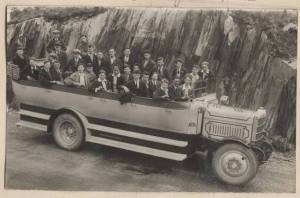
Attempts to prevent transport from moving were crucial to the TUC plan to win the Strike. Strikers aimed to make sure no trams, buses or trains were run, and picketing of tram depots and attempts to prevent buses and trains from running were one of the foremost battlegrounds on which the strike was fought on the ground.
In Leyton it was reported that
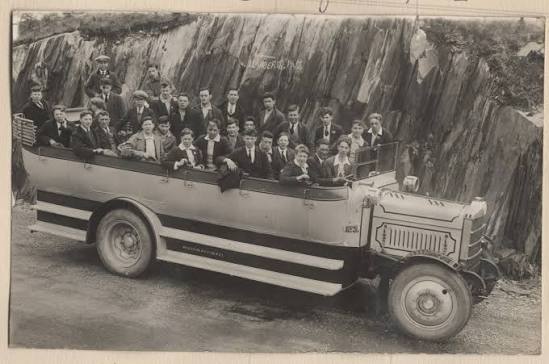
“The traffic on the roads was tremendous, and the private motors, lorries, charábancs, together with the “pirate’ ‘buses, helped greatly to alleviate the difficulty, although thousands of people had to walk to and from the City.
Independent ‘bus owners and charabanc drivers were not allowed to carry on their work without challenge.
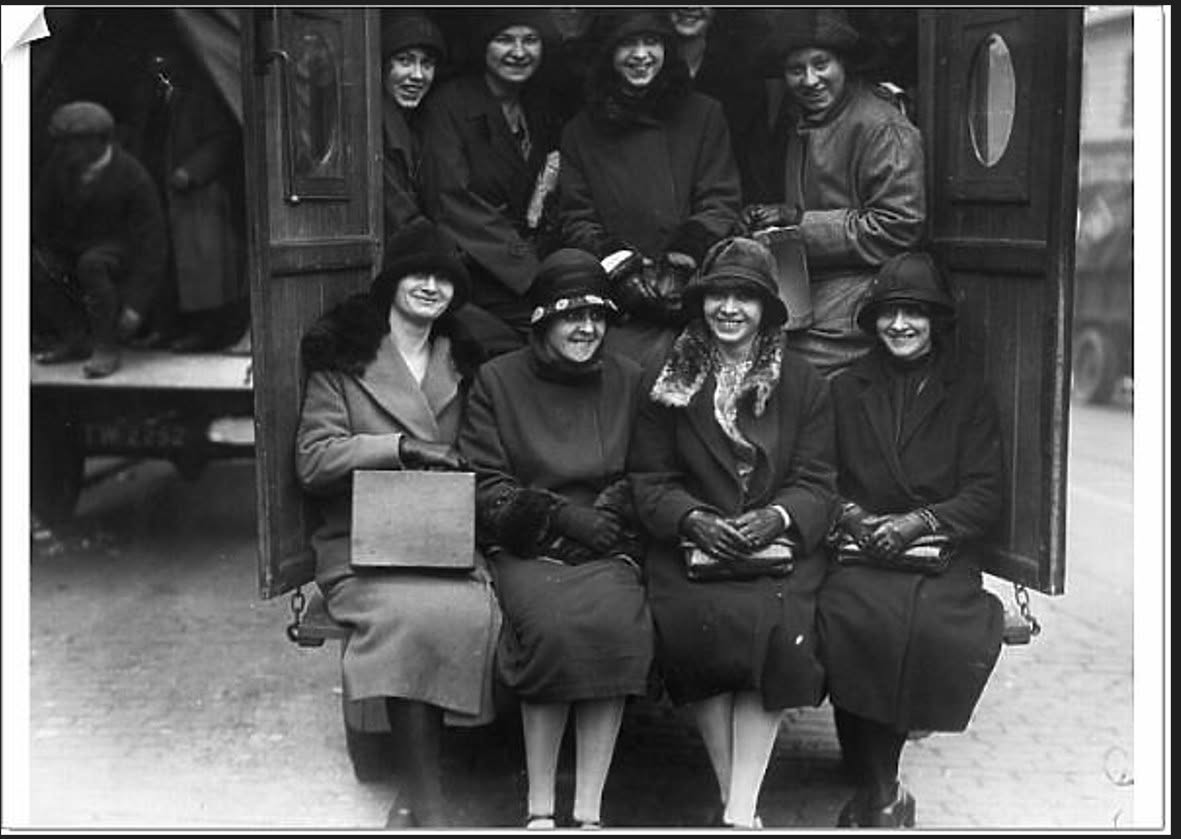
On the opening day of the strike intimidation was general. Crowds outside the Bakers’ Arms jeered and crowded round the ‘buses and omnibuses, and in some instances passengers were compelled to dismount.
In other parts of the route between Leyton and London more serious incidents occurred. Charabancs were overturned and men with lorries carrying girls to business were subject to brutal insults by the crowds of hooligans. The state of terrorism was so great that from Wednesday until the end of last week
hardly one motor-‘bus travelled as far as the Bakers’ Arms.
At the opening of the present week a greater confidence prevailed and a few ‘buses and many charabancs proceded without interruption from these
localities to the City. Motor lorries did a roaring business in conveying girls and men to and from business, and outside the rush hours there was comparatively little difficulty in getting to and from town.
Owing to the great road traffic progress was slow. It was a remarkable sight to witness the stream of vehicles of all descriptions pass our Lea Bridge
Road office. Vehicles of all sorts and sires, including small rural motor’buses, were impressed into the service, and in the morning and evening animated scenes were witnessed outside the Bakers’ Arms. Similar scenes occurred along the route from London via Whitechapel, Bow, Stratford and Leytonstone.”
The Railways
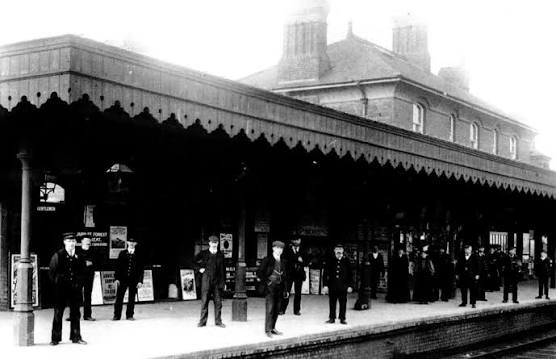
Rail workers were among the most unionised workforces in 1926, and most trains did not run as usual – at least initially, though there was some movement later in the nine day dispute.
“The railways were completely paralysed at the start of the strike. On the second day a skeleton service was started between Wood Street and London and other branches of the L.N.E.R. and L.M.S. in the district organised intermittent services.
After an entire suspension of Sunday trains on Monday an hourly service between Chingford and Liverpool Street was maintained from about 7.30 a.m. until early evening.
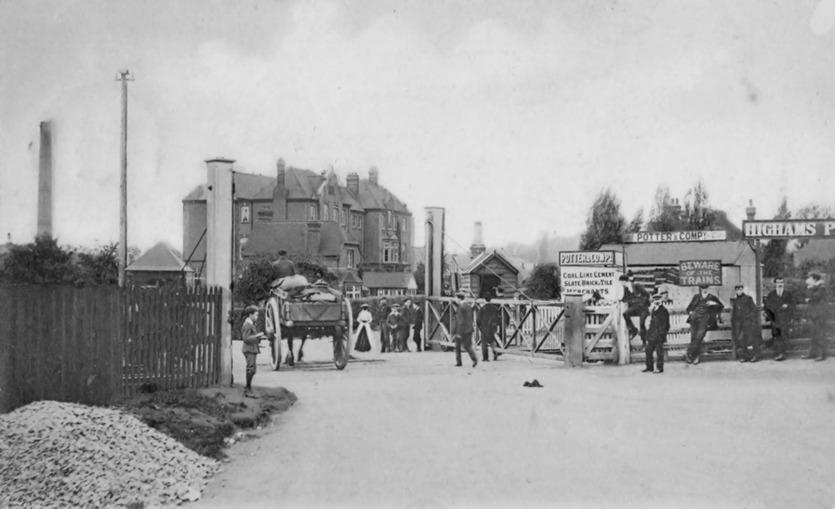
A semi-humorous incident occurred on the line during the training of volunteer engine drivers. Women from the Council houses at Highams Park congregated, on the level crossing at Wadham Road and attempted to prevent the engines proceeding further.
It is alleged that few stones were thrown at trains, but no serious interference with rail traffic occurred.”
Walthamstow Leyton & Chingford Guardian
“Walthamstow: One train got as far as Hoe Street Station on Wednesday night and there left derelict.”
TUC Intelligence Dept report 8/5/1926
Buses were also heavily affected:
“For nearly a week no buses have been running. since Monday an intermittent service has been maintained on the [LNER?] and [L… ?] branches.”
(Walthamstow Leyton & Chingford Guardian 12th May 1926)
“NO TRAINS ‘BUSES OR TRAMS. TO LONDON BY ROAD.
Tuesday saw unusual scenes in these localities where instead of the ordinary modes of travel to the City improvised methods had to be adopted, to in some measure cope with the usual exodus.
From the early hours of the morning there was an endless procession of vehicles of all descriptions. Charabancs had been called into use to convey some of the larger staffs of big firms, private owners of cars were able to come to the assistance of the less fortunately placed. Motorcycles, push bikes, and horsed vehicles were also brought into use. One lady had a “brainwave and used roller skates as a mode of progression. Up to eleven o’clock there was a continuous stream of vehicles, but after this hour the traffic resumed normal conditions.”
(Leytonstone Express & Independent 8/5/1926)
Violence/Arrests
The Trades Council reported “a very pleasant relationship with the police” and that there were no arrests connected to the Strike.
Even the anti-strike Walthamstow Leyton & Chingford Guardian acknowledged that
“Generally speaking the conduct of the large bulk of the strikers has been exemplary and efforts were made to keep the men amused by organising sports, games and meetings, where the latest news about the crisis was retailed.”
“With the exception of a few isolated instances of rowdyism good order has been maintained in the district.” (Walthamstow Leyton & Chingford Guardian 12th May 1926)
It is true there were no significant clashes, and there seem to have been no arrests directly connected with the strike, a stark contrast with other areas, where street fighting was a daily occurrence; most notably nearby boroughs West Ham and Hackney, where large battles with police took place.
Obviously Walthamstow saw lively scenes at some point, with the reported attack on the OMS recruiting office. But otherwise things sound like they were quiet. Possibly the fact that the Council supported the Strike and backed the electrical shutdown, reinforced the sense of the strikers being in the ascendant. Another commentator has suggested that police were generally pulled out of the outer boroughs to reinforce mass attacks on pickets in inner London.
Somewhere I once read, though, that Winston Churchill’s coach was reportedly overturned on Walthamstow High Street. Is this true?
Food Distribution
“Everything has been done to safeguard the food supply of the district.” (Walthamstow Leyton & Chingford Guardian 12th May 1926)
“No cases of profiteering on the part of local tradesmen have been reported.” (Walthamstow Leyton & Chingford Guardian 12th May 1926)
In Leyton: “Mr. H. Steed has been appointed as Food Controller and is carrying out his duties at the Leyton Pension Office, Knotts Green. His duties are not only to ensure an adequate supply of food, but to prevent profiteering. No cases of profiteering have been reported up to the present.”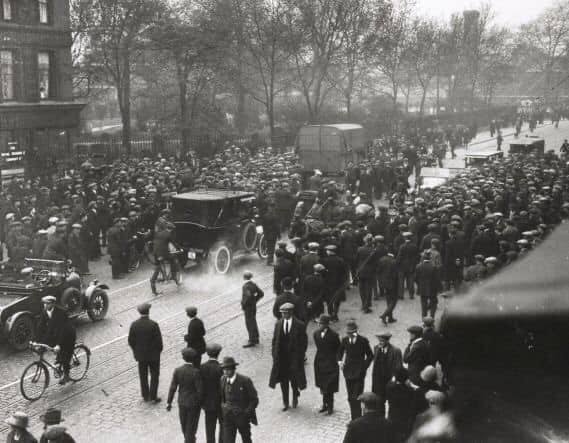
Walthamstow Leyton & Chingford Guardian
Local Press
The Directors of the (Walthamstow Leyton & Chingford Guardian “decided not to issue last week’s edition as it wes represented to them from reliable sources that
publication would be followed by serious disorder.” Probably this refers to adverse reaction at the paper’s appearance from printers, who were among the most unionised workers, and all out on strike solidly.
This local paper – like pretty much every other local paper! – took a dim view of the Strike.
Relief
Strikers and other workers affected by the stoppage faced hardship, and many turned to the local Poor law Guardians, who had power to either ‘outdoor relief’ – either money or vouchers for food or coal, or ‘indoor relief’ – a spell in the dreaded workhouse. The rules could be harshly enforced and were often used or penalise strikers.
“POOR LAW RELIEF. Discretionary poor Law relief may be given to men on strike, but wives and children will be dealt with in the ordinary way.
Rent vouchers will be issued and tickets for food as the Board’s funds are nearly exhausted.
INCREASED OUT RELIEF.- The Guardians are asking the Ministry of Health to sanction an increase in the scale of out-relief by providing boots and
clothing and a half-cwt. of coal to applicants during the summer months.”
(Walthamstow Leyton & Chingford Guardian 12/5/1926)
And further afield
While so far our research is sparse and this all needs further investigation, the areas around Waltham Forest on Essex’s fringe also saw some action in the ‘Nine Days’.
Woodford
The borough of Woodford had a Council of Action. They reported back to the Labour Research Dept afterwards, that they had made arrangements with the local Co-operative movement for the latter to supply Credit to the extent of £20 food vouchers (for five weeks) to hard up strikers.
(Woodford TC post-Strike Report, printed in “The General Strike 1926: Trades Councils in Action”, Emile Burns)
Woodford Council employees with the exception of the office staff and the staff at the sewage works, were all out on strike
Volunteer workers, however, quickly came forward to carry on.
“Well dressed young men have been enthusiastic road-sweepers and their efforts have brought forth words of praise and admiration from local residents.
In Woodford-road a young gentleman in plus fours was busy sweeping the road. His father (who appeared to be retired army officer) stood watching him and his flapper sister urged him on.”
(Leytonstone Express & Independent 8/5/1926)
However, not all volunteers who came forward were entirely selfless.
“VOLUNTARY WORKERS THEFT.
At Stratford Police Court on Saturday, Herbert Ernest Kirkby, 29, of Park Road, Ilford, and Walter Leonard Hill, 28, of Oakhurst Road, Manor
Park, dairy employees, were charged with stealing a tin of petrol belonging to the London Milk (Emergency) Advisory Committee.
Accused were employed at a Government milk dump at Woodford. There was also there a store of about 3,000 gallons of petrol, and when one tin was
missed and the police saw Kirby he said “I am sorry I took it.”
Prisoners now pleaded guilty. Both said that after doing their ordinary duty at Ilford they volunteered to assist with the milk distribution at Woodford.
On Thursday night, unfortunately they got some drink and it was then that they took the tin of petrol. The Bench fined them each 20s. or 14 days imprisonment.”
Wanstead
In Wanstead, Council employees were also on strike. Residents volunteered to empty the bins.
“WANSTEAD DUSTMEN VOLUNTEERS.
A number of prominent residents at Wanstead, have been busily engaged collecting dust and refuse from houses and shops, the regular employees being on strike.
Householders are earnestly asked in the interests of all, to burn all possible refuse, thereby not causing the volunteers unnecessary work, and at the same time safeguarding against disease.”
(Leytonstone Express & Independent 15/5/1926)
On four occasions during the week, on Saturday, Monday, Tuesday and Wednesday, convoys of petrol lorries left Wanstead for the filling station at Thames Haven. Each convoy was escorted by four armoured cars, uniformed police and corde eighty members of the Special Constabulary.
(Leytonstone Express & Independent 15/5/1926)
Loughton
A special meeting of the Loughton Urban Council was held on Tuesday 7th May, to consider what steps should be taken under the Emergency Act Regulations.
Business Firms were limited to 50 per cent. of their normal coal consumption, except in the cases of food production, when the coal officer had power to authorise more. Public lighting was restricted and no advertisement signs were to be lit.
“The chief officer of police for the district can have something to say as to the lighting certain lamps”
There was to be a local committee, consisting of representatives of each of the local coal merchants and a representative of the Council, who would assist the fuel officer. Clerk to the Council, Mr. Faulkner, had accepted the post of District Food Commissioner for the Woodford district, which consisted of Woodford, Wanstead. Buckhurst Hill, Chingford, Waltham Abbey and Loughton. He also assisted the Woodford people with their recruiting for volunteers and his office was the Loughton Recruiting Station.
(Leytonstone Express & Independent 8/5/1926)
In Loughton, “two railway drivers, one guard and two clerks” were still working, suggesting most rail workers were on strike.
(TUC Intelligence Dept report 8/5/1926)
Also at the meeting of the Loughton Council on the 7th, the Chairman, Mr. H. G. Sharp, J.P., reported that he and Councillor Leech had been engaged in enrolling Special Constables and up to the present: 78 had been sworn in. “In his view that was not enough in a district like Loughton. The Specials did duty not only in Loughton but in other places and they should be in readiness for any emergency. He did not apply his words to the members of the Council, but to all young men who were unable to continue their work because of the strike, and he urged all such to at once join the Special Constabulary.”
Mr. A. W. Leech, J.P., supported the remarks of the Chairman and moved the following resolution: “The Loughton Urban Council endorsed the notion of the Government in the present crisis, and pledges to support to the utmost of its power. He thought if all Municipal Authorities passed and sent resolutions
such as that it would greatly strengthen the hands of the Government.
The resolution was seconded and carried unanimously.”
(Leytonstone Express & Independent 15/5/1926)
Buckhurst Hill
“At Stratford on Monday, Albert George Wood 17; and Percy James Spicer, 15; of Albert-road, Buckhurst Hill, were charged with “doing an act calculated to prevent the proper working of the railway.
On Sunday afternoon, a Special Constable named Coombs, patrolling the railway lines between Loughton and Woodford, saw the accused near a signal box. A deal of apparatus connected with signalling was in an enclosed case nearby, and this Spicer opened and immediately the two of them were pounced upon.
Then Spicer said that he only opened it to see what was inside, and Wood said “I’ve done nothing.”
The prisoners said they were only trying to take a short cut home, and Spicer out of curiosity opened the box.
Mr. W. Mallinson (chairman) told them to keep away from such places and discharged them with a caution.”
(Leytonstone Express & Independent 15/5/1926)
Since the first day of the strike six formed policemen had been on duty at Buckhurst Hill level crossing. On Sunday they were replaced by special Constables, who regularly shared the duties with their regulation colleagues.
(Leytonstone Express & Independent 15/5/1926)
The End of the Strike
The TUC General Council and the trade union leaders had not wanted the General Strike to take place at all, being on the one hand aware that the government had made many more effective plans to face the dispute than had the TUC – and on the other hand, afraid of the potential of the mass ranks of the working classes taking the Strike much further than the leadership were willing to go. They had spent the none days negotiating and wavering, and in the light of an increasing confrontational grassroots battle, they used the effective state apparatus as an excuse to throw in the towel. On May 12th they called the Strike off, without warning, leading to confusion and disillusion among the strikers. In fact at first, with rumour and misinformation rife, many believed that the calling off of the dispute was a sign the strike had won concessions from the government on the miners’ lockout.
This was, in fact, not the case.
“Since the start of the week the impression had gained ground that the strike was weakened and the wireless news soon after 1 p.m. on Wednesday that it had been called off was not wholly unexpected and was received with enthusiasm by those who had been opposed to the strike. The strike committee issued a large poster declaring that the “strike is still on,” and this occasioned considerable unrest amongst the crowd in the street, and disputes led to the necessity of calling out the police who speedily cleared the streets. In the early evening a notice from Mr. Cramp, ordering N,U.R members to return to duty was posted outside the Labour Office.” [I wonder if this is a typo, as elsewhere it says the notice read NOT to return to work?]
“At first there was a rumour that the miners had met the owners in the early hours of Wednesday morning. Later towards mid-day there was a persistent rumour that within a few hours something of a definite character might be expected. Shortly after one o’clock there was a widely circulated rumour, that “peace had been declared”. At two o’clock the “Independent” was able to publish the following official information:
STRIKE CALLED OFF.
“Mr. Pugh announced to the Prime Minister that in order that negotiations may be resumed the strike would be terminated to-day.”
By this publicity residents in those localities were quickly put in possession of the all-important fact that the general strike was “off”.
Following the publication of this news a large number of “Specials” passed Londonwards and many of them to the cheery through nods of the passers by signified their approval by “Thumbs up”. Later a couple of machine gun cars passed through in the direction of The City, police and gunners smiling.
A special edition of the “Eastern Mercury’ formed the first newspaper intimation in those districts, followed quickly by a special edition
of the “Independent.”
(Leytonstone Express & Independent 15/5/1926)
The local ‘Guardian’ itself was fiercely partisan in reporting the Strike’s end:
“THE GHASTLY MISTAKE. HOW THE DISTRICT SUFFERED.
The illegal strike, which has so seriously affected these neighbourhoods, was called off on Wednesday. The Trade Union Leaders, who had acted unconstitutionally and undemocratically, climbed down, but not unfortunately until untold suffering had been brought upon their unhappy members and the public generally. The end which was prayed for has not yet been reached as the machine has got beyond the Unions control, and it is only by goodwill on all sides that it can be righted.
Victory having been won for constitutional and democratic government it is hoped that local employers will act with as much leniency and generosity as
possible considering the economic conditions, the chief aim being to restart the industrial machine smoothly and rapidly without reprisals.
As to the extremist leaders, who have so lamentably failed their members, these can be left to be dealt with by their own organisations, but they stand condemned in the eyes of the public generally for their ghastly mistake.
On the whole nothing but praise can be paid to the conduct and orderliness of the greater portion of the people concerned, and to the sacrifices, though misguided, which large numbers believed they were making on behalf of the miners.
To the others, who have been called upon to tramp weary miles, to find that their employment has ceased, their works closed, and to be faced with
enormous losses and possibly higher rates and taxes, no praise is too high for the way they have behaved.
As to those who have helped their fellows by offering their services and their cars-they have acted as true Britishers, and nothing more praiseworthy can be said than that.
Finally, the manner in which the police have handled many difficult situations has been exemplary.”
(Walthamstow Leyton & Chingford Guardian 14/5/1926)
In the face of the Strike being ended without any concessions, many employers, from local authorities to private companies, took advantage of the TUC surrender to impose worse terms on returning strikers, including loss of accrued benefits, worse working conditions, longer hours, in some cases pay cuts and loss of union recognition. As this became obvious, a brief struggle took place as some workers refused to return unless under the same conditions as immediately before the strike.
Strikers were warned not to return to duty till told to do so by their respective unions.
“There is no official confirmation of the rumour that railway men reporting back for duty were asked to accept wage reductions. We were informed last night that owing to the lengthy stoppage of traffic it is impossible to at once re-absorb all the men, and this led to a new strike.
Yesterday every effort was made to keep the strike alive, but dismay and uncertainty seemed to be the prevailing mood amongst the men still out of
work. The sudden stoppage of the strike came to them as a tremendous shock and they are amazed at the turn affairs have taken.
RAILWAY POSITION.
Last night the following notice was posted outside the Walthamstow Labour offices: Notice to Railwaymen :-Strike to continue. Signed, Bromley, Cramp, Walkden”
(Walthamstow Leyton & Chingford Guardian 14/5/1926)
“We are officially informed that there is no truth in the statement that L.G.O.C. men at Leyton garage would only be taken back on acceptance of wage reductions. There was only one man who reported back for duty yesterday.”
(Walthamstow Leyton & Chingford Guardian 14/5/1926)
The Leytonstone Express & Independent also stuck the knife in:
“Many thanks to the local Soviet for their expression of goodwill towards their fellow citizens. Last week it appears that pressure was brought to bear upon the Council to refuse to supply electrical power to the business in the
locality under threat that unless such a promise was made, the whole of the lighting of the district would be in peril. Such an outrageous request, to harness the Local Authority to the Trades Union Chariot during an industrial- and political-dispute was quite properly rejected, and as a consequence the Council employees’ at the Electric Lighting Works came out. Fortunately, it has been possible to “carry on” with. voluntary assistance, and we have been spared; what it was brutally intended to do, viz, plunge Lyton into darkness, to assist the strikers to win their battle against constitutional government. It is as well the people should know what is happening.
One sinister feature of the electric light trouble is the alleged action of the Walthamstow Council, who under contract supply us of with a large part of the electricity we use in Leyton. Perhaps we may be told whether it is true that Walthamstow in sympathy with the strikers, shut down its supply to us and left us to carry our burden alone. If so it is just as well that the public of both towns should be made aware of the facts. It is one thing when working men withdraw their labour at the dictation of their trade organisations. It is quite another thing, when a responsible local authority, charged with solemn duties to the inhabitants, abdicates its responsibility and seeks to put the people in peril…
The next few days will no doubt produce it important developments in the situation.. The bitterness of defeat will accentuate the exasperation of those who have staked their all upon national dislocation, and who now realise they have failed, One can only hope that the admirable restraint, that has been shown by both parties in the fight will be maintained to the finish, and that there will be no happenings of violence of which the protagonists in the struggle may feel ashamed afterwards.”
(Leytonstone Express & Independent 8/5/1926)
Post Strike Fallout
For other workers, too, the end of the Strike didn’t mean an instant return to work.
Eleven of the staff at the Leyton Electricity works who had struck were not offered their jobs back. On 13th May, Leyton UDC’s Special Committee considered a letter received from the Secretary of the Leyton Trades Council stating that “his Committee were desirous of obtaining from the Committee an assurance that all employees should be allowed to resume work without any attempt to impose new or altered conditions of service on presenting themselves for work.”
The Committee instructed the Clerk to forward a copy of the Resolution passed by them on the 12th giving the Electrical Engineer the choice to rehire or not. On the following day a Deputation from the Trades Council, consisting of “Messrs. Daines, Croxon and Batley” attended the Committee and argued for full reinstatement of all men, but the Committee regretted “they are unable to vary the Resolution which was passed by the Committee at the meeting held on the 12th instant.”
(Leyton UD Council Special Emergency Committee minutes 13 /5/1926)
A further vote of the full Council, on 29th June, considered a letter on the agenda from the Secretary, Leyton Trades Council and Labour Party, conveying
their strong disapproval of the action of the District Council in dismissing eleven employees who ceased work during the recent general strike, and
asking that the Council will receive a deputation on the matter.
They refused to hear the deputation.
(Leyton UD Council Special Emergency Committee minutes 29 /6/1926)
Here the tale peters out – we can’t be sure whether the eleven men ever got their jobs back, or remained frozen out– the latter being the most likely outcome, however, in this period of post-general Strike defeat and retreat for the trade union movement.
In the wake of the General Strike a wider dispute continued over management of electrical supply across the capital. Depending on their political persuasion, local councils lined up on one side or the other, backing the employers or the workers’ side, as the union walked out of the No. 10 (Greater London Area) District Council for the Electricity Supply Industry (where unions and employers had previously met on joint industrial terms). This dispute reached Leyton UDC. Their Electrical Supply and Lighting Committee on June 2nd considered rival letters from the Electrical Trades Union and the Electrical Power Engineers’ Association.
The Electrical Trades Union asked the Council to appoint representatives to attend a Conference to be convened at an early date to discuss the position.
They appointed the Chairman of this Committee and the Electrical Engineer to attend the Conference as the Council’s representatives.
“ELECTRICITY SUPPLY INDUSTRY-DISTRICT COUNCIL (No. 10) GREATER LONDON. We have received letter, dated 26th May, from the Electricity Supply Industry-District Council (No. 10), Greater London, with reference to the present position of the Whitley Organisations in the industry in view of the recent Industrial Dispute, and stating that a Committee had been appointed to draft a Scheme for revising and strengthening the Constitution.”
Walthamstow Council maintained solidarity with the locked out miners after the general Strike itself ended:
“The Chairman of the Council made a statement with regard to a Fund which she proposed to open in aid of the wives and children in the mining
areas, who are suffering in consequence of the dispute in the coal mining industry, and stated that Mr. W. G. Berry, the Council’s Accountant, had
consented to act as Treasurer of the Fund. Mover, Councillor McEntee; Seconder, Councillor Gibbons.”
(Walthamstow UD Council ordinary meeting minutes 26/5/1926)
Walthamstow, the Electrical supply and Borough status
A fine subsequently imposed on Walthamstow UDC for turning off the electricity, at Stratford Court, for ‘neglect of duty’, though the financial amount was said to be was negligible,
This issue was though apparently to have wider ramifications on a wholly different plane – the granting of London Municipal Borough status to Walthamstow:
“Following the strike, the government’s displeasure delayed the grant of borough status until 1929.
(‘Walthamstow: Local government and public services, in A History of the County of Essex: Volume 6. 1973)
——————————————————————————–
Postscript
Why the General Strike was Defeated
Although detailed analysis isn’t possible here for space reasons, there are a number of reasons why the General Strike wasn’t successful in its aims, despite a massive support from the organised (and the unorganised) working class and labour movement of the time.
These boil down to:
– the government was better prepared and had taken the necessary measures and laid plans that enabled it to outlast the dispute
– the TUC leadership did not believe in the Strike, did not prepare for it in anything like as careful a way, and actively sabotaged it
– on the ground, despite enthusiastic and often competent organisation, the local trade union apparatus did not seriously break out beyond the limits of the TUC guidelines, although many could see the necessity for it
and
– workers did not autonomously begin to transcend the limitations of the trade union structures that held them back.
Councils of Action in many areas took over some elements of local authority, workers stood by the strike in increasing numbers – preventing transport from running, for instance. But the plan to close down all the power stations was foiled in most areas, coal stocks had been built up and food did not run short – except for the strikers who could not afford it.
Ultimately, magnificent as the solidarity for miners had been, a solidarity strike on this scale had a built in problem –it was on behalf of others, and while millions could see that the defeat of the miners could herald further onslaughts on all workers, the Strike itself was not a ‘first hand’ dispute. However, it was – despite what the TUC claimed – an attempt to impose working class power “undemocratically” – as such the government were bound to not give in and the TUC General Council were bound to be afraid of it.
The potential of the General Strike lay in the local organisation, which had a slim chance to create a kind of dual power at the base. But this would have relied on a determination by the trade unionists involved to consciously create this. In some ways if you challenge the state at that kind of level, you have to be prepared to take power and hold it, and if the union leaders showed in 1926 (as they had in the more dangerous crisis of 1919-20) that they absolutely did not want to take over, the workers at the grassroots did not in reality have the political will.
A more detailed look at the General Strike failed can be read here:
Blog posts on the events of the ‘Nine Days’ in various parts of London can be found here:
https://pasttense.co.uk/tag/1926-General-Strike/
Other sources:
https://labourhub.org.uk/2026/05/05/the-general-strike-in-a-london-suburb/


Leave a Reply