
An account of how the squatted anarchist 121 Bookshop/ 121 Centre was targeted by undercover police officers (‘spycops’) working for the Metropolitan Police Special Branch’s ‘Special Demonstrations Squad’ (SDS) in the 1980s and 1990s.
This article is written by one person formerly involved in 121.
This is an incomplete article; this is not just because we have not yet read everything so far published by the Public Inquiry into Undercover Policing (UCPI), or because many Special Demonstration Squad documents have not made it into the public arena. Or because we have been given documents but told we cannot repeat what is in some of them…
But also because many documents containing evidence were destroyed – shredded by the Metropolitan Police, after revelations about spycops began to surface, but before the inquiry opened in 2015. Other documents are blocked from ever being released to us.
It is also incomplete because, so far, the Inquiry has heard evidence about spycops operating between 1968 and 1993, and little about the later 1990s has yet been published. Whether or not any more material about 121 will emerge is not clear, since former 121 activists have not been given any advance notice of any such material, and are still not granted ‘Core Participant’ status relating to 121 in the Inquiry (see below), which would allow us to see documents before they are published (in redacted form) or even some evidence that is never made fully public.
Much about 121 emerged in Tranche 2 of the Inquiry (covering 1982-1992), some of which was ‘incidental’ (mentions of 121 in undercover reports mainly about other subjects).
Given some of what took place at 121 between 1992 and the building’s eventual eviction in August 1999, some SDS activity there around these years is likely.
Should other revelations emerge, we’ll try to update this post, subject to the heavily restrictive rules about what can be said before the Inquiry itself publishes documents on its own website.
Background: 121 Railton Road
The 121 Centre in Brixton, South London, was squatted in December 1980, and shortly opened as a public anarchist space.
Before this, however, the building at 121 Railton Road had been variously squatted for living space, and used as a centre for local Black radical organising, between 1973 and 1980. Brixton’s growing West Indian communities and the racism and police oppression they faced led to the area becoming one of the centres of the British Black Panthers and other Black Power groups.

The upper floors of the building were first squatted in 1973 by Black Panther activists Olive Morris and Liz Obi, primarily to live in, but very quickly the abandoned Sunlight Launderette downstairs became used as an organising centre for a range of activities.
Between 1973 and 1980 various organisations used the building to organise against racism (including specifically targeted police racist violence against Brixton residents). These included a women’s centre, a Black squatters’ group, the Brixton Black Women’s Group, and Black People Against State Harassment.
In the late 1970s the building was used as Sabaar Bookshop, a Black radical bookshop. Sabaar moved out to new premises in nearby Coldharbour Lane in 1980.
We are not aware – yet – of any undercover officers specifically targeting the building in its earlier incarnations prior to 1980. However, given the high police interest in targeting radical Black organisations which opposed systematic police racism and violence, it may be that this evidence has not emerged, or been disclosed, but may exist.
Despite the British government being afraid, in the late 1960s, of a rising Black Power movement, they may not have had the leeway to infiltrate Black activist groups as easily as they were able to send the first SDS officers into the Vietnam Solidarity Campaign or more white left groups. Primarily this was – ironically – because they had no Black police officers at the time: all police forces actively blocked Black people from joining up, not to mention the widespread police racism against Black communities leaving pools of potential recruits somewhat thin on the ground.
A ‘Black Power Desk’ was set up 1967 to monitor early UK Black Power groups – whether within the Police or by MI5, is not yet certain. The Black Power Desk may (again, it is so far not clear) have been subsumed into the SDS in the late 1970s.
“So far, the official Undercover Policing Inquiry has released the cover name of one officer who may have tried to infiltrate the Black Power Movement, among other groups. The name he used was ‘Peter Fredericks’ and he described himself as ‘mixed race’. The Inquiry has stated that he was not deployed against any one specific group but reported back on several, including those opposed to apartheid in South Africa, the Black Power movement, and two other small ones, Operation Omega and Young Haganah. He was active for only six months in 1971, as opposed to four or five years which was standard for undercover operations of the Special Demonstration Squad. His deployment ceased when his probationary period in Special Branch was terminated; it is unclear why. All in all, the Inquiry makes it sounds like this undercover operation was aborted before it really took off, and never got beyond reporting on meetings and demonstrations attended.”
More here
The SDS did report on Black People Against State Harassment, though later.
Later the SDS did manage to recruit at least one more black undercover: HN78, Trevor Morris, who used the stolen identity of Anthony Lewis, a child who died, as well as an alias he made up, ‘Bobby McGee’, to report on Hackney Solidarity Group, Newham Monitoring Project, the City of London anti-apartheid group, Labour Party Young Socialists, the (revived) Anti Nazi League, the Anti Racist Alliance, SWP meetings and protests against fascist groups and figures like David Irving, in the early-mid 1990s.
For more on Trevor Morris aka Carlton King, we recommend you listen to the episode of the Spycops Info podcast: We Need to Talk About Carlton King.
121 Bookshop/Anarchist Centre
After being re-occupied as a squat by local anarchist squatters in late 1980, the 121 building was used from early 1981 until August 1999, as an anarchist bookshop and information centre, a cheap cafe and social space, a meeting point for local and political groups, and provided offices for magazines, newspapers and publishing collectives. It also served as a late night club and gig venue at various points in its existence.
The 121 was a space for people to meet, eat, talk, and dance, a space under the control of those who used it, not tied to or funded by the council or any institution, free of interference from bureaucrats and business. Brixton Squatters Aid, which was based at the 121 Centre from 1982, gave help and advice and lent tools to thousands of people squatting in abandoned property in Lambeth.
People using the space were involved in many campaigns and social struggles, including supporting the Miners and Printers’ strikes in the 1980s, housing and squatting struggles, anti-racist and anti-fascist organising, supporting prisoners here and abroad, fighting the poll tax, women organising for themselves, lesbian, gay and queer events, campaigns against council cuts, evictions and redevelopments, and anti-benefit cuts. And way way more. Too much to list.
Here’s a longer account of 121 (itself woefully inadequate! One day we will write the whole story…)
For years 121ers generally assumed we were under police surveillance – partly confirmed when a postman asked us if we knew Special Branch were opening our mail at Herne Hill Sorting Office several times a week (which must have been a hugely boring task – “please can you send me four copies of Basic Bakunin” etc ). Turns out, they were slightly more dedicated… We didn’t get full confirmation of this until a good 20 years after the centre was evicted.
Special Demonstration Squad surveillance of 121, in fact, began early in the anarchist bookshop’s existence. Initial interest from the SDS seems to have come at the behest of MI5, who were the main customer for the Squad’s intelligence (AKA MI5 often drove SDS priorities).
MI5 sent a memo/request to the SDS for intelligence on “the new South London anarchist Bookshop”, a memo dated 3 March 1981, showing MI5 interest in the new building, only a few weeks after 121 was squatted and opened.
As detailed in document UCP10000029199/1, a loose minute detailing MI5’s current requests for intelligence:
“LOOSE MINUTE
CC: SF463-22-1
F6
As requested, I attach a brief on Anarchist/Alternative activities in London for your next meeting with SB/SDS.
- S. LONDON BOOKSHOP Railton Road, Brixton
- Apart from [REDACTED] who are involved in the running of the shop?
- What is the nature and layout of the premises?
- Are the premises shared with other organisations/individuals?
- Is there a telephone in the shop? [REDACTED]
- What range of material is stocked?
- Does source have any views about the likely success of the venture?
Could it become the S London equivalent of the Rising Free Bookshop in Islington?
F7
3 March 1981 “
F6 – Section F6 was a unit within the larger Metropolitan Police Special Branch that handled intelligence matters related to national security.
F7- responsible for monitoring ‘political subversion and extremist groups’, including other left-wing and right-wing organisations, Members of Parliament (MPs), teachers, lawyers, and journalists.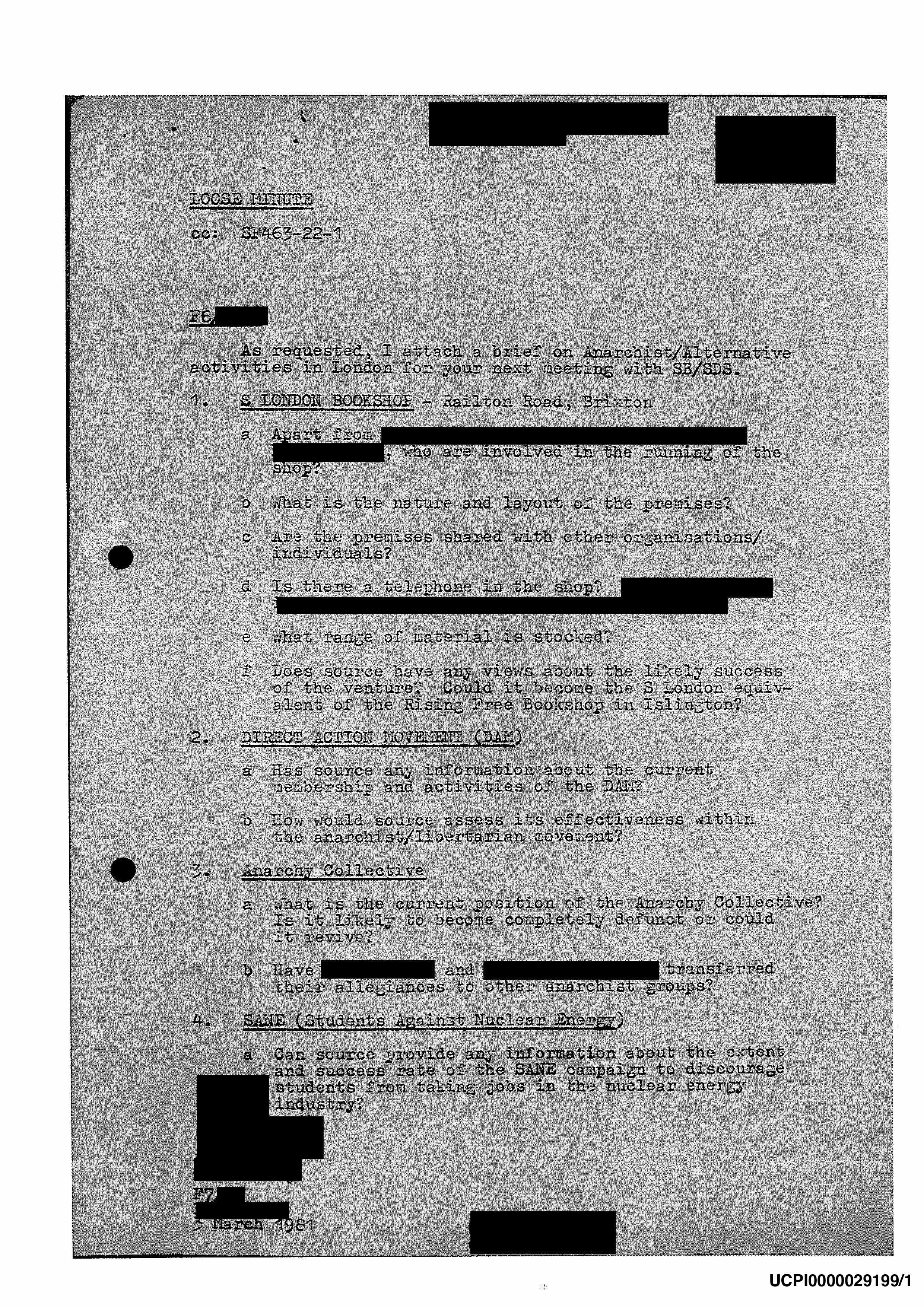
Pearcing Intelligence
When MI5 said jump, SDS generally asked how high.
SDS Undercover Officer Roger Pearce, using the cover name Roger Thorley (code numbered as HN85), infiltrated 121 Bookshop very shortly after this memo was sent. HN85 was also already spying on another of London’s anarchist spaces, Freedom Bookshop.
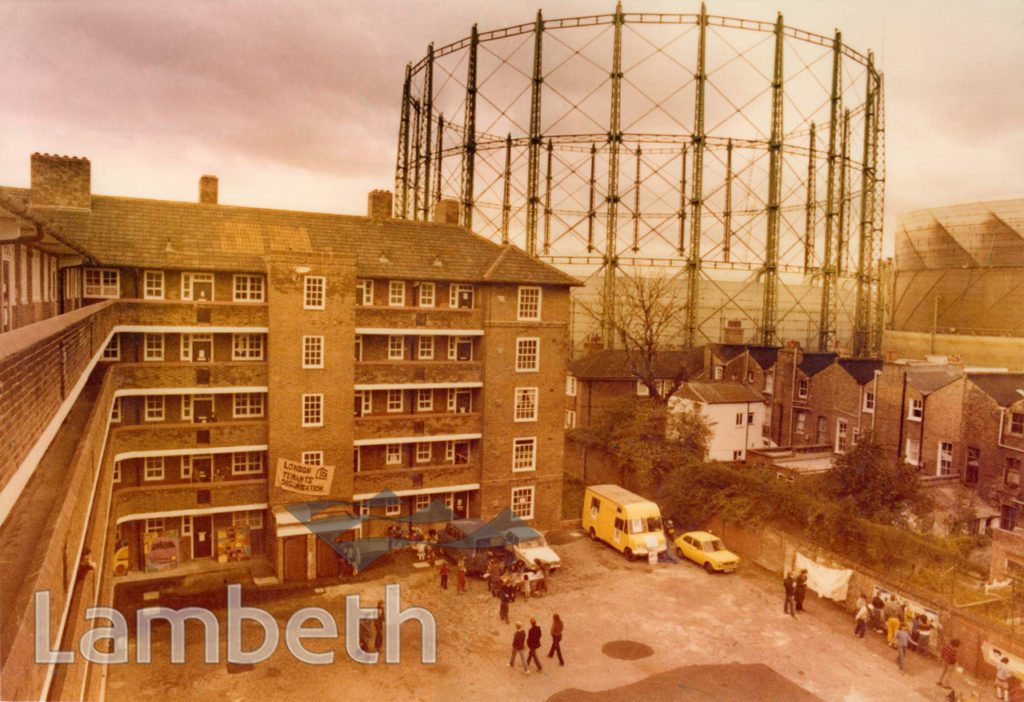
He had previously reported on the mass squat at Kilner House in Kennington, a GLC block occupied in 1980, which had involved a number of the anarchists who went on to squat and run 121.
The previous contact with Freedom was helpful in helping him infiltrate 121, as detailed in his witness statement.
Pearce had previously been recruited to Special Branch to work in C Squad which dealt with public order and subversion.

He was tasked to spy on the anarchist movement, though how, he claims, was left up to him.
He was by his own account partially intended to step in to replace HN20, deployed undercover as ‘Tony Williams’, deployed into the Revolutionary Communist Tendency, London Workers Group and the Direct Action Movement 1978 to 1982. ‘Williams’ real name is restricted by the Public inquiry.
In his witness statement, Pearce portrays himself as a clever operative, cunningly not associating to much with pacifists so as not to attract ire from the (decidedly un-pacifistic) 121ers; exploiting the differences in political temperament between Freedom & 121, to maintain something of a distance from both but keeping a relationship with both.
As we hope this article shows, the reality blurs heavily with fantasy in Pearce’s reporting.
Pearce gave evidence about his infiltration of the 121 Collective, to the UCPI in hearings in July 2024. You can watch some of this evidence on youtube
Documents published by the UCPI relating to his surveillance of 121 run to around 200 reports; HN85’s deployment as regards 121 covered early 1981 to mid-late 1984.
HN85 Pearce reported in depth on 121 Bookshop Collective meetings, on other meetings and events that took place in the building, and on individuals involved in the running of 121 and who visited. This reporting followed their domestic arrangements, relationships, personal appearance, children born to them, their engagements, on the state of their mental health, on work they undertook, and travels, often in fine detail.
Much of this reporting was concerned with what networks 121 and individuals were involved in and who they were in contact with; in regards to a lot of the intelligence, it is unclear what value it had in relation to any political activity they were involved in. The tone is generally sarcastic, offensive and personally critical, in many places disparaging about people’s appearance, especially women, and takes a misogynist and sexist line regularly. Not entirely unsurprising, to anyone who has met the Met.
Very little if what Pearce reported on was really ‘relevant’ to the SDS’ stated brief to report intelligence that could ‘prevent disorder’. But it did all add up to a detailed picture of political and social networks spreading ideas the Met, MI5 and the wider state behind them found offensive or threatening. Whether much of what Brixton anarchists got up to was in fact a threat to the state is for others to deduce.
Divisions and personal disputes are featured in a way which suggests Pearce was tasked to emphasise these; possibly, spycops’ deployment was at least partly aimed at exploiting and widening such divisions.
The 1981 Uprising
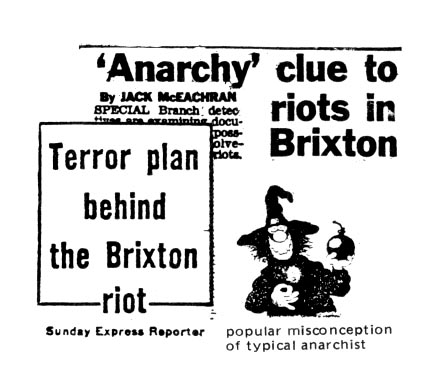
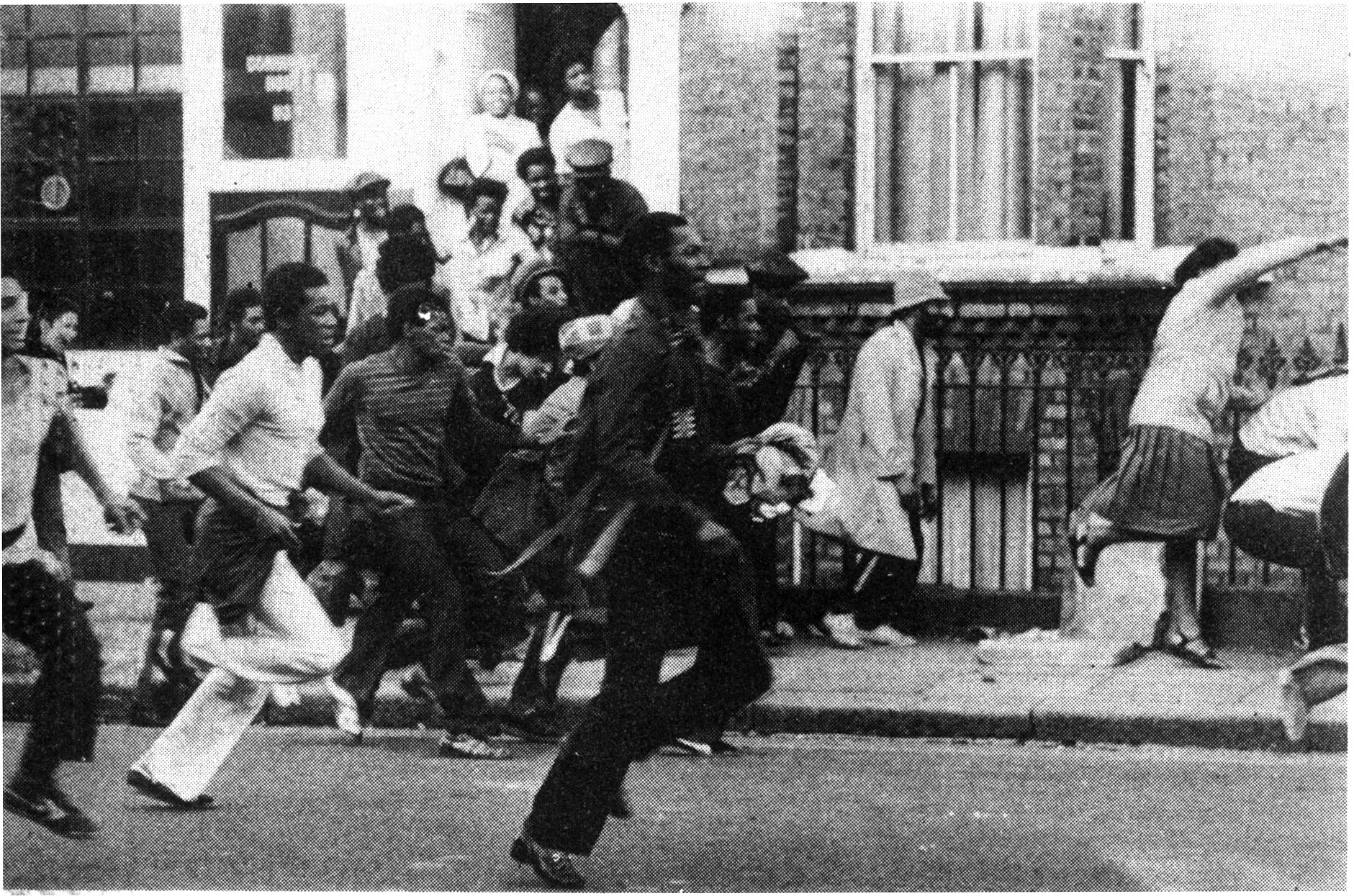
In the wake of the April 1981 Brixton riot, the Metropolitan Police, aided by stories fed to local and national press, targeted anarchists associated with 121, anarchists who lived locally, and local residents who happened to live with anarchists.

Although the vast majority of those taking part in fighting the police were local Black youth, the Police attempted to suggest in the press afterwards, that White anarchist agitators had either been behind the rioting or had taken a large part in directing it. Although some anarchists living locally had taken part in the fighting, they had not ‘directed’ the rioting any more than any other participant. The riot had been the result of decades of social inequality and poverty, and several years of racist police violence against Black residents of Brixton and was specifically sparked by incidents of police harassment.
While the Met were concerned to follow up the rioting by large scale repression of Black youth, they took the  opportunity to target 121 and local anarchists because they accurately saw anarchism as opposed to state violence.
Anarchist influence on the local Black community was minimal at best, and relations between 121 and some Black locals could be fractious, both because their politics was often quite different, and because racial tensions were high, partly stoked by racism (often from the cops) and frustration. HN85 was aware of these tensions, and reported on them here and here. Even as the Police fed lurid stories to the press about anarchist conspiracies, he was making clear in his reports that there was no substantial truth to them. The idea that a conspiracy of anarchists had contributed to the outbreak of fighting was laughable. Further: it fed into the usual police/press racist agenda, suggesting Black people were stupid, and needed White agitators to lead or organise them.
Anarchist Jean Weir, who lived locally, and her female Italian flatmate Patrizia Giambi, were arrested in or after the April riots, and charged with several offences. Jean was eventually found not guilty, but Patrizia was subsequently jailed for several weeks and threatened with deportation.
As detailed in this account of a post-riot arrests and defence campaigns.
Dave McCabe, who was involved in Freedom anarchist newspaper, and had some involvement with 121 from 1981, was arrested during further Brixton rioting in July, violently assaulted and badly injured by police, convicted of a public order offence (which he denied) and sent to prison. ‘Roger Thorley’ had befriended McCabe and reported extensively on him, alleging his involvement in various alleged anarchist conspiracies including bomb plots. McCabe disputes the truth of almost all of the reporting, dismissing it as fantasy.
See Dave McCabe’s witness statement to the inquiry.
 Pearce was party not only to internal discussions of 1981-2 defence campaigns for these arrestees (especially Patrizia), but also to legal discussions on a number of occasions relating to the legal defence mounted for McCabe, Weir and Giambi, and reported on them to the SDS – that he was a police officer only being revealed 40 years later.
This constitutes several instances of miscarriage of justice, even under a loaded pro-police ‘justice system’ – firstly as his involvement was never revealed to the defence during any trials, as it legally should have been, and secondly, as his access to their conversations about legal defence breaches the defendants’ right to have confidential discussion with their legal counsel. Flouting both of these legal rights and interference with ‘fair trials’ was to become a hallmark of SDS and other undercover units’ activity over the next few decades.
Pearce’s reporting alleging all three had been involved in the rioting, and in Jean and Patrizia’s case, claims they had links to the Italian Red Brigades, was variously released to the press and hyped up to smear anarchists.
HN85 clearly was able to use his position infiltrating 121 to access these defence discussions, and to make numerous reports on the defendants and other anarchists across London.
In his 2022 witness statement to the Inquiry (page 9), Pearce goes out of his way to claim he didn’t spy on privileged conversations. According to both Dave and Patrizia, this is untrue.
Dave McCabe has responded in his statement: “Roger did not just write about cases, but took an active part in meetings including those attended by lawyers. In relation to the case of Jean Weir and Patrizia Giambi, arising during the Brixton riots, in April 1981, he met their lawyers from Birnbergs and was privy to legal advice given; he attended the court cases, and it is now clear that he reported what was said (including the legal advice) in his intelligence reports… Roger attended legal meetings on my case and reported on me, yet there appears to be an absence of reports over my earlier appearance in the Magistrates Court… My lawyer… was living in the same house as Alan Albon in Camden and Pearce was a visitor to their home on several occasions and discussed my case, in particular the appeal.”
Much of what Pearce has to say about McCabe, his anarchist activities, and events in the SDS reports, Dave dismisses as fantasy and lies – including manufacturing bomb plots which somehow never reached press or any prosecutions, inventions about people’s criminal convictions, false allegations about who was active in what campaigns and actions and even simple bullshit about where people were living.
In her witness statement to the inquiry, responding to revelations that Roger Pearce spied and reported on her, Patrizia Giambi has noted that the smearing of her & Jean as linked to the Italian ‘Red Brigades’ (BR), which was fed to the press at the time, and was all untrue, clearly came from Special Branch, and originated with Pearce.
Jean Weir was involved in anarchist direct action but had no links to the Red Brigades. Patrizia was not a political activist at all, but was living in the same flat as Jean. She says Pearce’s article for Freedom about her case, written in 1981, when he was pretending to be an anarchist supporter, and which stresses her complete innocence of any charges, was more accurate than any of his contemporary reports or his recent witness statement!
Again, Pearce in his reports reveals privilleged legal info from Patrizia’s defence (as she notes in her statement, p30-40).
Patrizia Giambi’s life was impacted by Pearce’s lies for many years; she was arrested twice, raided twice, jailed, threatened with deportation, and labelled a terrorist. This jacketing lingered: by then living back in Italy, she was later arrested in 1988 after a Red Brigades action she had nothing to do with, and accused of murder, though the charges were soon dropped. Pearce, Special Branch intel, press lies continued to dog her life. (See P38-40 of her Statement)
In his 2022 witness statement Pearce was still smearing Jean Weir as ‘linked to the Red Brigades’ (p58).
Inside Agitators
Whatever the Met were shouting to the rooftops at the time about anarchists being ‘behind’ rioting, his  reports were making clear straight away that anarchists were not the instigators.
And, in fact, the SDS rejected the notion of an anarchist conspiracy in its own Annual Report for 1981:
Finally on the 1981 riots, it is worth pointing out that the SDS’ official underlying brief was to gather information that could ‘prevent disorder on the street’. The thousands spent on Pearce’s deployment into Freedom and 121 did not, of course, result in any such intelligence – because the disorder did not arise from the intense and fevered meetings of a few anarchists, it erupted – without pre-planning – from widespread community anger at the long-term violent and racist behaviour of the police over several years. If only someone had been infiltrating the Metropolitan Police who could have flagged this systematic provocation up beforehand…
Roger Pearce also reported on 121 Collective members’ involvement in the production of ‘We Want to Riot, Not to Work’ booklet about the riots, published in 1982, and the subject of a raid on Freedom Bookshop:

Pearce in his witness statement claims he was not party to the reasons why Freedom was raided in 1982: “the report dated 6 May 1982 (UCPl0000018063), which the inquiry says is one of a serious of reports following the raid which describes individuals from the Freedom Collective speculating about what the police knew in advance of the raid and how they know it, including coming to the conclusion that someone must have informed the police about the pamphlet “We Want to Riot Not to Work”. I think I was central to the discussions and probably guided them to the pamphlet which was: ostensibly the subject of the search to defiant attention from “My Little Black Book” after the raid. I do not know if the police were in fact concerned with “We Want to Riot Not to Work” I do not believe l was asked to provide cover for the raid. I was concerned l would come under suspicion as a result of the raid because so few knew about it, but l do not believe I did come under suspicion.”
Luckily, he was able to divert suspicion away from himself by implicating a stranger:
“I believe that I, or myself with others, who were in Freedom, later diverted suspicion towards a stranger who recently visited, whose name I do not think I knew but who Freedom remembered being in the shop.”
Showing how the SDS covered their own tracks by spreading division and encouraging unjust accusations.
Roger Pearce also reported on 121 Collective members’ involvement in or relationship to the following:

– Black Flag, the long running anarchist newspaper based at 121 in the early/mid 1980s, eg here
– The ‘Beyond the Bullshit’ anarchist conference 1982, organised by 121 though held at another squatted anarchist building, Centro Ibérico in West London.
– The riotous resistance to squat evictions on the Brixton ‘Frontline’ in November 1982 and at Effra Parade in March 1984
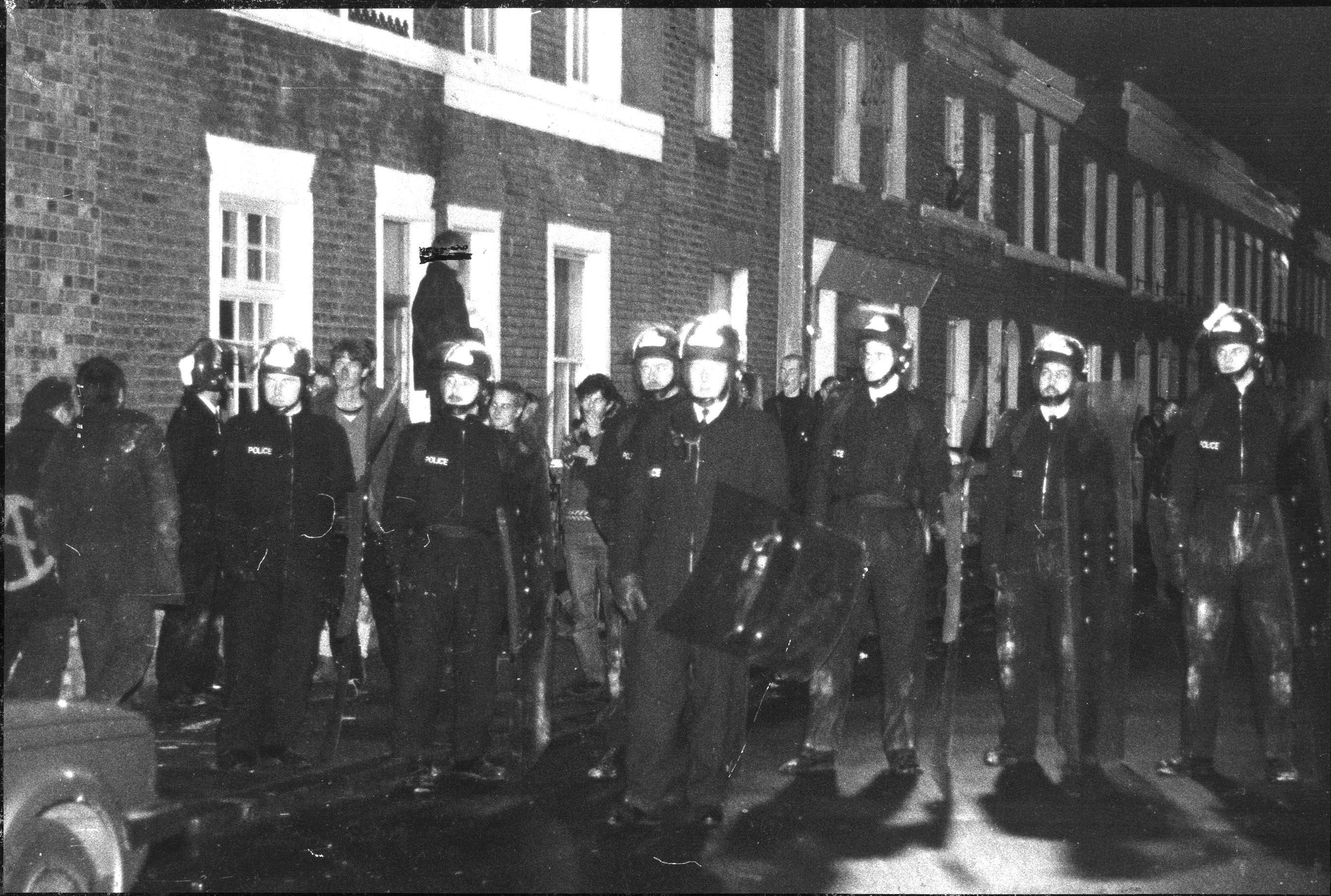
– the anarchist-organised anti-capitalist Stop the City protests in the City of London, 1983-4, eg this report
– A cluster of reports on anarchist pirate radio station ‘Our Radio’ in the early 1980s, eg here
– ‘Anarchist Feminist’ magazine, 1983-4
– National anarchist group Class War in its early days, 1983-4, eg here
A report on Toxic Graffiti magazine, and reports on Crowbar (the Brixton Squatters newssheet/magazine) eg here are probably from Pearce, though the source is are not identified.

When they Knock at your front door, how you Gonna Come?
Strangely enough (or maybe not), one event that Pearce did NOT seemingly report on was the police raid on the 121 Centre in August 1984, which also targeted four local squatted homes. The raid, featuring over 50 officers, used Firearms Warrants, and was justified as a search for guns. None were found. The nearest they came to a firearm was an anti-rape spraycan. The woman who owned it was arrested and later released without any charge. One other person was arrested for having two small marijuana plants. Another just because ‘his name rang a bell’, he was later found to have skipped bail on a small charge. The cops retained his address books after arresting him.
The police raiding the other houses seemed more interested in finding out identities and anything political they could. At the bookshop they spent three hours going through the whole building but found nothing incriminating.
This raid is one event that does not feature in SDS UCO reports that have been disclosed. There are several possible explanations for this omission:
a) (Ironically), this was an action launched without the prior knowledge of the SDS, possibly by local police. Crossed wires, parts of the police force operating without consulting each other?
b) The raid was authorised by Special Branch to cover HN85’s position, to obtain information they needed, but could not risk suspicion falling on him
c) there are reports relating to this raid that have not been disclosed
d) Reports have been lost or shredded at some point.
Given that ‘Roger Thorley’ was still deployed (just, though he was in the process of preparing to withdraw from his undercover role) at this point and still spying on 121, options a or b may apply. Various combinations of a,b,c or d are possible and not mutually exclusive. It’s likely we will never know for sure.
The cops claimed to be acting in this case on the info of a “reliable informant” – this was probably a South African squatter who claimed to be hyper-active, opening squats for people and “sorting out” muggers, but when he got nicked, 121 and addresses of other local anarchos got raided immediately after… “There was an attempt to run him down in Effra Parade and the driver departed London quickly…”
The suspicious character, gunning for the driver, later attacked a 121-er on the stairs of St George’s Residences, just over the road from 121.
Roger and Out
In his last few months of undercover activity, Pearce wrote several reports which alleged that small cells of anarchist were forming armed groups, either reforming the Angry Brigade or another groups, ‘Anarchists Armed’, plans to plant bombs on the north London Line, at Aldershot Barracks or elsewhere.
See here and here.
He implicated Dave McCabe, veteran anarchist Stuart Christie, and others in some of these ‘plots’. As McCabe details in his statement, and others implicated by Pearce’s smears have stated to the Inquiry, there was no substance to any of these accusations. Pearce was forced to backtrack on some of these accusations after his reporting was challenged during his evidfence to the Inquiry.
It should be pointed out that in his witness statement to the UCPI – submitted in 2022 – Roger Pearce was still claiming the anarchist defendants in the earlier 1978-79 Persons Unknown case were planning bombings, as partial justification for his infiltration of the Wapping Autonomy Centre. (page 35)
The 30-odd years distance might excuse Pearce a lapse or two of memory – however, the charges of ‘conspiracy to cause explosions’ against defendants in the Persons Unknown trial were dropped early in the proceedings – due to complete lack of any evidence. They were replaced by charges of conspiracy to rob – on which the defendants were acquitted, again, due to complete lack of evidence (apart from one who confessed under duress from police, and one who had gone on the run).
Just as the SDS Annual Report for 1978 claimed the ‘arrest of anarchist bombers’ as partly a triumph of their work – although the charges had already been dropped and defendants acquitted – Pearce repeats this, despite the Squad knowing it being untrue in 1979 and our Rog knowing it to be untrue in 2022.

Replacing Roger?
Although other officers did report later on 121, none were subsequently embedded in the centre as Pearce had been (unless there is a spycop we have not yet learned about).
In his witness statement Dave McCabe theorises that this was Pearce’s MI5 debrief led to MI5 placing an agent in 121 or Brixton anarchists instead.
“I believe that … Ml5 placed an agent amongst the Brixton anarchists from 1984, and this explains the lack of the subsequent disclosure and reactions in various Inquiry documents…”
It’s a matter of speculation, as it stands.
Why would MI5 continue to take such an interest in Brixton anarchists? On the basis of Pearce’s ‘bomb plots on the North London Line’ and smearing artists with imaginary links to armed urban guerillas? Such poor quality intel?
Possibly the reason why no SDS officer was sent in to closely monitor 121 is that the opposite is true – MI5 concluded there was no real need for such close scrutiny, because Brixton anarchists were not a significant security risk (or not any more?)
It’s worth noting that while Brixton remained volatile on a street level (more rioting would break out in 1985), the anarchists around 121 were becoming more distant from the old Black Flag links, which had included groups actually engaged in armed activity around the world; other areas in North London were becoming more the centres of anarchist activity; and the anarcho scene generally was moving more towards involvement in day to day class struggle, supporting mass-based class struggle, such the 1984-85 miners’ strike. These struggles did generate public order threats that the SDS continued to report on. MI5 obviously did get involved in spying on striking miners. But you have to wonder whether their interest in 121/Brixton anarchists might have declined as there was less talk of bombs and guns?
Without further evidence emerging, there’s little more to be usefully said on whether or not Pearce was specifically replaced by an MI5 operative.
Roger Rises
Fantasy, lies and smears did not do Pearce’s career any harm. After withdrawing from undercover work in 1984, he went on to rise through police ranks – as Detective Chief Inspector becoming head of the Special Demonstration Squad itself, from 1986 to 1988, and then becoming Head of the whole Metropolitan Police Special Branch. He was appointed Director of Intelligence (SO11) on 2 November 1998 and held it until 4 March 2003. In 1999, Pearce was appointed head of Special Branch (SO12) and held both posts concurrently until his retirement in 2003. In this latter role he also had oversight of the Covert Operations unit SO10.
Pearce also held ‘operational resourcing and leadership of the National Public Order Intelligence Unit, created in 1999 as a national extension of the Special Demonstration Squad, during its transitional phase. Though done under the aegis of the Association of Chief Police Officer’s Terrorism and Allied Matters Committee (ACPO TAM), the lead officers on it were David Veness and then Special Branch Commander Barry Moss. Thus, for the first two years of the unit’s life it was based in the Metropolitan Police Special Branch, where it was developed as an extension of the Animal Rights National Index (nominally under the ‘stewardship’ of the Home Office. It would remain so until April 2001, when control formally transferred to ACPO TAM.
This was done jointly with Paul Blewitt of West Midlands Police, though specifically Pearce oversaw the development of the NPOIU into an operational unit and it was his department that met the costs. It was later noted by HM Inspectorate of Constabulary, that this was a period when both the SDS and NPOIU shared connections through people and resources.
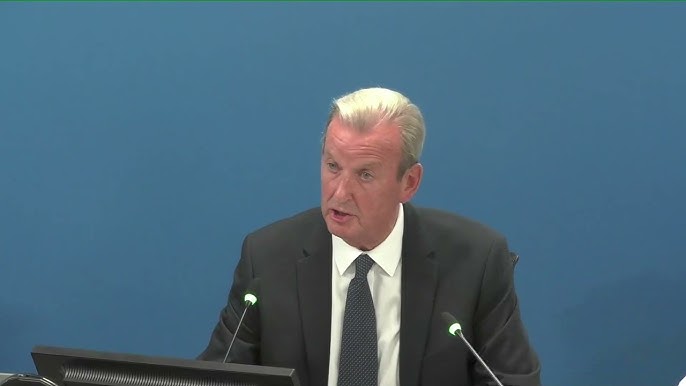
Pearce was almost certainly a member of ACPO TAM while head of the Metropolitan Police Special Branch, and given his role overseeing the NPOIU, it is likely that he also sat on the NPOIU Steering Group set up by ACPO TAM. Other members were Tim Hollis, Assistant Chief Constable for South Yorkshire Police and Paul Blewitt, Assistant Chief Constable for Operations at West Midlands Police, both of whom represented ACPO’s Public Order Committee. (Blewitt would later join former undercover officer John Dines at Charles Sturt University in Australia as an Industry Fellow in its School of Policing Studies.)
Likewise, Pearce’s involvement in NPOIU implies that he would have had knowledge of undercovers deployed into anarchist, ecological and anti-capitalist groups at the time by that unit. These include ‘Rod Richardson’ (1999-2003), ‘Lynn Watson’ (2002-2006) and Mark Kennedy (2003-2009). In particular, it is highly likely he would have had responsibility for signing-off ‘Rod Richardson’s deployment. Though given the transfer of control over the organisation, it is less clear who was responsible for authorising ‘Watson’ and Kennedy.
More on Roger Pearce ‘s time in charge of the SDS and Special Branch may yet emerge in the Public Inquiry Tranche 3 hearings, which began in October 2025, particularly in relation to the authorising of SDS deployments in the 1990s.
At Least This is Clearly labelled ‘Fiction’
Pearce has also, since retirement, capitalised on his experiences to write several fiction books featuring undercover police operations against leftwing extremists – clearly, in some cases basing characters on some of the real individual anarchists he spied on.
More on Pearce here
Hart to Hart
In November 1984 the SDS apparently gave some consideration to reposting officer HN12, aka ‘Mike Hartley’, to infiltrate 121, presumably to replace Pearce, who had just withdrawn from his undercover deployment. However, it was decided to allow HN12 to ‘end his time’ spying on a Socialist Workers Party branch.
This officer was at some point in 1985 exposed as a police spy to his targets. More on this here and here
HN12 was either careless, unlucky or both, since another report also implies he was exposed previously when spying on the Revolutionary Communist Group the previous year:
Ironically (given his history of exposure) ‘Hartley’ still has full anonymity both for his real name and any cover names he used, granted by the Undercover Policing Inquiry!
Burning Down the House
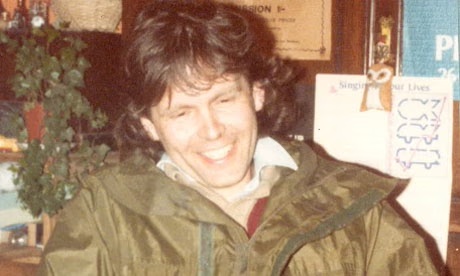
Reports mentioning 121 were also included in a wide range of evidence from another SDS officer, Bob Lambert (HN10), though of a more incidental basis, flagging up events, actions, organising that 121 cropped up in, rather than Lambert actively basing himself at the building.
Lambert operated as an undercover 1984-1988, using the cover name ‘Bob Robinson”. He mainly spied on animal rights activists in North London, but also reported on the anarchist scene across all of London, which intersected a lot with animal rights activism. Lambert was primarily concerned with infiltrating the Animal Liberation Front, whose direct action raids on animal laboratories testing products on animals, and attacks on outlets selling animal products was a major target of SDS activity from the early 1980s on, and for the next 20 years.

Lambert reported on involvement of 121ers in the 1985 Brixton Riot – see a report here, and on their regular attendance at Wapping printworkers dispute mass picketing at News International 1986-7, here and here
He made a number of reports on 121 connections to the Animal Liberation Front and other animal rights groups, also reporting on 121’s role in helping organise the South London Anarchist Festival in Lewisham in 1986, on provocative anarchist publishing project Hooligan Press, on Radio Interference (late 1980s anarchist pirate radio station, a successor to ‘Our Radio’), and on 121 involvement in an anarchist campaign protesting the 1987 UK General Election.
Some reports on Echomedia/Ekomedia, eg here, an anarchist bulletin covering UK and international resistance to capitalism, published from 121 around 1987-8, are probably by Lambert, though the source is not identified.
Lambert’s main bases of operations were involvement in Islington Animal Rights and in anarchist environmental campaigning group London Greenpeace (LGP). He wrote or co-wrote a number of activist documents, including contributions to London Greenpeace’s What’s Wrong With McDonald’s? factsheet – which was later subject to a notorious libel suit issued by McDonald’s against members of the group.
Having established himself on the animal rights scene, he set about befriending campaigners suspected of being in the Animal Liberation Front, and became an activist in an ALF cell. he took part in a co-ordinated clandestine action on the night of 12th July 1987, in which he planted an incendiary device designed to set off sprinklers and destroy fur stocks, which seriously damaged the Harrow branch of the Debenhams department store. Two more branches of Debenhams, in Luton and Romford, were targeted at the same time on the same night. The 1987 attacks, caused £4 million in fire damage and £4.5 million in trading losses across all three, and was credited with precipitating the ending of Debenhams’ involvement in the fur trade.
Bob was in fact acting as an agent-provocateur, encouraging and taking part in the action to ensure the arrests of ALF activists; the other two members of ‘Robinson’’s cell, Geoff Sheppard and Andrew Clarke, were both arrested and subsequently imprisoned for four years.
These convictions are now being challenged, as Lambert’s true identity & involvement was never disclosed to the court – another miscarriage of justice.
Abuse of Power Comes as No Surprise
During his deployment ‘Bob Robinson’ formed ‘sexual relationships’ with at least four women, some of whom were activists he was targeting, others who were not involved in activism. He fathered a child with one activist, Jacqui, before vanishing from their lives. After some vague communications to throw them all off the scent, the next they, the other women he had shared the lives of, or most of the activists and friendsheard was 23 years after when he was finally exposed publicly as a police spy in 2011 (although suspicion and rumour around ‘Bob’ had been growing in the years since his disappearance).
Lambert remained deployed in the field as ‘Bob Robinson’ until 1988. Using the pretext of being under investigation by police for his involvement in the 1987 Harrow Debenhams’ arson – which included a Special Branch raid on the home of his then ‘partner’ Belinda Harvey to add credibility to Lambert’s cover story – ‘Robinson’ told Harvey and other friends, including his son’s mother, Jacqui, that he needed to go ‘on the run’ to avoid capture; to some he said that he planned to move to Spain until things quietened down.
In reality, he continued to work within the police, rising to become a Detective Inspector in Special Branch, and followed Roger Pearce in becoming head of the Special Demonstration Squad. He supervised other SDS agents who spied and lied while infiltrating groups such as London Greenpeace, Reclaim the Streets, anti-fascist groups, anti-roadbuilding campaigns, and campaigners against genetically modified crops. His experience in penetrating London Greenpeace and the ALF was used as a model for other SDS agents. He is also directly implicated in police attempts to spy on, smear and discredit Stephen Lawrence’s family’s campaign against the police failures to investigate Stephen’s racist murder in 1993; and implicated in the scandal of SDS surveillance-derived intelligence being passed to private firms organising blacklists against trade unionists.
Much more on Lambert here
We’ll Write You A Chit for That
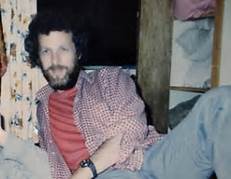
We’re currently not sure if SDS officer Mike Chitty, numbered HN11, deployed undercover in South London animal rights circles in South London as ‘Mike Blake’ 1983-1987, ever visited 121, but it seems likely, as he spied on South London Animal Movement and its offshoot, RATS, and leading animal rights activist Robin Lane, and reported on their activities 1985-6. Both were either based at or met at 121.
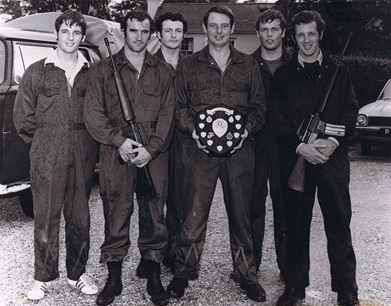
Chitty also reported on the setting up of Streatham Action Group, a local anarchist group formed in 1985, which was loosely connected to 121.
Mike Chitty remained in Special Branch after his withdrawal from undercover work, but reportedly his behaviour became increasingly erratic and unpredictable. He returned to associate with some of those he had spied on, possibly from a sense of guilt, and when this came to attention of his bosses, it was suggested he had some form of PTSD or was having a breakdown.
Chitty’s post-deployment association with some of his former targets in animal rights circles worried SDS managers when they learned of it, especially after he encountered Andy Coles (see below), then undercover in the same milieu, correctly guessed he was the latest SDS spycop in this scene, and tried to contact him through Special Branch. He also vaguely threatened a civilian who had assisted his deployment by pretending to emply ‘Mike Blake’.
In 1994-95 Chitty took legal action against the Metropolitan Police. An SDS internal briefing, written by Bob Lambert, from 1994, implies Chitty had threatened to reveal details of SDS sying to some of its targets, possibly as leverage in this legal case.
In the end it seems he accepted a medical retirement instead and dropped the case without going public.
Dining Out
121 was also visited by by a third SDS undercover, John Dines (HN5), who used the name ‘John Barker’.
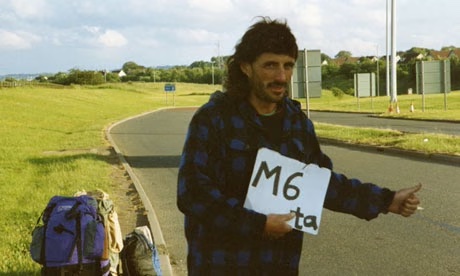
Although best known for spying on anarchists and animal rights groups in North London, Dines began his deployment in South London, hanging around the South London Direct Action Movement (DAM) in 1987-88, possibly building a ‘legend’ to help him infiltrate other groups. South London DAM was based at 121. The DAM was a national British anarcho-syndicalist grouping (since evolved into the Solidarity Federation), and DAM members had been involved in 121 from its beginning. (A Direct Action Movement Conference at 121 was also reported on in 1985, though I am not sure which officer reported this, possibly Lambert).

Like Bob Lambert and many other SDS officers, John Dines formed an intimate relationship with a woman activist he was reporting on – Helen Steel.
Their two-year ‘relationship’ ended as he withdrew from his five-year deployment faking a mental breakdown, leaving Helen distraught and worried. She spent years trying to track him down, and gradually uncovered evidence that he was a policeman. Her determine pursuit of more information began the slow avalanche of disclosure that laid bare some of the working of the SDS.
We cannot legally give more detail on Dines’ reports that mention 121, as his reports and witness statement have not yet been published by the UPCI and are subject to Restriction Orders. John Dines has not come to give evidence in person to Inquiry hearings and is not expected to do so. It’s possible thye may never be published.
No Lip
121 was visited more regularly around 1989-90, by a fourth UCO, who used the cover name ‘John Lipscomb’ (HN87).

HN87 was mainly targeted at hunt sabs and animal rights groups – he spied on Brixton hunt sabs, Bromley Animal Rights Group, Croydon Animal Aid, the Hither Green (Lewisham) Hunt Sabs, and South London Animal Aid. Embedded in the Brixton hunt sabs/anarchist scene, he joined some of them in a trip to Treworgy Free Festival. He was known in South London hunt sab and anarchist circles as ‘Hippy John’ or ‘Beardy John’.
HN87 attended meetings of and reported on a local anti-poll tax group, Brixton/Clapham Community Resistance against the Poll Tax, which was a t one time based and met at 121, and had its postal address there.
Beardy John reported on involvement by 121 activists and related scenes in anti-fascist actions in 1990, and on 121’s ‘financial difficulties’ in January 1990.
‘Lipscomb’ was noted by some activists he had spied on as having been guilty of unwanted touching of some young female activists.
Coles on the Dole?
Spycop who visited 121, no 5 (at least): UCO Andy Coles, aka ‘Andy Davey’ (HN2), aka ‘Andy Van’. HN2 reported on 121 extensively from 1990 to 1994.
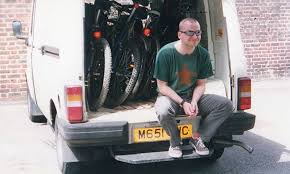
Coles succeeded ‘John Lipscomb’ in spying on the revived Brixton Hunt Sabs group (re-founded in 1989) and was a regular attender at social events at 121. He also visited many Brixton squats. He used to drive sabs to hunts, and also to drive activists to New Covent Garden fruit and veg market in Nine Elms, where we would collect vegetables which were left over from the market, and use them to make large communal meals for the 121 Café, often sold cheaply to raise money for political causes.

On one occasion Coles’ van caught fire on one of these trips and was entirely burnt out. He is recalled as saying he would ‘claim on his insurance and also claim fraudulently for expensive items of electrical equipment he would say were in the back’. It is not known whether or not he did claim this insurance. Presumably this was a cover story for the fact that he was being supplied with a new van by the SDS (at public expense).
Coles reported on meetings of the 121 Collective in 1992, on 121ers and Brixton anarchists involvement in anti-fascist actions in 1992 and on South London Anarchist Group, active c.1993-94, which met at 121.
Coles followed in the time-honoured SDS tradition of targeting women he was spying on for sex. Pretending to be a 24-year-old animal rights campaigner, (in reality a 32-year-old, married, undercover policeman) he groomed a 19-year old activist, known to the Public Inquiry as “Jessica”, into a sexual relationship with him in 1992-93. “Jessica” has said she considers herself to have been a “young” 19-year-old due to her inexperience, whilst HN2 Andy Coles presented himself as being age 24, when he was in fact age 32.
Jessica’ has set out in her evidence to the Inquiry the unequal power balance between them and her belief that Coles deliberately targeted her due to her vulnerability. ‘Jessica’ later described in a Channel 4 interview that she felt she had been groomed by Coles.
Andy Coles denies that this relationship took place, although other activists who knew them both at this time were aware of it. The Metropolitan Police – his employers at the time – have, however, accepted that it did happen, and have in fact made a public apology to ‘Jessica’ and settled the civil court case she brought against them.
At the material time when ‘Jessica’ sets out they were in a relationship, Coles was trying for a family with his then wife. Lovely.
Whilst deployed undercover, Coles’ behaviour towards women earned him the reputation of a ‘letch’ and a ‘creep’, with several other female witnesses to the Inquiry coming forward to give evidence about his conduct.
In 1993, Andy Coles turned up late at night and uninvited to the home address of a young female activist who was alone at the time. When inside he made unwanted sexual advances towards her.
She has described how Coles lunged at her and tried to kiss her, and then chased her around the flat for a couple of minutes, the young woman was upset and a few days later confided in someone she considered to be a fellow activist and friend (ironically, this turned out to be another undercover policeman).
Coles was also a major author of the ‘SDS Tradecraft Manual’, which helped to train large number of future undercover policemen who also went on to abuse numerous women. The Manual, a guide written to train further undercover officers in how to spy on targets. As covered in his evidence to the Public Inquiry.
The Manual had a number of pieces of advice and guidance on undercover practice which have a dubious basis legally and morally.
You can read this Manual here
Andy Coles practised and embedded this and other abhorrent SDS tradecraft, Later he later then went on to work in the MPSB training office as well as in the National Public Order Intelligence Unit.
Evidence from a hearing in the Public Inquiry on 18 December 2024, from ‘Jessica’ on the relationship & the trauma and feelings of abuse she has undergone here
Coles is shown in one report arguing in the SDS back office that officers should be allowed to break the law on a much wider scale to achieve their objectives, and in drafting training documents that were used to teach future officers to break the law and abuse (mainly women) targets and members of the public.

Since vanishing from South London animal rights circles in 1994, Andy Coles has risen in the world. He became a Conservative Party councillor in Peterborough, a school governor, an expert on child protection (!) and best of all, Deputy Police & Crime Commissioner for Cambridgeshire. Well, the last until he was forced to resign after the outrage at his grooming of a teenager into a sexual relationship while a police spy forced him out.
One Brixton anarchist recalled that ‘Andy Van’, while undercover, expressed a hatred of conceptual art and sabotaged Carl Andre’s ‘bricks’ sculpture in an exhibition in the Tate Gallery, stealing a brick. Ex-Councillor Andy Coles has neither confirmed nor denied this, though his dislike of conceptual art has featured on his modern social media. We can neither confirm nor deny that this aversion to conceptual art is shared more widely among Special Branch .
Coles also fancies himself as a writer. He pens meaningful political poetry – of a quality that only be described as ‘McGonagallite’. And he has recently revived plans to write a novel, provisionally titled However Roguish a Man; the subject: undercover policing as used against the radicals of early 1830s London! More on Coles literary ambitions here
Coles now has more time to devote to this, as he lost his council seat in 2022 and failed to regain it at election in 2025, partly due both times to a vigorous campaign by ‘Jessica’ and others, including Cambridgeshire locals, reminding voters of his dubious & exploitative past.
Andy Coles evidence to the Inquiry
And there’s more
Flic in a 2-2
Spycop who reported on 121 no No 6: ‘Neil Richardson’, HN122, who spied primarily on Class War.
‘Neil’ reported on the 1992 Anti Election Alliance, an agitation around the 1992 UK General Election, in which individuals from 121 and Class War (CW) were involved and which used 121 as a postal address, as well as CW’s meeting at 121 during its ‘Summer of Discontent tour 1992.
‘Neil Richardson’/HN122’s witness statement to the Inquiry is turgid and well tutored, and contains little of dramatic interest, apart from being a useful guide to spycop methodology.
There is nothing more specific in his statement re 121, than reporting on CW – 121 links.
@ @ @ @ @ @ @ @ @ @ @ @ @ @ @ @ @ @ @ @ @ @ @ @ @
Our knowledge of SDS spycops largely reports on 121 dries up after this. As noted above, revelations so far are limited to Tranche 2 of the Inquiry, Tranche 3 is underway – we have no real indication of what evidence might emerge about undercover activity relating to 121 – and the Inquiry won’t disclose it to us. Incidental evidence may emerge, much as reports from Lambert, ‘Lipscomb’, Coles, et al above revealed some intel collected about the Centre.
The Eviction of 121
Various early attempts by Lambeth Council, who owned the building, to evict the 121 squat tailed off in 1985, when a legal hearing for a possession order was adjourned and left unresolved.
In 1997 this case was revived by Lambeth Council. In February 1999 the Council was granted a court order allowing it to evict the centre, which had been squatted for 18 years. The 121 Collective contested that the council had lost title under the principle of ‘adverse possession’. The Council argued that since the 1983-5 court case had been fought on the grounds that they were licensees, they had recognised the council’s title to the property which rendered the 12 year clause irrelevant. Since letters were exchanged in June 1985, 11 years, 11 months and 2 weeks before the latest proceedings began, Judge Cox decided the case was still going, although it had been adjourned and not come back to court for over 12 years. All legal arguments by the 121 and learned friends were rejected. Leave to appeal was refused.
121 survived, occupied and under threat, for several months, despite a couple of speculative dates and false alarms.
The Centre was finally evicted on August 12th, 1999, early in the morning, when only a few people were present. The eviction was enforced with the aid of 150 police, some of whom were armed, supported by a police helicopter.
Given the interest in the eviction from the police, and the huge resources eventually committed to its final demise, it seems unlikely that there was not some more attentive intrusion by the SDs or another unit into the 121 or the scene involved in defending it in early 1999. At least one other SDS spycop, Jim Boyling (who spied on Reclaim the Streets among other groups) visited 121 in the relevant era. We aren’t legally allowed to repeat (yet) whether or what he reported about 121 or the defence campaign. Boyling will be giving evidence in the next round of Inquiry hearings in December 2025, though he is unlikely to be asked about 121.
Did SDS operative James Thomson, who went undercover as “James Straven”/”Kevin Crossland” ever visit 121? He spied on Brixton and Croydon Hunt Sabs and was active 1997-2002, so was definitely active in the right area geographically.

Another SDS operative, ‘Dave Hagan’ (HN81) was spying on other groups active in Brixton at that time, notably the Movement for Justice, and also allegedly spied on anarchists – but it has very recently been announced that HN81 is refusing to attend or give evidence to the Inquiry, so little is probably going to come out from him. Given that HN81’s spying on supporters of the family of Stephen Lawrence after his murder by racists was the major trigger for the announcement of the Public Inquiry in the first place, the lack of any info from him on 121 is not the biggest story here.
121 Within the Public Inquiry
A cascade of revelations between 2010 and 2014 about SDS and NPOIU undercovers and their activity gradually bult up to a picture of widespread targeting of families of Black victims of racist murders and their supporters, mass surveillance of political campaigns, miscarriage of justice and deceptive sexual relations with women targets, using false names (often derived from using the birth certificates of children who died while young).
The flood of discoveries – mainly by their activists and women targeted, and some journalists who supported their work – finally pushed then British Home Secretary Theresa May to announce there would be a Public Inquiry into Undercover Policing of political targets in 2014. It opened the following year. This inquiry continues – more hearings begin in October 2025.
Despite an application being submitted, 121 were not granted ‘core participant’ status in the Public Inquiry into Undercover Policing (UCPI). Then Chair of the Inquiry, Judge Pitchford, rejected 121’s application to be Core Participants in 2015, on the grounds that there wasn’t enough evidence that 121 was specifically targeted:
“The 121 Bookshop and Centre was based at 121 Railton Road in Brixton. It was used as a meeting place for a number of campaigning groups and organisations. The applicants… say that they have been informed that the building was kept under observation by Special Branch in the 1980s. This does not imply undercover activity.They are ‘aware’ that two campaign groups that visited 121 were targets for two named undercover police officers… I consider that the application does not reveal a real possibility of a direct and significant role in the subject matter of the Inquiry.”
Since then, clear evidence of MI5 asking the SDS for intel on the Bookshop in March 1981 emerged, and Roger Pearce’s role has come out, and the given reasons for this refusal didn’t really wash any longer, but the decision has not been reversed, since Pitchford’s resignation as Chair and his replacement by the ultra-spook-friendly Judge Mitting. Who is now himself planning to resign after this tranche of hearings – to be replaced by a rotating elected committee of community representatives, no doubt.
However, 121’s applicants have subsequently been told that they are being treated as a target group for the purposes of group disclosure. Relevant individuals have received what is considered by the Inquiry to be necessary and relevant disclosure even when it does not mention them by name. Some of those most heavily spied on have been supplied with reports and some of us have given statements to the Inquiry.
****s of Brixton
Apart from SDS undercovers, other former Brixton police officers have been implicated in the wider revelations surrounding the SDS, political policing and the relationship between policing, Special Branch and big business.

Sid Nicholson served as a police officer in apartheid South Africa before joining the Metropolitan Police, and working out of Brixton Police Station. Nicholson spent 31 years in the police and rose to the rank of Chief Superintendent. After leaving the Met he worked in private security, eventually becoming head of security for multi-national fast food giant McDonald’s. He oversaw McDonald’s surveillance of anarchist group London Greenpeace in the run up to McD’s suing five LGP members for libel in 1990 for handing out a leaflet pointing out the company’s exploitation of workers, environmental impact, and unhealthy food (a leaflet, remember, at least partly written by spycop Bob Lambert). Resulting in the McLibel trial between Maccies, and anarchist activists Helen Steel and Dave Morris.
Nicholson revealed in the witness box that McDonald’s security department were all ex-policemen – including his side-kick, Terry Carrol, who had also been based at Brixton nick – with “many, many contacts with the police service” and that they could obtain information from the police easily. He also revealed that his staff had traded confidential information about Steel and Morris with Special Branch officers.
It is believed Bob Lambert worked closely with Brixton police during his time in Special Branch’s C Squad, before going undercover to infiltrate London Greenpeace. A memo by Carrol from 1994 read out in court during the McLibel trial noted:
“I had a meeting with ARNI [Animal Rights National Index, later grew into National Public Order Intelligence Unit/NPOIU] from Scotland Yard today who gave me the enclosed literature. Some of it we have, other bits are new.”
Nicholson himself noted that he had “quite a lot of experience with Special Branch officers,” and that his first contact with them in relation to London Greenpeace had taken place at a meeting at McDonald’s HQ in September 1989.
After this meeting McDonald’s decided to hire two separate private detective agencies to spy on London Greenpeace, Bishops Investigation Bureau/Westhall Services and Kings Investigation Bureau.
It looks likely that Special Branch passed on work product derived from Lambert (and possibly other cop-spies) to Nicholson, Carrol or others at McDonald’s, its Security Department or contracted external detective agencies.
What was the nature of the relationship between Nicholson, Carrol and McDonald’s on the one side, and Special Branch and ARNI on the other?
Collusion between police and the corporate security goons was such that in 1998 the McLibel Two defendants Helen Steel and Dave Morris went on the attack, and in 2000 won a £10,000 award and an apology from the Met in an out-of-court settlement for the disclosure by the police to McDonald’s of confidential information about them.
The case helped to expose how “police (including Special Branch) officers had passed private and in some cases false information about the McLibel 2 (and other protesters), including home addresses, to McDonald’s and to their private investigators”.
Spies in the House of Love
Spying on social centres linked to anarchist, anti-capitalist, radical and environmental movements ramped up considerably in the 1990s and 2000s.

As well as spying on 121, Andy Coles’ reported on 56a Infoshop in South London, on individuals involved and groups that used the space. Coles at one point was arrested while active undercover, and gave a false name (ok, ANOTHER false name) – the name being exactly that of a leading organiser within 56a at the time. Questioned about this in a hearing at the Inquiry in December 2024, Coles claimed it was “coincidence”.
The Colin Roach Centre was specifically targeted by UCO Mark Jenner, using the name ‘Mark Cassidy’.
Following the example set by previous SDS spycops, Jenner ‘furthered his cover’/engaged in state-licensed sexual abuse, engaging in a ‘relationship’ with ‘Alison’, an activist he met at the Centre.
London Action Resource Centre (LARC) in East London – opened in 1999 – was subject to reporting from before it actually opened, through police interest in people involved in Reclaim The Streets (RTS) https://wp.me/p74yfw-L8 who began the LARC project.
UCOs known to have frequented LARC includes ‘Jackie Anderson’, Jim Boyling, ‘Jason Bishop’, Dave Jones, ‘Rob Harrison’, Mark Kennedy and ‘Marco Jacobs’.

‘Rob Harrison’s real name is expected to be released into the public domain by the Public Inquiry into Undercover Policing shortly after the beginning of hearings in October 2025.
The Old Button Factory was a squatted gig and meeting space in Brixton, not far from 121, active 2000 to 2001. After the WOMBLES anti-capitalist action group started to use the space in the run up to May Day 2001, undercover officer ‘Dave Jones’ attended WOMBLES meetings at the Button Factory. He volunteered to repair the building’s electrics, providing him access to the entire building outside of meetings. Another UCO, ‘Rod Richardson’ of the National Public Order Intelligence Unit, also visited the Button Factory during this period.
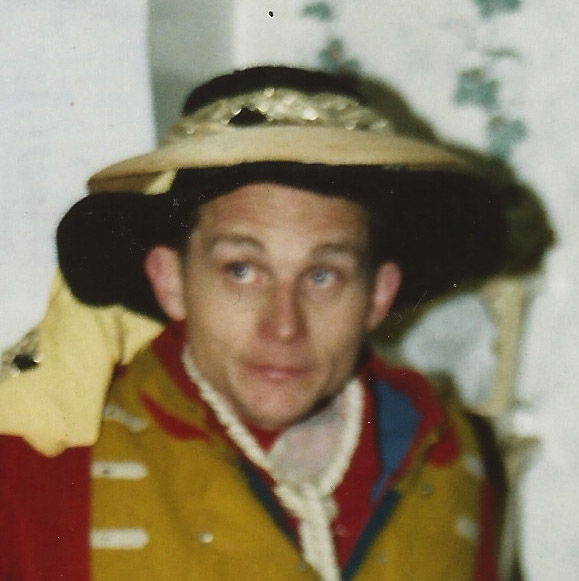
The WOMBLES were the specific target of an unprecedented number of overlapping undercover deployments by both the SDS and NPOIU involving ‘Jason Bishop’, ‘Rod Richardson’, ‘Dave Jones’, ‘Jackie Anderson’, and Mark Kennedy.
Police associated several other squats with the WOMBLES groups, and targeted these spaces:
• A derelict meat processing facility on Great Suffolk Street, near London Bridge which was squatted on 27 April 2001. Nick-named ‘the Bacon Factory’, it was specifically opened as a convergence space for the Mayday mobilisations in 2001.
‘Dave Jones’ and ‘Rod Richardson’ were known to be involved, and it is thought that ‘Jackie Anderson’ was active there also.
• The ‘Dentist Factory’ on the corner of Great Dover Street and Globe Street (Elephant & Castle), used to store material for the WOMBLES as well as host some larger meetings and benefit gigs.
• 126 Tooley Street, near London Bridge, which was opened as a women’s only space. It had previously been a reprographic unit and several bottles of developing fluid had also been left there by the previous tenants, along with [empty barrels marked ‘HAZCHEM’. These were subsequently converted into compost toilets by the occupiers.
On 7th September 2001, in what appears to have been pre-emptive repression against DSEi related protests, the presence of these items was used to justify both Tooley Street and the Dentist Factory being raided by police. It was obviously an intelligence-led operation, and most likely based on highly exaggerated misrepresentations of what was going on in the spaces.
‘Rod Richardson’ is known to have been present at both squats prior to the raids, and ‘Jackie Anderson’ is likely to have been there too.
• The Radical Dairy in Stoke Newington – 2002 to 2003. ‘Massage Jackie,’ the SDS undercover officer deployed to infiltrate the WOMBLES, is known to be actively involved in the centre, including putting on massage sessions. The NPOIU undercover officer ‘Rod Richardson’ was also infiltrating the WOMBLES in this period and is also known to have visited Radical Dairy and even stayed overnight a couple of times
• Fortess Road / Grand Banks – two WOMBLES squats in Tufnell Park, North London 2004

Mark Kennedy immediately reported details about the new squat including with details about security, and produced an ACAB (All Coppers Are Bastards) t-shirt of his own design there! One for the Metropolitan Police Museum.
• The Institute for Autonomy – early to mid 2005
UCO involvement included ‘Simon Wellings’ who had infiltrated the Dissent! media group which aimed to ensure effective alternative media provision around the G8 counter summit mobilisations. His involvement in this group and media organising raises concerns about unjustifiable interference in journalistic endeavours and freedom of expression covered by Article 10.
‘Rob Harrison’ is also believed to have become involved in events, especially in connection to No Borders and ‘Dave Evans’ was involved in preparations for the Art Not Oil campaign, and the subsequent exhibition in the social centre.
Mark Kennedy was also known to have attended through his close relationships within the WOMBLES and his role in distributing Zapatista coffee.
• The Square Social Centre, Bloomsbury, 2006
Undercover officers known to have spent time at the Square include ‘Dave Jones’, ‘Rob Harrison’ and Mark Kennedy.
• Everything 4 Everyone (Dalston Theatre) – East London 2006
‘Dave Jones’ had considerable and significant involvement in the Dalston Theatre social centre. He is known to have been there often, and helped out with some building work. When the squat was threatened with eviction, ‘Jones’ helped prepare defences, including boarding up the windows. When the building was finally evicted, he turned up late, after the eviction was over, but probably in time to get involved in discussions about future plans.
• The Vortex Social Centre (Stoke Newington) – Jan to March 2007

This was another short lived squatted social centre, whose occupation began on 6th January 2007. The building had previously been home to the Vortex Jazz Club, but was bought by a property developer who intended to demolish it and build a Starbucks with luxury flats above
It is known that ‘Rob Harrison’ was involved in the short lived space, and had been involved in proposing a benefit gig there to raise funds for the Sack Parliament event organised on behalf of his target group, State of Emergency.
• The RampART Creative Centre and Social Space opened in April 2004|
Spied on by UCO ‘Rob Harrison’
Police spies also from the NPOIU infiltrated Nottingham’s Sumac Centre which was massively misrepresented in NPOIU intelligence cases with extensive repetition of the term ‘extremist’ used to justify authorisations. It was a primary named target of the undercover deployment of Mark Kennedy, and also ‘Rod Richardson’ (who preceded Kennedy) who was involved in setting up the project and lived at Neds Housing Coop, just behind the social centre.

Mark Kennedy is known to have taken part in the squatting of a convergence space at the abandoned Bounds Green campus of Middlesex University and opening it to the public, only to then take part in discussions with uniform police about the possibility of raiding the space.
• Oxford social and resource centres (OARC, EOSC, OCSET) rented resource centres shared and used by groups including Undercurrents, Rising Tide and Corporate Watch, in particular at Cherwell Street in east Oxford, were also spied on by Mark Kennedy. During one of Kennedy’s visits he is known to have passed the password for the Cherwell Street resource centre computer to his handler (potentially an offence under the Computer Misuse Act 1990).
• The Cowley Club (Brighton)
An authorised target of ‘Marco Jacobs’. Mark Kennedy often frequented the space,
• BASE (aka Kebele Bristol)
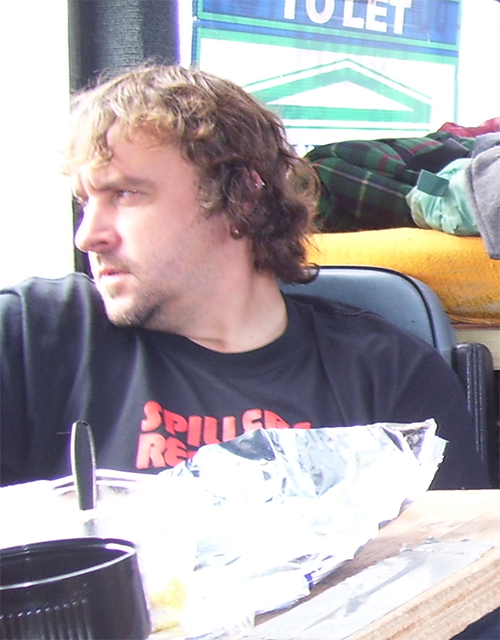
‘Marco Jacobs’ is certain to have attended events there with activists from Cardiff, and Kennedy is known to have reported on what he referred to as “a young contingent at the Kebele”.
• The Peoples Autonomous Destination (The PAD), Cardiff
Both ‘Marco Jacobs’ and ‘Lynn Watson’ are known to have attended and believed to have reported on meetings held at The PAD.
• The Common Place (Leeds)
Most heavily targeted by ‘Lynn Watson’ from 2004 to 2008, but Mark Kennedy occasionally attended also.
Some social centres from 1999-2008 such as the Spike Surplus Scheme, and the Autonomous Centre of Edinburgh (ACE) plus those opened after 2008, such as the RATstar and the Library House (both located in Camberwell, South London) were also targeted. More may – or may not – emerge on this in future Inquiry hearings.
I Always Feel Like, Somebody’s Watching me…
The range of spying carried out under the aegis of the Special Demonstration Squad and National Public Order Intelligence Unit from 1968 onward has gradually been revealed to be breathtaking. 100s of campaigns, groups, movements were targeted, and 1000s of people kept under surveillance. Increasing numbers of women have discovered that men they slept with or shared their lives with were not who they said they were, but were in fact policemen, reporting on their lives and exploiting them for sexual gratification, to improve their cover or opportunistically. The details of lives of children have been reported on – children have been born by targets and then abandoned – cops have used the names of dead children as cover.
Special Branch have collected vast amounts of information, some of which has been passed on to companies that blacklist trade unionists – people have lost jobs as a result. Officers acted as agent provocateurs and led people into actions that got them jailed.
Much of this activity was directed against political groups and campaigns whose outlook was entirely legal and peaceful, including MPs.
Other activity was clearly aimed at groups whose ideas and actions were aimed at more radical change, and were prepared to break the law or get involved in disorder to achieve them.
121 falls more into this bracket. We were anarchists, and acted on our beliefs, which did not exclude breaking the law to achieve our aims and using ‘violence’ on occasion to resist violence or affect change. As Dave McCabe says in his witness statement, democracy in its current form is the result of centuries of political violence from above and below, and the state uses violence routinely against its own ‘citizens’ and much more against other countries: “When the State renounces violence, then so will I.”
Was spying on us more justified than infiltrating CND or the Labour Party Young Socialists?
Core Participants in the Public Inquiry have determined that we will not be divided on the basis of ‘some targets were justified, some were not’.
We expected it, and to some extent felt it was inevitable. Whether or not we were a threat to the security of the state (hugely debateable!) we wanted to be! And claimed to be. Probably the claim amounted to much more than the reality.
Unsurprisingly Special Branch, since its beginning, has always considered anarchism as a major threat to the state and public order, and has rarely left anarchists in the UK out of its roster of targets.
Some of the group involved in 121 around its beginning, associated with Black Flag, had strong links to people who had been involved in illegal activity, including armed robberies for political causes, armed action against fascist regimes, and more. This was a milieu that Special Branch and MI5 had been extremely active in surveilling, and had co-operated in attempting to get convicted on charges of conspiracy to cause explosions and conspiracy to rob in the immediately preceding years. 121 was of great interest to the secret state because of these links. Even if we made more of being prepared to use violence than actually doing it – we did expect that they would consider us dangerous. We were not surprised when we heard that were reading our mail and still less surprised when we learned of the undercovers who targeted us. It confirmed suspicions we had had for a long time.
To be fair if we had claimed to be pacifists – they might have still spied on us! They spied on peace campaigners!
Spying on 121 as an institution did not violate the centre, in the way individuals have been impacted – especially women exploited for sex, who have had children and then seen their ‘partners’ disappear, who have gone to jail, who have had their ‘best friends’ betray them.
However, many individuals involved in 121 were personally targeted and the effect on them is variable and multi-faceted. Dave McCabe’s witness statement shows how Roger Pearce’s tissues of fantasy were the background to legal skulduggery, trawling trips to McCabe’s old school for info… Many others’ lives, relationships, children and jobs are recorded: sometimes accurately, often featuring complete untruths. How was this ‘intelligence’ all used? We know the SDS passed information to the secret services and to private companies like McDonalds and organisations that blacklisted trade unionists. The Inquiry has barely explored these links. How many of us had our work, opportunities, affected? We know 121ers have been harassed, arrested, raided, a lot of it on the basis of reporting by officers whose evidence has been shown to be part-fantasy, part self-aggrandisement, part telling their bosses what they wanted to hear.
We understand the anger of those friends who have been personally and intimately abused by spycops, and have supported them, and feel angry at what happened to them. What happened to 121 as a building is not on the same scale as that, and the consequences we faced were not on that level, although what happened to some 121ers reflects part of that picture.
However – what was it all for? It was a huge amount of effort and cost, but for what result?
For all their infiltration and hundreds of reports they found out very little of worth about 121 or those of who involved there. The police attempted to portray 121ers as being behind the ’81 riots – while knowing it was untrue, based on their own UCO’s reports. And even this plan largely failed. Lots of the reporting was snarky and petty, with little value – building a picture of us and our networks, but not stopping us from doing what we were doing. All the resources of the SDS did not prevent collective action from the thousands of people targeted.
As Dave McCabe noted in his witness statement: “DI Roy Creamer, a veteran SB officer acknowledged as an expert on the anarchist movement, has stated in his evidence (given in Tranche 1) that nothing the UCOs learnt could not have been learnt by conventional SB methods. An interesting viewpoint from an officer once attached to SDS itself. What was the practical benefit of these deployments?”
[Although Roy Creamer, the infamous ‘situationist cop’ should not himself be trusted, and we also have no truck with ‘conventional SB methods’, this is true: in fact, most of what Roger Pearce learned could have been picked up from reading publicly available anarchist publications…!]
It is true that the SDS’ activities as regards 121 probably constitute less in terms of the provocation, attempts to stir division, deception for sexual gratification, that other groups were subject to. More outraged reactions than ours are justified.
But we do think – the state, police, establishment, is bound to work like that – our morality and theirs aside, it is in their interest and in the interest of the economic and social strata they work for to keep tabs and try to frustrate those who aim to dismantle class hierarchy and inequality. The question is: can those of us who would like to see a different model of society build alternatives that might prevent these police units from operating?
This is a tough question. Over 40-odd years of spying in hundreds of groups and thousands of people, only a few SDS or NPOIU spycops were ever found out during their infiltration. They had a lot of resources and they played them effectively to cover their tracks. In most cases, we were also willing to be fooled: we didn’t have anything like the levels of security needed to catch such a methodical surveillance op.
@ @ @ @ @ @ @ @ @ @ @ @ @ @ @. @ @ @ @ @ @ @
Inquiring Minds
The next round of hearings in the Public Inquiry into Undercover Policing began in October 2025 – here’s the upcoming schedule of hearings.
A number of the spycops covered above or those they targeted have already given evidence to the Inquiry.
Some are refusing to co-operate – eg John Dines has not and will not be appearing. Though his lying evidence has been used against the woman he abused, Helen Steel. N81 ‘Dave Hagan’, as noted above, is also refusing to appear.
Activists formerly involved in a number of social centres, some affiliated to the old Social Centres Network (to which many of the squats and other spaces belonged) have submitted a collective witness statement to the Inquiry in advance of Tranche 3, detailing some of the spying on centres, and its impact (some parts of this article on 121 was originally written for that statement).
This will be accepted into evidence and published by the Inquiry.
NB: There is a currently existing UK Social Centres Network which consists mostly of newer centres.
@ @ @ @ @ @ @ @ @ @ @ @ @ @ @ @ @ @ @ @ @ @
Through our own networks, and from evidence released by the Public Inquiry, activists are still piecing together identities, finding out about abusive officers, trying to hold the system & individuals to account.
Support the wider campaign to expose secret policing…!
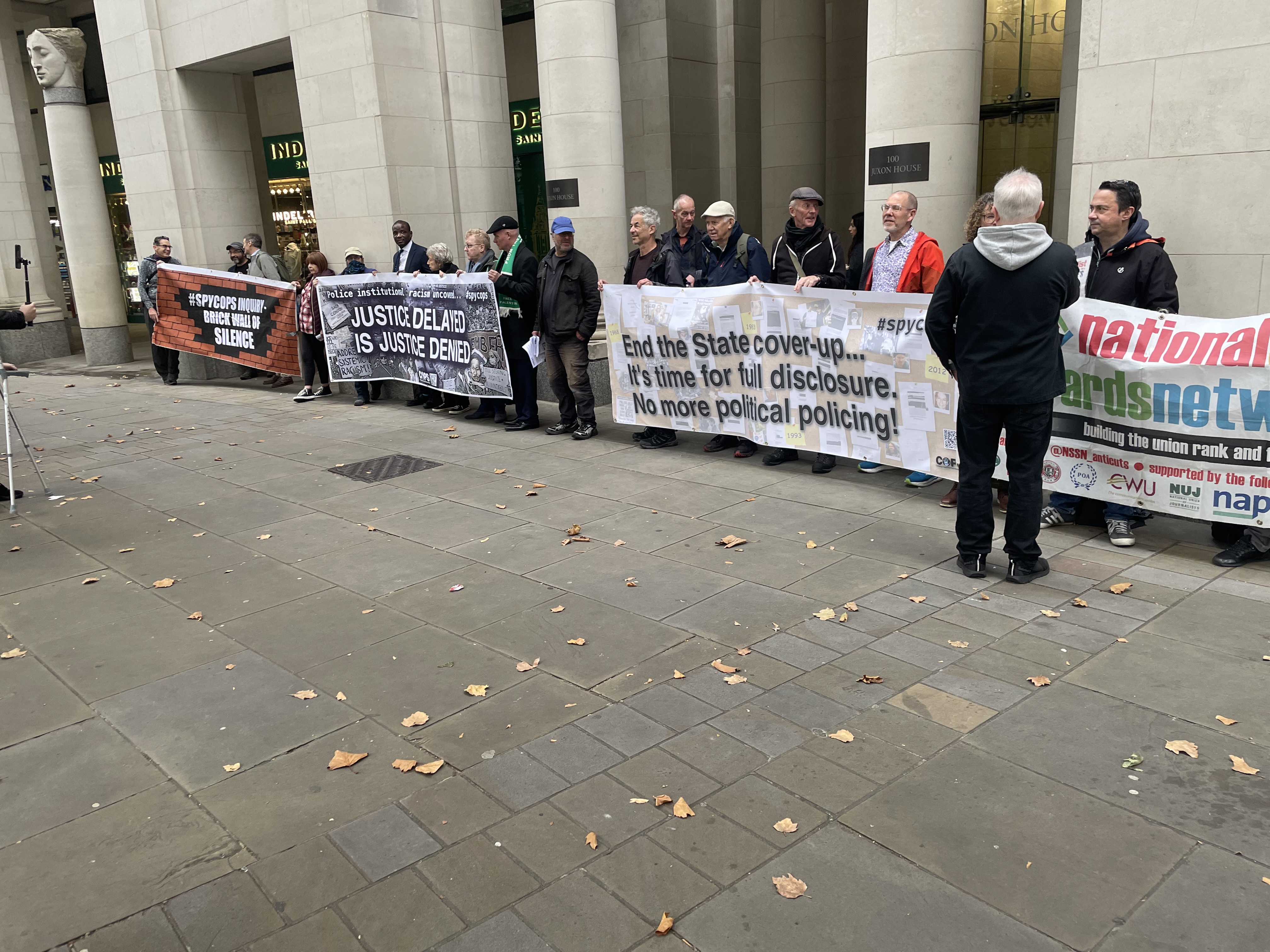
More info from anti-spycops campaigns at:
Campaign Opposing Police Surveillance
There is an ever-increasing wealth of evidence published on the website of the Public Inquiry into Undercover Policing.


 LONDON RADICAL HISTORIES
Leave a reply to mudlark121 Cancel reply