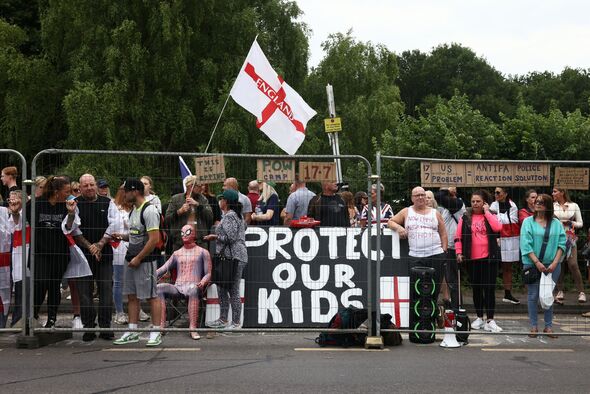
Mass Racist Attacks on migrants – nothing new.
The current wave of white crowds engaging in attacks on migrants living in hotels and hostels in Britain are hardly a new phenomenon.
Communities migrate. Movement of people is as old as humanity. Countries are invented shared myths. Borders, immigration controls and passports are barely even a blip in history; for most of human existence movement was as free as resources could make it (although resources to allow you to migrate are another problem). Of course people will flee war, starvation, seek better economic prospects in other countries. Especially if the ruling elite of the destination nation has historically looted the wealth of the world and continues to sponsor war, genocide and invasion across the globe. At the heart of it is, refugees coming here are generally people in need with little or nothing. The endless fucked-up truth is that working class people with little can be mobilised to hate, besiege and threaten them.
A tradition of xenophobic violence – usually ‘justified’ with an economic grievance or claims of criminality or immorality – goes back centuries. Patterns repeat.
A brief tour through some UK examples shows how the rightwing uprising of 2024-5 is reviving old tired lies, bigotry and myths to target refugees.
Racism Belongs in the Middle Ages
During the 1381 Peasants’ Revolt, crowd attacks were mulitiple – overwhelmingly on the wealthy and powerful such as lords, archbishops, landlords and scheming lawyers. However a section of the London ‘mob’ gathered to assault and kill a number of Flemish workers living in the City; a community accused of competing with ‘native’ workers.
As today, the wealthy elite was quite happy to hire ‘cheap foreign labour’ & then fail, or be unwilling, to protect them from local resentment: playing us off against each other has always worked quite nicely for them.
Hatred and suspicion of Jews was also rife. Anti Semitic pogroms crop up in English history from the 12th century onward, from a crusade against Jews after king Richard I’s coronation through ‘blood libel’ claims of ritual murder of Christians.
Successive kings borrowed money from Jewish moneylenders but exposed the Jewish communities deliberately to crowd resentment and violence
This would culminate in the wholesale banning of all Jews from England in 1290 (a ban lasting over 360 years).
In 1517, the annual May Day celebrations – often boisterous and occasionally riotous – evolved into another mass attack on ‘foreigners’ alleged by agitators like John Lincoln, a ‘broker’ (like Farage, a former banker ) to have “bought wools to the undoing of Englishmen”. attacking foreigners and burning the houses of Venetian, French, Italian, Flemish and German merchants.
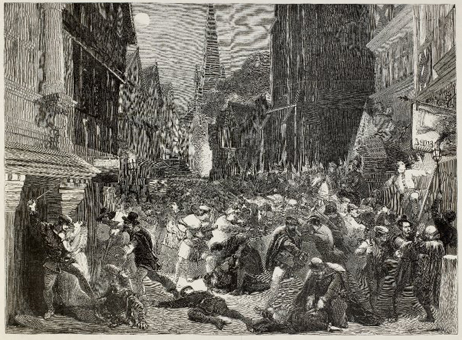
Interestingly here king Henry VIII and the authorities wee accused of showing preference to ‘foreigners’ and over-harshly punishing the rioters – ‘Two Tier Justice’ of its time.
From the 18th century increasing numbers of Irish people mobbed to London, often because they were desperate and starving (especially since English conquest and incoming British settlers dispossessed them of the most productive land in Ireland). Frequently Irish migrants were extremely poor or destitute, scrambling for any work. Irish workers were blamed for working for cheaper wages, especially in the building trades, and were on occasions attacked by ‘native’ workers.
In summer 1736, reports spread of English builders being let go from the building of Christ Church, to be replaced by Irish workmen, said to be working below the agreed rate (supposedly at somewhere between half and two thirds of what the previous workers had been paid).
In July this sparked three night of anti-Irish rioting in Spitalfields, which ended with the murder of a teenager.
1919 Riots
Maybe closest in parallel to the current onslaught on migrant hotels are the 1919 race riots and 1949 lodging house riots
Between January and August 1919, seven British ports experienced some of the most serious and sustained instances of public disorder in twentieth century Britain. During these riots, white working – class crowds targeted black seamen, their families and black-owned businesses and property in these ports. Other black people, including military personnel and skilled workers also came under attack from white crowds.
Some newspaper editorials fanned the flames of racial tensions by describing black people in terms of racist stereotypes. A major focus was on black men’s relationships with white women.
In Glasgow, the British Seafarers Union and the National Sailors’ and Fireman’s Union (NSFU) held anti-immigrant labour meetings, blaming foreigners for undercutting white employment.
In 1919, demobilization had increased Liverpool’s black population to about 5,000. They were mostly working class and out of work. Black Liverpudlians were sacked from local oil mills and sugar refineries because white people refused to work alongside them. In May 1919, white rioters began attacks on black people in the streets, their businesses and homes. The violence in Liverpool was orchestrated by well-organised gangs, hundreds and thousands strong, who hunted black men on the streets.
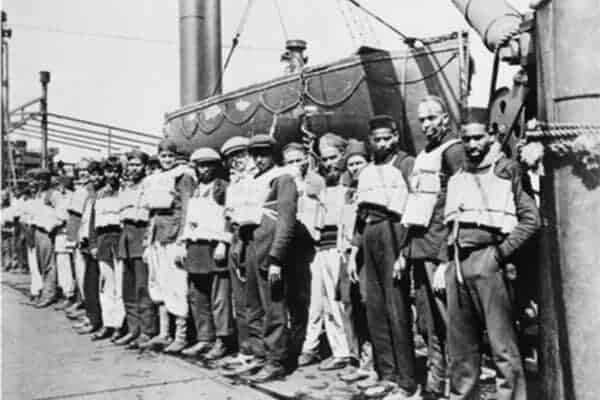
The Elder Dempster Shipping Line’s hostel for West African sailors and the Davis Lewis Hostel for black sailors were attacked and many houses were targeted and set alight.
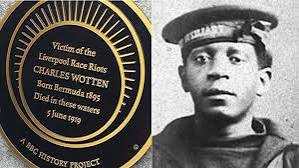
Riots continued into June, peaking with the murder of black seaman Charles Wotten, on 5 June 1919. He had served as a ship’s fireman in WW1. Wotten was chased into the river by a white mob and drowned. No one was charged. Instead 40 black men were arrested and several jailed for ‘riotous assembly’ – presumably for defending themselves.
The police also registered members of the black community; their details were recorded, to produce a relatively detailed picture of the black population of the city, with the origins, trades and family backgrounds of hundreds of people. This was used after the riots to develop a system of observation and monitoring in Liverpool. Black seamen were issued with registration cards that contained photos and fingerprints that had to be produced to sign on for ships, a system copied and adopted by other ports. The Aliens Order of 1920 and Special Restrictions (Coloured Alien Seamen) Order of 1925 further required all black seamen living in Britain, including British subjects, to register with the police and then prove their nationality.. The 1925 Order was, in effect, the enforcement of the earlier Alien Restriction Act of 1914, designed to keep aliens resident in Britain under supervision. This legislation has been described as ‘the first instance of state-sanctioned race discrimination inside Britain to come to widespread notice.’
Cardiff’s black population increased from about 700 in August 1914 to about 3,000 in April 1919. About 1,200 of them were unemployed seamen. There were at least as many demobilized white soldiers in the city, most of whom were unskilled. On 11th June, 1919, a large hostile crowd of white people attacked a group of black men and their white wives on Canal Parade bridge. The white crowd attempted to reach Bute Town where a large number of Cardiff’s black citizens had their homes, but police managed to stop them. Some attackers did get into Bute Street and attacked Arab (men mostly from Yemen and Somalia) owned lodging houses. More determined and organized attacks on Cardiff’s black community ensued over the subsequent few days. Two thousand people attacked black people in their houses and shops.
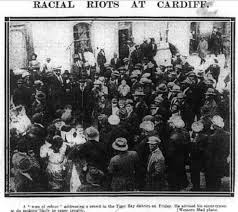
The racists didn’t get things all their own way though: “Some of them were badly cut up; negroes started carrying guns and razors to defend themselves. More mobsters got hurt in Cardiff’s Tiger Bay than any other part of Britain, for Tiger Bay had the toughest negroes there were in Britain.”
In both Liverpool and Cardiff, repatriation schemes were established to ‘encourage’ Black residents to ‘return’ to Africa or the Caribbean. Some ‘voluntary’ repatriations were less than voluntary.
Not everyone wanted to be deported – part of Cardiff’s black population indignantly rejected the offer. They insisted on claiming their rights as British subjects to get fair treatment and remain in the city. Some black folk had been born here anyway; others had white partners and mixed race children. This was specifically frowned upon by the authorities (the eugenics movement being at its height). But this did make forcing them out more difficult.
In Salford, black people were also attacked but when they decided to retaliate, police intervened and arrested them.
Also in June 1919, a shop in Cable Street, east London was attacked by a crowd of 3,000 people. The shop, which was “kept by an Arab”, had become targetted after stories had been circulating that “some white girls had been seen to enter the house”. The occupants were escorted away from the property by police.
By the end of the 1919 riots, five people had been killed, many were injured and at least 250 were arrested.
A lot more good info and analysis on 1919 here
Post-WW2
After the Second World War, Britain had a huge labour shortage. Various schemes were set up to take European Voluntary Workers, ex-prisoners of war and Polish ex-servicemen. Many West Indians who had served in the armed forces and related occupations hoped to find jobs in Britain owing to the lack of opportunities in the colonial islands.
The Ministry of Labour set up the National Service Hostels Corporation to organise hostel accommodation near the workplace for these migrant workers. The NSHC provided a list of 97 hostels across the country to accommodate 1128 migrant workers.
In July 1949, there was a racist riot in Deptford, Southeast London.
A large crowd of white men attempted to storm Carrington House, a London County Council lodging house in Brookmill Road where a group of around 40 black men from Africa and the Caribbean were staying. What seems to have started out as a clash in the high street was followed by hundreds of white men attempting to force their way into the hostel. Those under attack barricaded themselves in and defended themselves and when the police intervened some of them were arrested as well as their assailants. After two nights of clashes, a third night drew a crowd of 1500 outside the hostel but the night passed off peacefully.
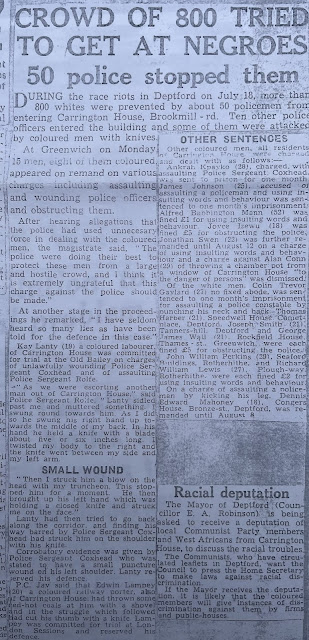
The men from Africa and the Caribbean had faced racism including colour bars in local pubs, and there were later suggestions that one motive for the violence was that some of them ‘had befriended white girls’.
As usual in such cases the attackers justified their violence on the grounds of defending women and children from an imaginary threat. Again – this is echoed in current anti-refugee agitation.
Many of the actual women seem to have had different ideas. Mrs Lilian Carrigan of Kings Grove, Peckham wrote to the local paper that ‘The coloured boys of Carrington House, Deptford, don’t get a fair deal… There are quite a lot of snobbish people about here who still feel themselves above the level of coloured people, and the colour bar in Peckham is very strong‘. Another woman living opposite Carrington House told the South London Observer: ‘They’re persecuted. You’ll find plenty of sympathisers for them round here’.
(See the great transpontine site for more on these events)
There was also trouble in 1949 in the West Midlands – an attack by Poles on 65 Jamaicans living in a Ministry of Labour hostel in Causeway Green, Oldbury. Poles armed with sticks, stones and razors attacked Jamaican quarters, after previous fighting began after a dance.
Polish residents alleged that “Jamaicans take young girls into the hostel.”
After events at Causeway Green, the hostel reduced the number of Jamaicans allowed to stay to 30 (it was originally 12) but many refused to leave and lose their jobs.
This shows the resonance of the grievance against the alleged morals of migrants – one or two charges of assault aside, there have been outraged calls for violence in the 2025 agro over reports that ‘young migrants talked to young women’… White mobs rarely gang up after the regular assault on young women by white men.
Fascist Voices
Recent agitation by fascists and media elements has formed a central plank of these attacks through the years.
Large-scale Jewish migration into London’s East End in the late 19th century (fleeing mass pogroms and murders during Russian government-backed mob violence) sparked fierce anti-immigrant agitation. Central figures in this campaign included people like Major Evans-Gordon, the MP for Stepney, (whose speeches and writings are remarkably similar to those of Enoch Powell later), the Reverend Billing of Spitalfields, the local vicar; and Arnold White, (though also from East End trade unions. An early rally against Jewish immigration produced a resolution to Parliament calling for bans on migrants, signed by 43 unions including the Dockers Union; pioneer socialist and much revered dockers leader Ben Tillet was outspokenly very anti-immigrant.)
Much of the writing and speechmaking Invasion’ described them as being of inferior race of humanity, and tried to establish a causal link between the Jews and poverty, and the creation of social evils in the areas they inhabited. Arnold White’s symposium The Destitute Alien in Great Britain was published in 1892. Books like WH Wilkins’ ‘The Alien Invasion’ described them as being of inferior class, questioned whether they in fact brought Russian persecution upon themselves, and campaigned for strict immigration laws.
In 1901 Major Evans-Gordon and others formed the British Brothers’ League, basically a nationalist and racist organisation, to help build up anti-immigrant activity. Every Conservative candidate in Bethnal Green, Hoxton and Haggerston – districts where organised racism remained a major feature for decades – exploited anti-immigrant attitudes in elections from 1892 to 1906. This pressure paid off, contributing to the passing the first Aliens Act. restricting immigration, in 1905.
This built into the 1930s attempts by Oswald Mosley’s British Union of Fascists to launch anti-Jewish pogroms in the East End – backed then as now by millionaire-backed media establishments like the Daily Mail (still at it today, though now joined by new rabid rightist mouthpieces like GB News).
But as much as many working class people were willing to kowtow to the posh racists and serve as fascist foot soldiers, there has been a powerful tradition of working class anti-racism and anti-fascism.
Mosley’s march in the 1930s was largely stymied by mass working class resistance in the street at Cable Street and Bermondsey.
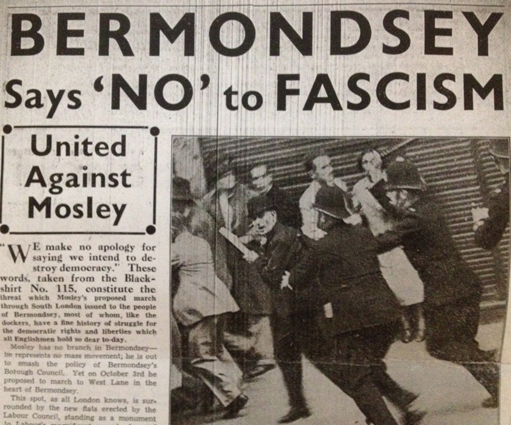
But you also have to wonder at possible involvement of revived Mosleyite fascists in the 1949 Deptford events (above).
1950s Notting Hill and St Anns in Nottingham were the scene of white riots against West Indian migrants, definitely involving Mosleyites and teddyboys inspired by neonazi Colin Jordan and his followers.
Again a central complaint by the white attackers was that Black men were forming relationships with white women.
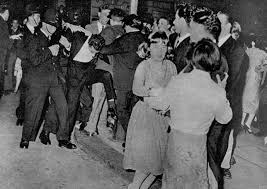
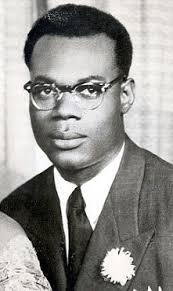
A spate of racist attacks ended in murders like those of Kelso Cochrane.
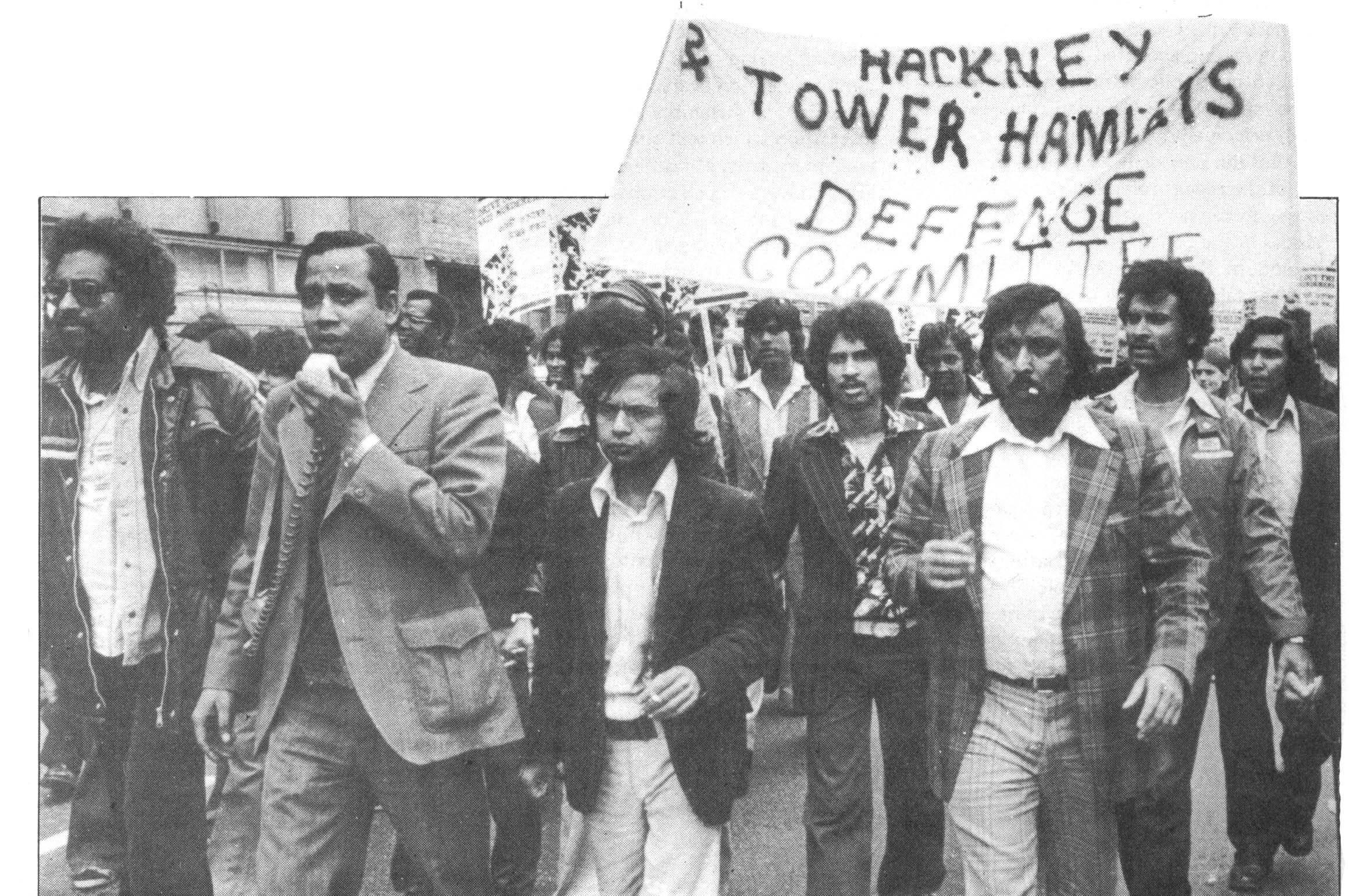
Through the 1970s across the UK, but most notably in areas like London’s East End (again), racist attacks were stirred up by far right groupings like the National Front and British Movement, against Black and Asian communities.
But as in 1919, 1949 and 1958, those targeted got together to fight back, organising against fascists and racists with collective action.
Patterns repeat. In the early 1990s in South East London, fascist British National Party ferment spread hatred abroad, encouraging racist murders like that of 15-year old Rolan Adams in Thamesmead in 1991, and Stephen Lawrence two years later in Welling. Wherever Nazis gather, they feed off and in turn inspire bigoted violence.
And the current demos at hostels have seen the appearance (if they have not outright been organised by) known rightwing racist agitators of many years standing – from British National Party veterans to English Defence League stalwarts.
Racism, the Rich and the Establishment
Since the Southport murders and racist rioting in response, we fave seen a rise in hysterical scapegoating – fear and perception of crime committed by refugees spread to incite distrust. Any crimes are seized on as done by Muslims, migrants or asylum seekers – whether true or not, it is all built up into a whirlwind of disinformation without much evidence.
Treatment of Jews in Medieval Europe or Roma in earlier centuries provides historical blueprint for this. Lies, pigeonholing and prejudice built over years form the background, any incident (or merely a rumour) serves as a spark, rabid xenophobes act as mouthpieces and communities looking for outlets for grievance, disillusion and resentment can be provoked to erupt.
Whatever middle class rightwing Media and organised fascists hype up about ‘concerned locals’ defending women and girls against dangerous foreign men – the high percentage of men nicked during 2024 race agro who had domestic violence convictions, and the corresponding preponderance of paedophiles and sexual abusers in far right groups give the lie to this. Misogyny exists to an extent among migrant men, no doubt – no less than among white British men – because they are MEN, socialised by male-dominated cultures to treat women with contempt. Which needs addressing – among ‘native’ men no less.
An attitude more obvious among those who are prepared to set fire to hotels with young migrant women and children in them.
The same old fascist faces, and the rightwing media, are always encouraging attacks by those who have very little on those who have nothing – to distract us all from our continued exploitation by those who have control of nearly everything. The rich.
No mobs gather outside the mansions of the wealthy or to set the hotels of Mayfair alight. Which is what we should be agitating for !
But note who does time after race riots – the foot soldiers or deluded, not the well to do MPs or self-lauded grifters like ‘Tommy Robinson’, all of who sun themselves in Dubai or Spain while their unemployed acolytes of the 2024 vintage get jailed. And Reform and their rival rightwing parties will all merrily welcome wages being driven down, housing becoming more expensive, and the privatising of healthcare – because they are bosses and landlords first and foremost. They drive the causes of resentment then distract by blaming ‘foreigners’.
It’s important to fight fascist ideas in ways linked to our own class interests and not either pander to racists or ally with the authorities. Official ‘Anti-racism’ sponsored by governments need shunning like the plague – a Labour regime that cuts disability benefits, keeps down wages, sabotages social housing and threatens health cuts is handing Reform the initiative. Anti-fascism and anti-racism needs explicitly linking to fighting austerity and working for a greater share of resources for all.
With its “We’re deporting more than the Tories” schtick, Labour is playing Reform’s game, and history shows that this is almost always the case – Labour capitulates to the right and enflames divisions BETWEEN working class people. Labour has been spreading anti-migrant rhetoric merrily for a number of years…
An important point is not to let ideas spread by rich agitators like Farage & other Reform leaders dominate working class thinking. Earlier anti fascist organisers like Anti Fascist Action recognised that you have to both challenge organised fascists physically on the Street, and fight racist ideas ideologically where they appear around you.
Gather to stand against fascist and racist ideas, against deportations and scapegoating, as well as expanding the fight against Labour’s drive to increase austerity – wherever you can… and Let’s Riot – yes – against the Rich and the Landlords…

 LONDON RADICAL HISTORIES
Leave a reply to Anonymous Cancel reply