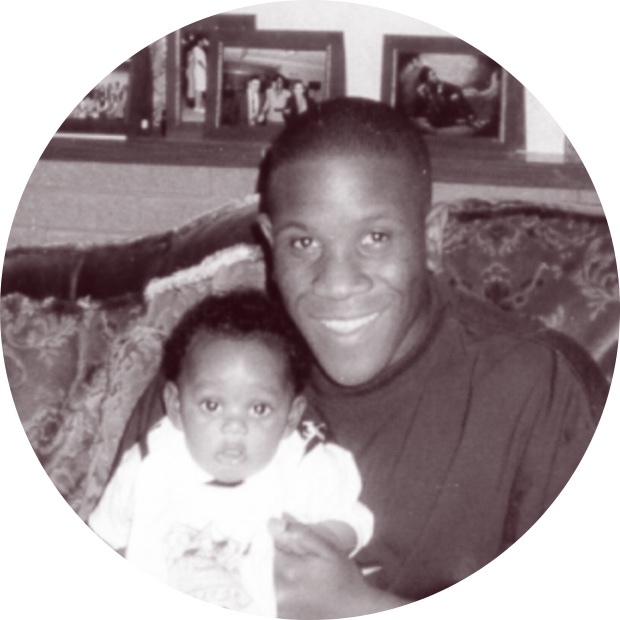
On 19th January 1999 Roger Sylvester died, eight days after being after being arrested by police officers and taken to a psychiatric hospital. Restrained outside his home by eight police officers from Tottenham Police Station, he later collapsed and fell into a coma after being held down by officers for 20 minutes in a padded room at the hospital. An inquest returned a verdict of unlawful killing but this finding was later overturned, and no police officers ever faced any charges.
Roger Sylvester was living in Tottenham at the time he died and had been working for Islington Council part time as a care worker. He had previously worked as a computer operator for the Met. He had suffered from psychosis following a serious assault in 1986.
On the night of 11 January, 1999, Roger was detained outside his own home, under section 136 of the Mental Health Act 1983, and restrained ‘for his own safety’ by eight police officers. The circumstances leading up to this are unclear, but Roger had got locked out of his home with no clothes on and police were called. According to the restraining officers they then took him to St. Ann’s Hospital where, following some further 20 minutes under restraint, he went limp. Roger remained in a coma until his life support machine was switched off seven days later.
Investigation and Inquest
From the moment he died, Roger’s family and friends have campaigned to find out what happened to him and for those responsible for his death to be held to account. The identities of seven of the eight officers emerged later: PCs Phillip John Steedman, David Alan Clohosy, Ian Alexander Smith, Sean Kiernan, Andrew Philip Newman, Simon Paul Creevy, and John Anderson.
This campaign proved a lengthy, emotional struggle for justice in the face of obstruction, delay and misinformation by criminal justice agencies.
The initial investigation into Roger’s death was handled by the Metropolitan Police Complaints Investigations Bureau (CIB). Their actions demonstrated numerous failures in basic policing, such as a failure to secure evidence from the scene of the initial detention and insensitive treatment of the Sylvester family. This led to the lodging of a complaint from the family about the initial investigation which resulted in disciplinary proceedings. Detective Superintendent Curtis and his assistants Detective Sergeants Theobalds and Cockram all eventually pleaded guilty to neglect of duty.
The investigation into Roger’s death took place under the old, discredited police investigations system known as the Police Complaints Authority (PCA). In 2004 this was replaced with the Independent Police Complaints Commission (IPPC). Under the old system police forces would investigate other police forces. In this instance, Essex Police investigated the Roger’s death. The Metropolitan Police repeatedly stalled when required to disclose the information that had come out of the investigation by Essex Police.
INQUEST, which campaigns around deaths in custody, has learnt through its casework with families that such failure to disclose information promptly, despite protocols and directives from the coroner, is the common experience of most grieving families in cases of deaths in custody. In addition, the frequent practice of providing information in a piece-meal fashion, when it is eventually disclosed, inevitably leads to the suspicion that the disclosure given may not be as full as it should be. Unacceptable delays of several years are regular occurrences in cases of deaths in custody. In Roger’s case it took a shocking four years for there to be any public scrutiny of the events leading to his death. Not only is this very distressing for the families concerned, it also means that as there is no public scrutiny of a death for a long period, the opportunity for identifying what went wrong and to seek to prevent other deaths is set back.
The Essex Police investigation further distressed the Sylvester family. Sheila Sylvester, Roger’s mother, commented at the time: “The investigation has not centred on the behaviour of eight officers who laid hands on my son that fateful night. Their actions were not investigated with the thoroughness and rigour that would have been the case had they been civilians. This is unjust. Instead Essex Police chose to investigate Roger, the victim, and his family in an attempt to blame anyone but the police for his death.”
The torture the Sylvester family went through can be seen in the repeated delays and reversals in the case.
A brief chronology of this legal process:
• January-October 1999 – Roger’s death is investigated on behalf of the Metropolitan Police Service (MPS) under the supervision of the PCA.
• October 1999 – The evidence is sent to the Crown Prosecution Service (CPS) for a decision as to whether criminal charges could be brought against the officers involved in the fatal restraint.
• November 2000 – 13 months later the CPS announce that there is insufficient evidence to prosecute any officer involved in the death.
• February 2001 – A challenge to this decision is launched in the High Court on behalf of Roger’s family.
• May 2001 – The challenge comes before the Lord Chief Justice, Lord Woolf, who adjourns the matter pending the outcome of the inquest into Roger’s death.
• September-October 2003 – The four-week inquest into the death of Roger Sylvester finally takes place, four years and seven months after his death.
• November 2004 – the Inquest verdict is overturned by Judicial Review.
• June 2005 – The CPS uphold their decision not to prosecute any officers.
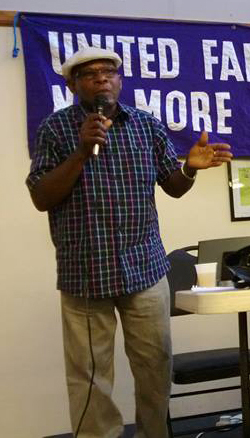
The inquest into Roger’s death concluded on 3 October, 2003, almost five years after he died. The jury found that Roger died due to hypoxic brain damage which resulted from a cardiac arrest, caused by the restraint used upon him. In particular, they found that it was the position he was held in, and the duration of this restraint, that killed him.
All five medical experts who gave evidence agreed that the restraint applied to Roger played a part in his death.
The jury at the inquest returned a unanimous verdict of unlawful killing on the basis that Roger was:
- Held in restraint position too long;
- Had a lack of medical attention;
- No attempt was made to alter his position of restraint.
Following the verdict, the Metropolitan Police Commissioner, Sir John Stevens, suspended all eight officers involved in restraining Roger.
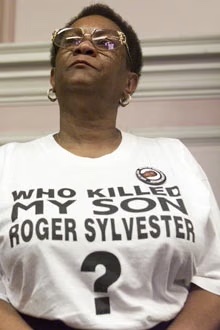
The police applied for a judicial review of the inquest decision and permission was granted for the judicial review to proceed to a full hearing held in November 2004. In the High Court the officers tried to argue that the evidence could not allow the jury to conclude that restraint caused the cardiac arrest, or that the restraint was unlawful and that the coroner was therefore wrong to leave the verdict to the jury. They also claimed that the coroner made errors in his summing up to the jury and this demonstrated that the jury’s verdict was perverse. The High Court judge rejected the officers’ arguments on the actual evidence: he found that there was sufficient evidence on which the jury could have legitimately returned a verdict of unlawful killing. However, he accepted the officers’ arguments concerning the technical errors made by the coroner in his summing up. On that basis the judge overturned the verdict of ‘unlawful killing’. The eight officers were re-instated immediately by the new Metropolitan Police Commissioner, Sir Ian Blair. For the Sylvester family, just when they had imagined that the unlawful killing verdict would allow them to get on with their lives, the challenge meant reliving the events surrounding Roger’s death. Justice was snatched from their grasp when the decision to overturn the inquest verdict on technicalities was made.
Police Racism and Obstruction
“Try as they may, the officers responsible for Roger’s death cannot quash the truth. The judge in the High Court was compelled to accept that the evidence was there to allow the inquest to conclude that the officers had lied on oath; that in fact they had deliberately held Roger down in a position which they knew to be unlawful and dangerous; and that they then gave a false account to cover up their actions. Our son Roger was unlawfully killed and the verdict was quashed on a technicality”
(Rupert and Sheila Sylvester)
One of the key concerns for Roger’s family has been the conduct of the Metropolitan Police at every stage. As they admitted at the inquest, the officers who restrained Roger knew from their training that it was dangerous to restrain a person in the Prone position for any length of time, and that doing so would amount to the use of unreasonable, and therefore unlawful, force. Evidence from witnesses at the inquest suggested that they had in fact done so, contrary to their vehement denials. The jury agreed. This was also acknowledged by the High Court judge in the judicial review. The evidence also suggested that the officers had set out a false account of the restraint in their incident report books and in their testimony on oath at the inquest.
There has been no indication that the superiors of the restraining officers called them to account for their conduct in the five years after Roger’s death. On the contrary, the officers were allowed to remain on duty as though nothing had happened, and two were promoted to the rank of sergeant. No action was taken to suspend them until after the unlawful killing verdict.
Throughout the inquest, the Metropolitan Police Commissioner and officers involved in the restraint engaged in a concerted attack on Roger’s character, with crude and persistent references to ‘drugs’, ‘violence’ and ‘exceptional strength’. These racist stereotypes are often applied to young Black men, especially in the context of a restraint-related death in custody, with the object of stirring racist assumptions and shifting attention away from the contribution of restraint to the death.
In 1999, forensic pathologist Freddy Patel was reprimanded by the General Medical Council (GMC) for releasing medical details about Roger Sylvester to reporters outside an inquest hearing. Mr Patel told reporters that Sylvester was a crack cocaine user, something his family denied. Patel was later struck off by the General Medical Council after his evidence to the post mortem into the death of Ian Tomlinson, who died after being hit and pushed over by a police officer at the G20 London summit protests in 2009. Patel’s examination of Ian’s body was found to be incompetent and his evidence dishonest.
The Campaign
“We have faced a criminal justice system that has been persistently unable and unwilling to bring its own to account”.
Roger Sylvester Justice Campaign
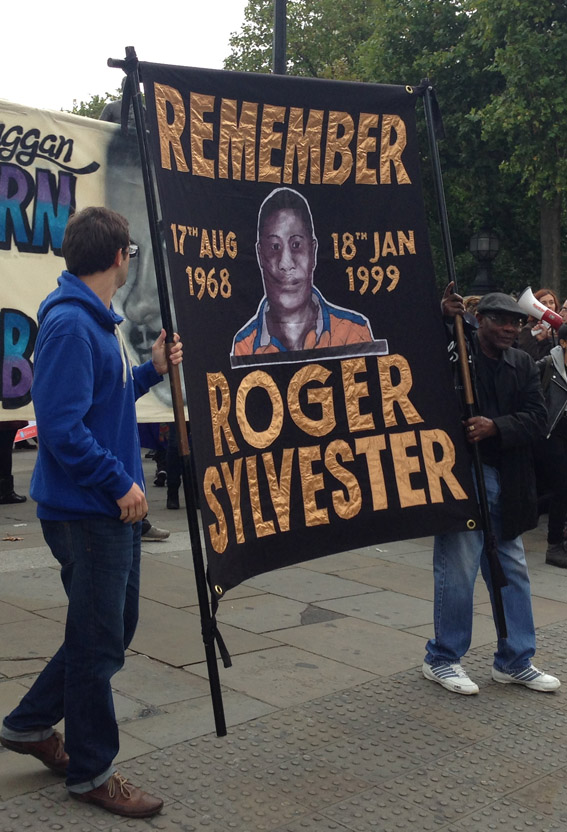 The Roger Sylvester Justice Campaign was set up by the family and friends of Roger to press for the truth about the circumstances of his death and to ensure that all those responsible for his death are held accountable. The campaign has won widespread support from MPs, NGOs and individuals. It has organised public meetings, demonstrations, press conferences and lobbied politicians and senior police figures. The campaign’s ongoing persistence has achieved significant successes, including getting two of the police officers in the initial investigation disciplined and, by raising public awareness about the issues, prompted the Metropolitan Police to revise their guidelines on restraint. By highlighting issues surrounding the failings of the investigation and inquest process they helped other families that followed them. Without their brave and consistent campaigning presence none of this would have been possible.
Contact the campaign at the website: http://www.rsjc.org.uk or by email: rsjc@hotmail.com
This post was mostly adapted from a leaflet about Roger’s death by Inquest and Unison.
@@@@@@@@@@@@@@@@@@@@@@@@@@@@@@@@@@@@@@
Spied On by the Police
The Roger Sylvester Justice Campaign has been revealed to have been spied on by Special Branch officers working for the Special Demonstration Squad. Revelations by campaigners against police spying on campaigners forced the Home Office into announcing a Public Inquiry into Undercover Policing in 2014; since then, documents releasee by the inquiry have gradually built up a picture of the many groups, campaigns, individuals targeted.
The ‘spycop’ who reported on Sylvester family campaign, coded HN81, used the covername “Dave Hagan”. This officer has also been exposed as being involved in surveillance on the family of Stephen Lawrence, killed by racists in SE London in 1993 (the crucial revelation that causee the Public Inquiry to be founded), and on the campaign for justice for Joy Gardner, killed by police and immigration officers in Hornsey in 1993, as well as on other family campaigns for justice and anti-racist organisations.
Roger Sylvester’s brother Bernard Renwick gave evidence to the Public Inquiry in the latest “tranche” of hearings (in November 2025), describing the killing of Roger, the family’s campaign, and their reactions to the gradual revelations of police surveillance of them.
The SDS made a particular point of spying on campaigns for justice for people killed by police, many of them Black. Any critical response to deaths in police custody, or to police investigations into racist killings, exposures of police corruption, or call for police accountability to local communities, seemed a red flag to Special Branch, who sent in officers to pretend to be activists to keep tabs on the campaigns. One police whistleblower has reported that part of the motive for his was to gather intelligence that could be used by police forces to spread smears to discredit the campaigns. This specifically related to ‘Dave Hagan’ who most infamously met with his SDS supervisor Bob Lambert and DI Richard Walton, at Lambert’s home, in 1998 during the Public Inquiry into the Stephen Lawrebnce killing and the police’s handling of the case. Walton was involved in planning police responses to the Inquiry and was seeking evidence from ‘Hagan’ that could be levelled against the Lawrence Campaign.
As noted above, the emergence of this meeting into the news in 2014 was the revelation that sparked the then Home Secretary Theresa may tp announce a Public Inquiry into Undercover Policing. 11 years into that process a wealth of further evidence of the Special Demonstration Squad’s 40 year infiltration of hundreds of campaigns and targetting of thousands of activists has come to light – including numerous accounts of sexual abuse of mostly female targets by the police spies, a pattern of racism, misogyny and lies.
HN81, ‘Dave Hagan’, however will NOT be giving evidence to the Inquiry. He will not be facing questions about his actions in regard to the Lawrence Inquiry, or about spying on the Roger Sylvester family Campaign, or on Joy Gardner’s campaign – or about the other families and campaigns he reported on covertly. He has now refused to appear, claiming the whole process is affecting his mental health. Along with many other officers, his true identity is being kept secret – allegedly for fear that targets of these spycops will seek revenge on them. More accurately for fear of facing the public disgust that revelations of their actions.
He should be forced to appear. But the Inquiry are unlikely to do that, as they fawn on the police and rarely press them.
At the very least the Public Inquiry should release the true name of this spy.
@@@@@@@@@@@@@@@@@@@@@@@@@@@@@@@@@@@@@@
 LONDON RADICAL HISTORIES
Leave a comment